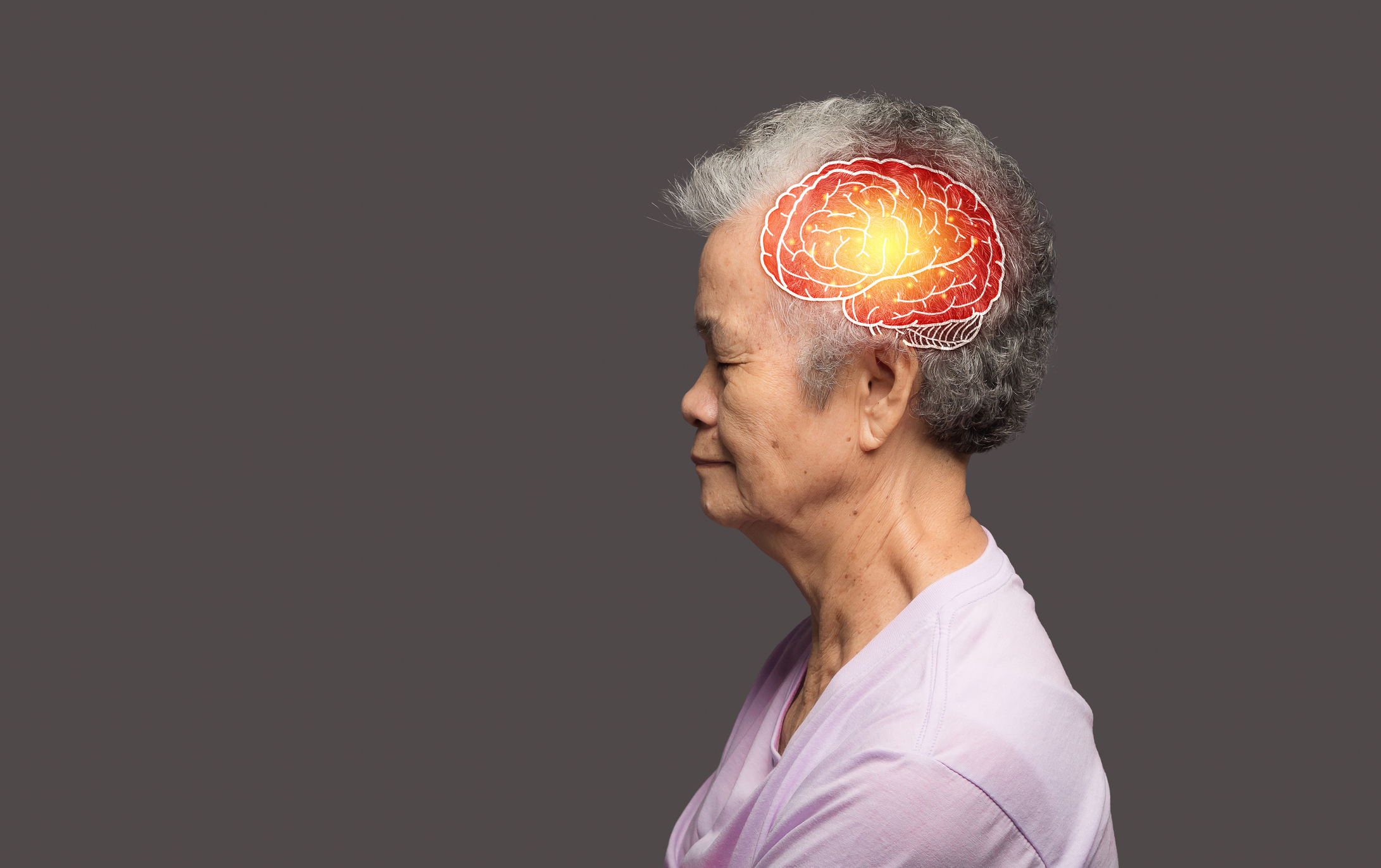
June is Alzheimer’s and Brain Awareness Month. It is important to understand what Alzheimer’s is and what steps you can take to care for your brain.
Alzheimer’s disease is a degenerative disease and the most common type of dementia. It causes a slow decline in memory, thinking, and reasoning skills. Age is the biggest risk factor for the disease, followed by sex and family history.
Dementia is not a specific disease, but an overall term that describes a group of symptoms like memory loss and the loss of other mental abilities severe enough to interfere with daily life, caused by physical changes in the brain.
There are many signs and symptoms of Alzheimer’s and dementia. Ten early signs and symptoms include:
- Memory loss that disrupts daily life
- Challenges in planning or solving problems
- Difficulty completing familiar tasks
- Confusion with time and place
- Trouble understanding visual images and spatial relationships
- New problems with words in speaking or writing
- Misplacing things and losing the ability to retrace steps
- Decreased or poor judgment
- Withdrawal from work or social activities
- Changes in mood and personality
Even though there isn’t a cure for Alzheimer’s and many other types of dementia, there are many preventative measures you can take to care for your brain.
Here are five ways to care for your brain:
- Regular cardiovascular exercise elevates your heart rate and increases blood flow to the brain and body. Several studies have found an association between physical activity and reduced risk of cognitive decline.
- Eating a healthy and balanced diet lower in fat and higher in vegetables and fruit helps reduce the risk of cognitive decline. Although research on diet and cognitive decline is limited, certain diets, such as Mediterranean and Mediterranean-DASH (Dietary Approaches to Stop Hypertension), may help reduce the risk.
- It is Important to get enough sleep. Not getting enough sleep due to conditions like insomnia or sleep apnea may result in problems with memory and thinking.
- It is important to take care of your mental health. Some studies have linked a history of depression with an increased risk of cognitive decline. Seek medical treatment if you have experienced symptoms of depression, anxiety, or any other mental health concerns. Also, try to manage stress.
- It is important to challenge and activate your mind. Try building furniture, completing a jigsaw puzzle, doing something artistic, or playing a strategy game. Challenging your mind may have short and long-term benefits for your brain.
If you or a loved one is experiencing symptoms associated with Alzheimer’s, you can receive treatment from a neurologist at Flushing Hospital Medical Center’s Ambulatory Care Center. To schedule an appointment, please call (718)-670-5486.
All content of this newsletter is intended for general information purposes only and is not intended or implied to be a substitute for professional medical advice, diagnosis or treatment. Please consult a medical professional before adopting any of the suggestions on this page. You must never disregard professional medical advice or delay seeking medical treatment based upon any content of this newsletter. PROMPTLY CONSULT YOUR PHYSICIAN OR CALL 911 IF YOU BELIEVE YOU HAVE A MEDICAL EMERGENCY.