
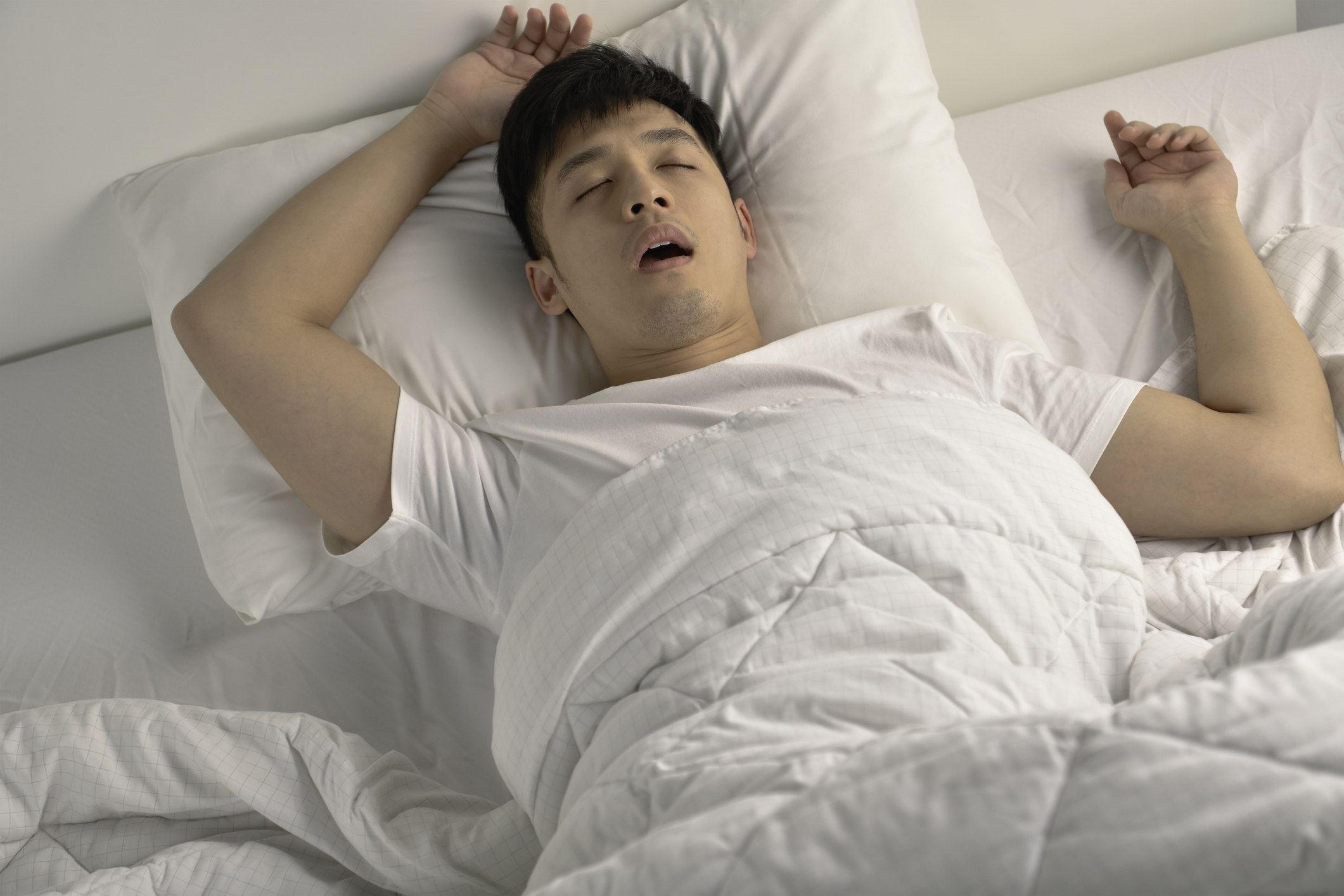
 Snoring is a condition that many people suffer from. They try different methods to try to prevent themselves or their loved ones from snoring.
One method that has become a popular trend on TikTok, which is used as a quick fix to stop snoring, is mouth taping. Mouth taping is the act of taping the mouth shut with medical-grade, skin-safe adhesive tape, so the wearer is forced to breathe through their nose instead of their mouth.
The theory behind mouth taping is that it helps you breathe better through your nose, which is considered healthier than mouth breathing. Breathing through your nose while you sleep has several benefits, as it may help:
- Lower your blood pressure
- Improve oxygen levels
- Trap and filter out allergens found in the air
- Humidify and warm the air you breathe
- Moisturize and soothe sore throats
- Improve bad breath and oral health
- Improve snoring
- Improve dry mouth
- Develop structural improvements to your jawline
However, taping your mouth shut can be more harmful than good, as there are many potential risks and complications, such as:
- Difficulty breathing
- Redness, irritation, or allergic reactions on your lips and skin
- Difficulty falling and staying asleep
- Increased anxiety if you don’t like the feeling of having your mouth taped shut or have trouble breathing through your nose
If you have always been a mouth breather, these complications may become increasingly difficult, and you can have a hard time adjusting to mouth tape.
It is recommended never to use mouth tape if you have:
- Heart issues
- Nasal obstruction
- Nasal congestion
- Sinus infections
- Chronic allergies
- Deviated septum
- Enlarged tonsils
For individuals who are already struggling with conditions such as nasal obstruction or chronic allergies, having their mouth taped closed forces them to rely on only their nose for air, which can potentially lead to severe respiratory distress, significant drops in oxygen levels, and exacerbation of underlying health issues during sleep.
Unfortunately, there isn’t enough scientific evidence that shows that mouth tape works to stop snoring. The problem is that there are so few studies on mouth tape, and those that exist are focused on very small populations.
According to the National Library of Medicine, a small study showed that 30 people snored less after mouth taping. However, another study of 36 people with asthma showed no signs of change in their condition after mouth taping. What’s more, a study in 2022 revealed that 10 participants struggled with a phenomenon called mouth puffing, where they continued to try mouth breathing even after their mouths had been taped shut.
Despite some people using mouth tape for snoring and sleep apnea, it is ill-advised to do so. Instead, there are many safer methods to use to stop snoring, such as:
- Using a continuous positive airway pressure (CPAP), an Inspire device, or an oral appliance if you have sleep apnea
- Sleeping on your side instead of your back
- Taking decongestants to help relieve congestion
- Using nasal strips to improve airflow
If you are having trouble sleeping, you can receive treatment at Flushing Hospital Medical Center’s Ambulatory Care Center. To schedule an appointment, please call (718) 670-5486.
All content of this newsletter is intended for general information purposes only and is not intended or implied to be a substitute for professional medical advice, diagnosis or treatment. Please consult a medical professional before adopting any of the suggestions on this page. You must never disregard professional medical advice or delay seeking medical treatment based upon any content of this newsletter. PROMPTLY CONSULT YOUR PHYSICIAN OR CALL 911 IF YOU BELIEVE YOU HAVE A MEDICAL EMERGENCY.
