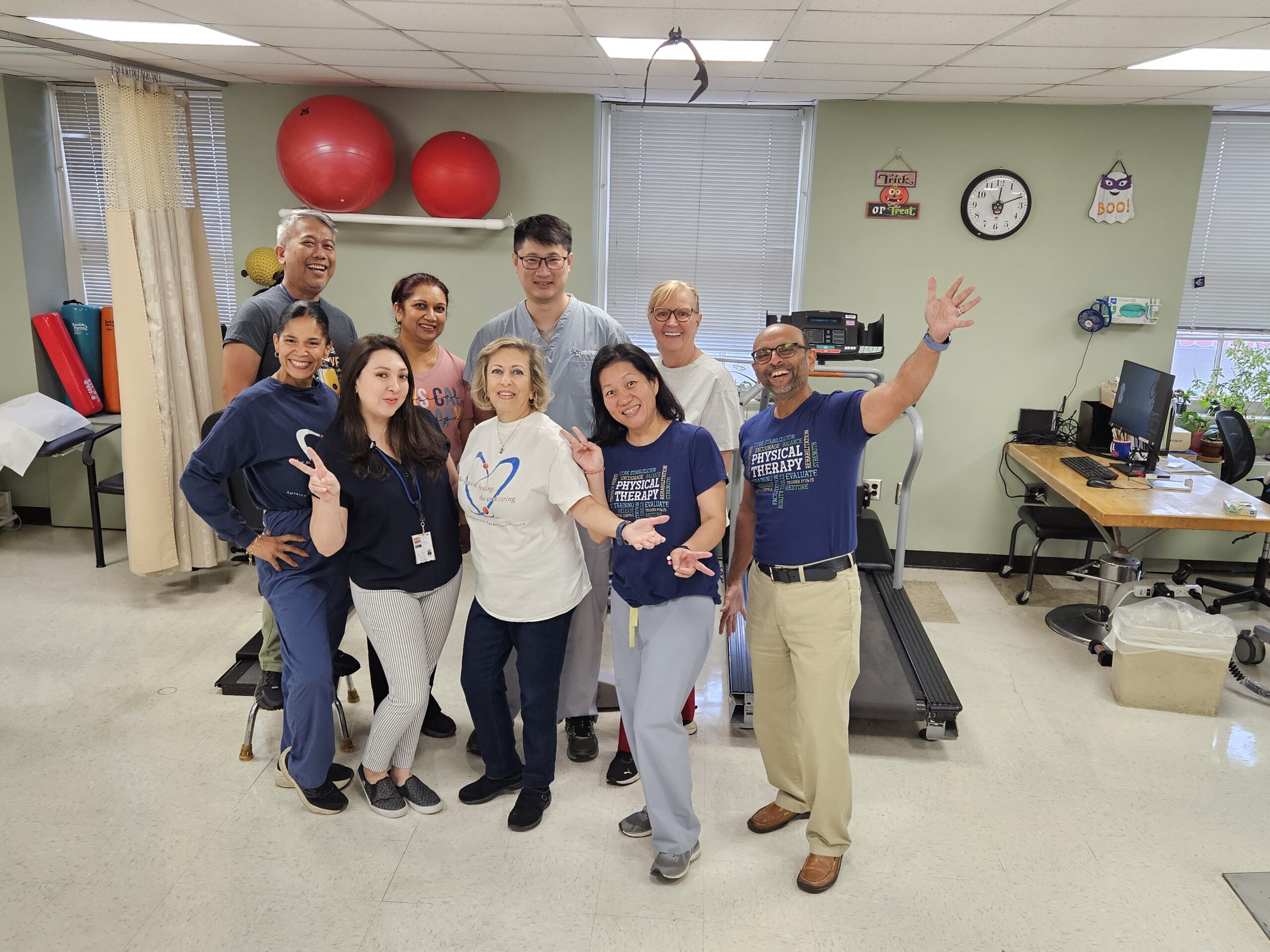
Flushing Hospital’s Department of Physical Medicine and Rehabilitation

Rehabilitation therapy is a form of patient-centered healthcare that is designed to restore, maintain, or improve a patient’s physical, cognitive, and emotional abilities after illness, injury, surgery, or chronic conditions. The Department of Physical Medicine and Rehabilitation at Flushing Hospital Medical Center offers a comprehensive range of outpatient services. The team’s experienced staff includes physical therapists, occupational therapists, speech language pathologists, and audiologists. 

The department has physiatrists who are highly experienced rehabilitation physicians. They are board-certified in physical medicine and rehabilitation, brain injury medicine, and electrodiagnostic medicine.  

Physical therapists provide outpatient services at the hospital. They assess each patient’s unique needs and determine a care plan to address the functional deficits identified. Goals for therapy are based on the patient’s specific needs.  

Common diagnoses treated on an outpatient basis include neck/back pain, joint pain/arthritis, musculoskeletal diseases, and neurological conditions such as stroke and nerve injuries.  

Flushing Hospital’s Department of Physical Medicine and Rehabilitation utilizes therapeutic exercise and movement-based interventions to improve patient outcomes. Electrotherapeutic equipment and thermal modalities, such as hot/cold packs, work as adjuncts to manual therapy techniques. Therapists are trained in manual techniques such as myofascial release and joint mobilization. Exercise techniques using equipment and resistance modalities are taught to the patient as a home exercise program to improve their overall function. 

Dedicated occupational therapists evaluate patients’ self-care skills for activities of daily living (ADLs). They develop care plans to improve the patient’s ability to perform these tasks to lead a more independent lifestyle. 

The speech-language pathologists provide communication, cognitive, and swallowing evaluations and treatment to patients of all ages. Care plans are individualized and patient-centered. Patients with dysphagia (difficulty swallowing) may also be referred for instrumental swallow evaluation, specifically Modified Barium Swallow (MBS) tests, to objectively assess swallowing, make appropriate food and liquid recommendations, and develop a targeted swallowing therapy plan. 

The audiology department provides comprehensive audiological evaluations to patients of all ages, from newborn through geriatric age ranges. Recommendations are made based on the individual’s needs and may include referral/recommendation for possible hearing aids. These patients are given appropriate referrals and guided in the follow-up process.  

Flushing Hospital’s Department of Physical Medicine and Rehabilitation is committed to providing the highest quality care and helping individuals improve their quality of life by regaining mobility, strength, and independence. For more information, please call us at (718) 670-5515. 

All content of this newsletter is intended for general information purposes only and is not intended or implied to be a substitute for professional medical advice, diagnosis or treatment. Please consult a medical professional before adopting any of the suggestions on this page. You must never disregard professional medical advice or delay seeking medical treatment based upon any content of this newsletter. PROMPTLY CONSULT YOUR PHYSICIAN OR CALL 911 IF YOU BELIEVE YOU HAVE A MEDICAL EMERGENCY.

Hydrotherapy Rehabilitation

Hydrotherapy When we receive significant physical injury or have medical conditions that cause pain, physical therapy is often recommended to help with recovery.  A very soothing and relaxing form of treatment is water or hydrotherapy.

Hydrotherapy has been used for hundreds of years. It utilizes the healing properties of water and the body’s reaction to it at different temperatures. For instance, cold water may be used to reduce inflammation while warm water may be used to increase circulation.

Water therapy has proven effective in treating certain conditions such as arthritis, multiple sclerosis, muscular dystrophy, muscle strains or tears, back pain or head injuries

There are many benefits a patient can achieve from hydrotherapy, they include:

  • Pain relief
  • Increased circulation
  • Re-education of paralyzed muscles
  • Increased range of motion in joints
  • Strengthening weak muscles
  • Rehabilitating injured limbs

Hydrotherapy may not be recommended for patients with heart disease, hypertension or vascular conditions.  Each case is unique to the individual and speaking with a doctor is highly recommended.

The Department of Physical Medicine and Rehabilitation at Flushing Hospital Medical Center offers a multi-disciplinary team approach to the treatment of conditions and injuries. Following an assessment by a physician and therapist, a program is developed to achieve maximum results. A patient’s program may involve the use of therapeutic exercise, heat, ultrasound, electrical stimulation, hydrotherapy, and patient education. To schedule an appointment, please call (718) 670-5515.

All content of this newsletter is intended for general information purposes only and is not intended or implied to be a substitute for professional medical advice, diagnosis or treatment. Please consult a medical professional before adopting any of the suggestions on this page. You must never disregard professional medical advice or delay seeking medical treatment based upon any content of this newsletter. PROMPTLY CONSULT YOUR PHYSICIAN OR CALL 911 IF YOU BELIEVE YOU HAVE A MEDICAL EMERGENCY.

When is the Right Time for Knee Replacement Surgery?

If you are experiencing prolonged periods of knee pain or stiffness that makes it hard to perform simple everyday tasks, you may be a candidate for knee replacement surgery.

Knee joint orthopedic replacement implant

Knee replacement surgeries are often performed to treat patients who have suffered a serious trauma, but the most common reason for someone to need this procedure is to treat progressive osteoarthritis or other diseases that affect the knee joint. This procedure is usually a last resort and your doctor might recommend it only after all other forms of treatment or medications have proven unsuccessful.

Performed by an orthopedic surgeon, knee replacement surgery involves replacing some or all of the components of the knee joint with a synthetic implant, to repair the damaged weight-bearing surfaces that are causing pain. A total knee replacement surgery replaces all three compartments of the diseased knee joint. A partial knee replacement involves an implant in just one or two compartments of the knee, retaining any undamaged parts.

Minimally invasive surgery has revolutionized knee replacement surgery. Minimally invasive knee joint replacement requires a much smaller incision, which leads to less pain, decreased recovery time and better motion due to less scar tissue formation. The average hospital stay after knee joint replacement is usually three to five days.

Rehabilitation is almost always necessary after knee replacement surgery. The physical therapy you receive after surgery, whether in a sub-acute facility, an out-patient center, or in your home is an essential part of your healing process as proper exercise will prevent scarring, maintain muscle strength and joint stability. The frequency and duration of therapy varies from patient to patient.

Flushing Hospital’s team of highly qualified orthopedic surgeons performs over 1,500 procedures every year, including hundreds of minimally invasive knee replacement procedures. They also perform surgeries to repair hip fractures, fix broken wrists and ankles, as well as shoulder replacement surgery. For more information about the Department of Orthopedic Surgery at Flushing Hospital, or to schedule an appointment to speak with a surgeon, please call 718-670-3135.

All content of this newsletter is intended for general information purposes only and is not intended or implied to be a substitute for professional medical advice, diagnosis or treatment. Please consult a medical professional before adopting any of the suggestions on this page. You must never disregard professional medical advice or delay seeking medical treatment based upon any content of this newsletter. PROMPTLY CONSULT YOUR PHYSICIAN OR CALL 911 IF YOU BELIEVE YOU HAVE A MEDICAL EMERGENCY.