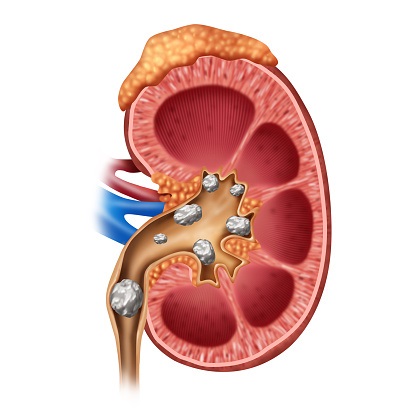
 Kidney stones are deposits of different minerals that can accumulate in the urinary tract. They typically occur in adults but can affect children and babies as well.
There are many types of kidney stones, including:
- Calcium stones are the most common type usually caused by a high intake of certain substances such as salt
- Cysteine stones can form in people who have cystinuria, an inherited disorder, marked by increased formation of stones in the bladder, kidneys, and ureter
- Struvite stones, most often occur in women who have urinary tract infections
- Uric acid stones can occur with gout or after chemotherapy
Kidney stones don’t cause symptoms until they move around in the kidney or pass into the ureter. Small stones can pass out of the body with little or no pain. However, larger stones in the urinary system can get stuck and cause many symptoms, including:
- Intense pain in the lower back and/or in the sides
- Frequent, urgent, and painful urination
- Nausea and vomiting
- Blood in the urine and/or cloudy urine
- Urinary tract infections secondary to kidney stones accompanied by a fever
Kidney stones have several causes, but two of the most common causes in children are not drinking enough water and having a diet containing too much salt and ultra-processed foods. Most children with underlying conditions are more at risk for kidney stones. These conditions include:
- Diabetes
- Obesity
- Problems with how the urinary tract is formed
- Metabolic disorders
- Gout
- Other kidney conditions
- Conditions that affect the thyroid or parathyroid gland
- Some urinary tract infections
Other reasons that make a kidney stone more likely are:
- Not having enough citric acid in the urine
- Having too much calcium in the urine
- Some medicines
- Special diets, such as a ketogenic diet that is sometimes used to prevent seizures
Kidney stones are diagnosed when a healthcare provider asks about the symptoms and how long they have been going on, about the child’s diet, whether the child is dehydrated, and if there is a family history of kidney stones, or urinary or kidney problems.
The healthcare provider will also perform exams to diagnose kidney stones, including:
- Blood tests
- Urine tests
- Kidney function tests
- Imaging tests, which can show the exact size and location of the kidney stones, helping the doctor decide on the best treatment
Treatment for kidney stones depends on the type of kidney stone and its size. Some children will only need to drink a lot of water and take pain medications to pass the stone. Those with larger stones may need surgery or other treatments to help remove the stones.
It is not always possible to prevent some types of kidney stones. However, all children who have had kidney stones should drink a lot of liquids, water being the best, throughout the day while avoiding dark sodas, soft drinks, and sports drinks. They should also limit the amount of salt and protein in their diet.
If your child is experiencing kidney stone symptoms, you can talk with a doctor at the Pediatric Ambulatory Care Center. To make an appointment, please call 718-670-3007.
All content of this newsletter is intended for general information purposes only and is not intended or implied to be a substitute for professional medical advice, diagnosis or treatment. Please consult a medical professional before adopting any of the suggestions on this page. You must never disregard professional medical advice or delay seeking medical treatment based upon any content of this newsletter. PROMPTLY CONSULT YOUR PHYSICIAN OR CALL 911 IF YOU BELIEVE YOU HAVE A MEDICAL EMERGENCY.