Is Prenatal Yoga Right For You?


Keeping active while pregnant is good for you and for your baby.  Research suggests that practicing prenatal yoga offers many benefits, including helping you relax and prepare for labor.

ThinkstockPhotos-181707869

Many childbirth-preparation classes encourage stretching, mental centering and focused breathing. Taking prenatal yoga classes in a yoga studio or using an exercise DVD can:

.Improve sleep and balance

.Reduce stress and anxiety by calming the nervous system

.Increase strength, stamina, flexibility and endurance needed for childbirth

.Ease lower back pain, nausea, headaches and shortness of breath

.Decrease the risk of preterm labor, pregnancy-induced hypertension and intrauterine growth restriction

. Helps with breathwork in preparation for labor

. Increase circulation

Check with your doctor before starting any exercise program.  Listen to your body and do what feels right for you. Prenatal yoga can be a great way to prepare for childbirth. Namaste!

For more health and lifestyle tips, follow us on Twitter @FHMC_NYC and like us on Facebook www.facebook.com/FlushingHospital 

All content of this newsletter is intended for general information purposes only and is not intended or implied to be a substitute for professional medical advice, diagnosis or treatment. Please consult a medical professional before adopting any of the suggestions on this page. You must never disregard professional medical advice or delay seeking medical treatment based upon any content of this newsletter. PROMPTLY CONSULT YOUR PHYSICIAN OR CALL 911 IF YOU BELIEVE YOU HAVE A MEDICAL EMERGENCY.
Five Foods to Prevent Osteoporosis

ThinkstockPhotos-451969173Osteoporosis can strike at any age and occurs in both men and women, but it is most common in post-menopausal women. Bone is living tissue that constantly regenerates. Osteoporosis causes bones to become weak and brittle making you more susceptible to fractures. The most common fractures occur in the hip, wrist or spine.

Medications, healthy diet and weight-bearing exercise can help prevent bone loss or strengthen already weak bones.

May is National Osteoporosis Month. If you suffer from osteoporosis, try adding foods that are good for your bones and rich in nutrients like calcium, vitamins D, C, and K, as well as potassium and magnesium.

.Dairy products — Low-fat and non-fat milk, yogurt and cheese that contain calcium and are fortified with vitamin D, as well as fatty fishes like canned sardines, salmon (with bones), mackerel and tuna.

.Potassium — Spinach, beet greens, okra, tomato products, artichokes, plantains, potatoes, sweet potatoes, collard greens and raisins.

.Magnesium — Tomato products, raisins, potatoes, spinach, sweet potatoes, papaya, oranges, orange juice, bananas, plantains and prunes.

.Vitamin C — Red peppers, green peppers, oranges, grapefruits, broccoli, strawberries, Brussels sprout, papaya and pineapples.

.Vitamin K — Vegetables such as kale, mustard greens, turnip greens and Brussels sprout, okra, Chinese cabbage, dandelion greens, and broccoli.

If you think you have osteoporosis, make an appointment with a doctor at Flushing Hospital Medical Center’s Ambulatory Care Center by calling 718-670-5486.

For more health and lifestyle tips, follow us on Twitter @FHMC_NYC and like us on Facebook at www.facebook.com/FlushingHospital.

All content of this newsletter is intended for general information purposes only and is not intended or implied to be a substitute for professional medical advice, diagnosis or treatment. Please consult a medical professional before adopting any of the suggestions on this page. You must never disregard professional medical advice or delay seeking medical treatment based upon any content of this newsletter. PROMPTLY CONSULT YOUR PHYSICIAN OR CALL 911 IF YOU BELIEVE YOU HAVE A MEDICAL EMERGENCY.

Are you at Risk for Stroke?

May is National Stroke Awareness Month. A stroke or a CVA (cerebrovascular accident) is an attack on the brain that can occur very quickly and with little warning.  Every year, more than 795,000 people in the United States suffer a stroke and one death from stroke happens every four minutes, making it the fifth leading cause of death in the U.S.

stroke_infographic_webThe risk of having a stroke varies with race and ethnicity. Though stroke risk increases with age, strokes can occur at any time. Prevent or reduce your risk of stroke by:

. Keeping your blood pressure, blood glucose and cholesterol levels in normal range

. Quitting smoking

. Staying active and maintaining a healthy diet and weight

. Treating heart disease

You may be having a stroke if you experience:

. Sudden, severe headache with no known cause

. Trouble seeing out of one or both eyes

. Confusion or trouble speaking

. Dizziness or trouble walking

. Numbness or weakness in the arm, face or legs, especially on one side of the body

If you suspect you or someone you know is having a stroke, act F.A.S.T:

F   Facial Weakness

A  Arm Weakness

  Slurred speech

  Time to call 911

Remember, the quicker you get medical help, the less damage to your brain and body and the better your chances are of surviving or avoiding long-term disability.

All content of this newsletter is intended for general information purposes only and is not intended or implied to be a substitute for professional medical advice, diagnosis or treatment. Please consult a medical professional before adopting any of the suggestions on this page. You must never disregard professional medical advice or delay seeking medical treatment based upon any content of this newsletter. PROMPTLY CONSULT YOUR PHYSICIAN OR CALL 911 IF YOU BELIEVE YOU HAVE A MEDICAL EMERGENCY.

What is White Coat Hypertension?

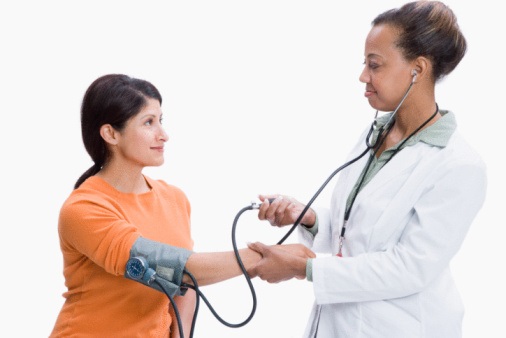
WhiteCoatDoes the thought of having a physician take your blood pressure make you nervous? Anxiety over going to the doctor’s office can lead to an elevation in your blood pressure; a condition known as “white coat hypertension.”

White coat hypertension is a real condition that occurs when blood pressure readings at your doctor’s office are higher than they are in other settings, such as your home. The term white coat refers to the traditional white lab coat health care professionals wear in clinical settings.

The underlying cause of white coat hypertension is believed to be tension and stress associated with being examined by a physician. Not much attention was given to this condition since the blood pressure of patients returned to normal levels when taken in the home environment, where they feel more relaxed. Recent studies however have proven that people with white coat hypertension are twice as likely to develop true hypertension within a decade, compared to people with normal blood pressure levels.

How do you know if you have white coat hypertension and what should you do if you have it? The first step is for your doctor to have you monitor your blood pressure at home to see if it returns to normal levels. If it does, together, you and your doctor can decide whether to treat it or not. On one hand, if your blood pressure is normal during the rest of the day, taking blood pressure medications can lead to hypotension (low blood pressure). On the other hand, people with white coat hypertension might have elevated blood pressure during other stressful parts of the day. Many factors, such as age, family history, and the existence of other conditions will help the doctor make the right decision for you.

There are things that you can do to reduce your anxiety and stress before having your blood pressure checked by a health care professional. First, avoid drinking excessive amounts of water before checking your blood pressure because water can increase your reading. Also, do not participate in any physical activity before having your blood pressure taken. Excessive physical exertion will raise blood pressure. Lastly, avoid stressful situations and remain calm leading up to and during your visit to the doctor’s office.

If you think you have hypertension, make an appointment with your doctor immediately. If you do not have a primary care physician, call Flushing Hospital Medical Center’s Ambulatory Care Center at 178-670-5486 to schedule an appointment.

Join us on Facebook.com/FlushingHospital or follow us on Twitter @FHMC_NYC for more tips on fitness and health.


All content of this newsletter is intended for general information purposes only and is not intended or implied to be a substitute for professional medical advice, diagnosis or treatment. Please consult a medical professional before adopting any of the suggestions on this page. You must never disregard professional medical advice or delay seeking medical treatment based upon any content of this newsletter. PROMPTLY CONSULT YOUR PHYSICIAN OR CALL 911 IF YOU BELIEVE YOU HAVE A MEDICAL EMERGENCY.

Oatmeal Chocolate Chip Lactation Cookies

Are you a breastfeeding mom who needs a little help boosting your milk supply? Try this healthy, easy and delicious lactation cookie recipe. The addition of Brewer’s Yeast, which contains B vitamins, may help increase milk production. 
Recipe courtesy of Food.com.
download (2)
Ingredients
1 cup butter
1 cup sugar
1 cup firmly packed brown sugar
4 tablespoons water
2 tablespoons flaxseed meal or ground flaxseeds
2 eggs
1 teaspoon vanilla
2 cups flour
1 teaspoon baking soda
1 teaspoon salt
3 cups oats
1 cup chocolate chips
2-4 tablespoons Brewer’s Yeast
Directions:  
  1. Preheat oven to 350°.
  2. Mix the flaxseed meal and water and let sit for 3-5 minutes.
  3. Beat butter, sugar, and brown sugar well.
  4. Add eggs and mix well.
  5. Add flaxseed mix and vanilla, beat well.
  6. Sift together flour, brewers yeast, baking soda, and salt.
  7. Add dry ingredients to butter mix.
  8. Stir in oats and chips.
  9. Scoop onto baking sheet.
  10. Bake for 12 minutes.
  11. Let set for a couple minutes then remove from tray.

Makes 4 1/2 dozen cookies

All content of this newsletter is intended for general information purposes only and is not intended or implied to be a substitute for professional medical advice, diagnosis or treatment. Please consult a medical professional before adopting any of the suggestions on this page. You must never disregard professional medical advice or delay seeking medical treatment based upon any content of this newsletter. PROMPTLY CONSULT YOUR PHYSICIAN OR CALL 911 IF YOU BELIEVE YOU HAVE A MEDICAL EMERGENCY.

What are Gallstones?

Have you ever experienced sudden abdominal pain and wondered if it might be gallstones?

KONICA MINOLTA DIGITAL CAMERA

Gallstones form in the gall bladder, located just under the liver, and may cause no signs or symptoms. However, if a gallstone lodges in a bile duct, it could cause a blockage. Gallstone pain may last several minutes to a few hours and symptoms may include:

  • Sudden and rapidly intensifying pain in the upper right portion of your abdomen
  • Sudden and rapidly intensifying pain in the center of your abdomen, just below your breastbone
  • Back pain between your shoulder blades
  • Pain in your right shoulder

Make an appointment with your doctor if you experience any of these signs or symptoms. Seek immediate care if you are experiencing:

  • Abdominal pain so intense that you can’t sit still or find a comfortable position
  • Yellowing of your skin and the whites of your eyes
  • High fever with chills

Laparoscopic surgery to remove the gallbladder, called a cholecystectomy, is one of the most commonly performed surgical procedures in the United States, and is the treatment of choice for gallstones that cause moderate to severe pain. Symptoms usually do not return after the gallbladder has been removed. In a small number of cases, surgery may be done to prevent complications of gallstones.

The surgical team at Flushing Hospital Medical Center offers laparoscopic gallbladder removal using the da Vinci robotic system. Using the robot allows for faster healing time, less scarring and shorter hospital stays.

For an appointment with a gastroenterologist, please contact the Ambulatory Care Department at 718-670-5486.

All content of this newsletter is intended for general information purposes only and is not intended or implied to be a substitute for professional medical advice, diagnosis or treatment. Please consult a medical professional before adopting any of the suggestions on this page. You must never disregard professional medical advice or delay seeking medical treatment based upon any content of this newsletter. PROMPTLY CONSULT YOUR PHYSICIAN OR CALL 911 IF YOU BELIEVE YOU HAVE A MEDICAL EMERGENCY.

Diabetes and Skin Complications

Believe it or not, skin complications are sometimes the first sign that you may have diabetes. According to the American Diabetes Association (ADA), people with diabetes develop skin diseases more easily than those without the condition, making them more susceptible to general skin conditions such as bacterial infections, fungal infections, and localized itching. More specifically, styes, boils, jock itch, athlete’s foot, and ringworm. Diabetesandskin-300x200

There are several skin conditions that mostly affect or only affect people with diabetes, such as diabetic dermopathy and diabetic blisters. Some of these conditions are painful, while others are found to be embarrassing.

Fortunately, most of these conditions can be prevented or easily treated, if caught early. To reduce the risk of developing skin-related complications of diabetes, it is recommended that individuals keep their glucose levels in a safe range by eating healthy, exercising and taking their medication. It is also important that proper skin care is practiced. Individuals with diabetes should consider the following tips for good skin care:

  • Keep skin clean and moisturized.
  • Avoid very hot baths and showers, and use moisturizing soap and mild shampoos.
  • Treat cuts right away. Wash minor cuts with soap and water.
  • During cold, dry months, keep your home more humid. Bathe less during this weather, if possible.

If not cared for properly, these conditions, in a person with diabetes, can turn into a serious problem with potentially severe consequences. If you have diabetes and have noticed changes to your skin, please call Flushing Hospital Medical Center’s Ambulatory Care Center at  718-670-5486 to schedule an appointment with an endocrinologist or dermatologist.

All content of this newsletter is intended for general information purposes only and is not intended or implied to be a substitute for professional medical advice, diagnosis or treatment. Please consult a medical professional before adopting any of the suggestions on this page. You must never disregard professional medical advice or delay seeking medical treatment based upon any content of this newsletter. PROMPTLY CONSULT YOUR PHYSICIAN OR CALL 911 IF YOU BELIEVE YOU HAVE A MEDICAL EMERGENCY.

The Benefits of Drinking Bay Leaf Tea

Bay-leaf-462032601-300x200

There are many benefits of drinking bay leaf tea. Some of the most widely known benefits are:

1.  Bay leaves are a rich source of vitamin A, vitamin C, iron, potassium, calcium, and magnesium. Also regular inclusion of bay leaves in meals promotes general health.

2.  They have been proven to be useful in the treatment of migraines.

3.  Bay Leaf contains enzymes that help to breakdown proteins and digest food faster, helping to calm indigestion.

Recipe for Bay Leaf Tea

  • 16 oz water
  • 3 bay leaves
  • Juice1 large or 2 smaller lemons
  1. Place ingredients, together, in a pot and bring to a boil.
  2. Drink, after it cools down

A hot cup of bay leaf tea can be very comforting. The aromatic fragrance that the leaves release is calming and the essence of the spiced tea makes bay leaf tea delicious.

All content of this newsletter is intended for general information purposes only and is not intended or implied to be a substitute for professional medical advice, diagnosis or treatment. Please consult a medical professional before adopting any of the suggestions on this page. You must never disregard professional medical advice or delay seeking medical treatment based upon any content of this newsletter. PROMPTLY CONSULT YOUR PHYSICIAN OR CALL 911 IF YOU BELIEVE YOU HAVE A MEDICAL EMERGENCY.

Breastfeeding and Going Back to Work

If you’re breastfeeding your newborn and returning to work, you may be wondering how you are going to do both. With a little discipline and some planning, breastfeeding and working is a challenge you can overcome.

breastfeeding1-300x204

Here are some suggestions designed to make nursing your child and transitioning back to work easier:

1. Before going back to work, speak with your supervisor about your plans to breastfeed. Discuss different types of schedules, such as starting back part-time at first or taking split shifts.

2. Many Lactation Consultants recommend that breastfeeding moms join a breastfeeding support group to talk with other mothers about breastfeeding after your baby is born and how they transitioned back into the workplace.

3. Ask if your company provides a lactation support program for employees. If your company does not, ask about private areas where you can comfortably and safely express milk. The Affordable Care Act supports work-based efforts to assist nursing mothers.

4. Ask the lactation program director, your supervisor, wellness program director, employee human resources office, or other co-workers if they know of other women at your company who have breastfed after returning to work.

If you have any questions regarding breastfeeding your baby, please contact Flushing Hospital Medical Center’s Pediatric Ambulatory Care department at 718-670-5486.

All content of this newsletter is intended for general information purposes only and is not intended or implied to be a substitute for professional medical advice, diagnosis or treatment. Please consult a medical professional before adopting any of the suggestions on this page. You must never disregard professional medical advice or delay seeking medical treatment based upon any content of this newsletter. PROMPTLY CONSULT YOUR PHYSICIAN OR CALL 911 IF YOU BELIEVE YOU HAVE A MEDICAL EMERGENCY.

Do You Have Fibroids?

ThinkstockPhotos-150934694

About 20-80 percent of women develop uterine fibroids by the time they reach age 50. Fibroids are muscular tumors that grow in the wall of the uterus and are almost always benign (not cancerous). Fibroids can grow as a single tumor, or there can be many of them in the uterus ranging in size from as small as an apple seed to as big as a grapefruit.

Not all women with fibroids have symptoms. Some have heavy bleeding (which may cause anemia), painful periods, pain during sex or lower back pain. Some experience a feeling of fullness in the pelvic area, rectal pressure or frequent urination due to fibroid pressure on the bladder. Large fibroids may cause the abdomen to swell, making a woman look pregnant.

No one knows what causes fibroids. Risk factors for developing fibroids include age, family history, ethnicity, and obesity. Researchers suspect a combination of hormones, like high levels of estrogen and progesterone, may cause them to grow or shrink. For example, they grow rapidly during pregnancy when hormone levels are high, and shrink when anti-hormone medication is used. They also stop growing or shrink once a woman reaches menopause.

Your gynecologist will check during your regular exams to see if you have fibroids. Talk with your doctor about the best way to treat your fibroids which may include medication or surgery. If you have fibroids, but don’t have any symptoms, you may not need treatment.

Flushing Hospital Medical Center’s Department of Obstetrics, Gynecology and Women’s Health uses the latest techniques and equipment, such as ultrasonography, color doppler, laser and laparoscopic surgery.  We also offer minimally invasive robotic procedures using the da Vinci robotic system. Fibroid surgery performed using the robot allows for faster healing time, less scarring and shorter hospital stays.

For an appointment, please contact the Ambulatory Care Department at 718-670-5486.

Join us on Facebook.com/FlushingHospital or follow us on Twitter @FHMC_NYC for more tips on fitness and health.

All content of this newsletter is intended for general information purposes only and is not intended or implied to be a substitute for professional medical advice, diagnosis or treatment. Please consult a medical professional before adopting any of the suggestions on this page. You must never disregard professional medical advice or delay seeking medical treatment based upon any content of this newsletter. PROMPTLY CONSULT YOUR PHYSICIAN OR CALL 911 IF YOU BELIEVE YOU HAVE A MEDICAL EMERGENCY.