Flushing Hospital’s Nurse of The Month

Our nurses are the pillars of our community. In addition to meeting the demands of being a caregiver, they wear several hats including that of an educator, nurturer,  and comforter.

Not only to do nurses care for patients; they provide support to families and loved ones during difficult times.

Our nurses pour their hearts into all aspects of their job, and this is one of the many reasons why we celebrate their accomplishments.

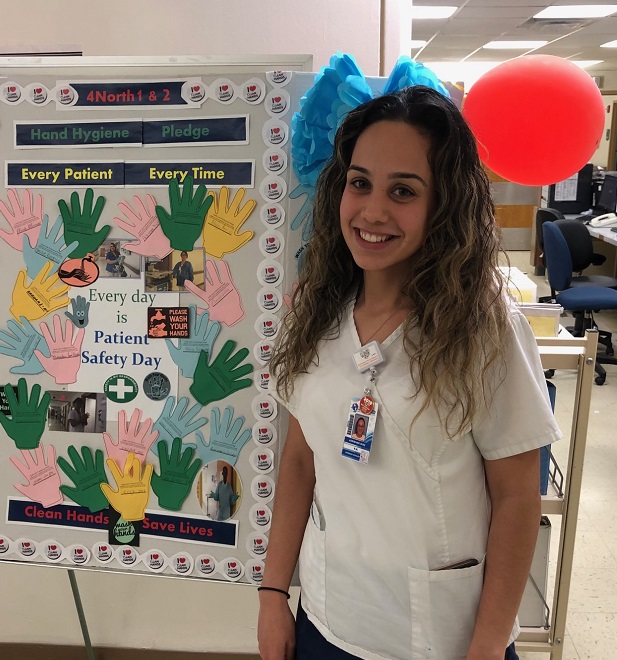
Join us in congratulating  Elizabeth Sun, RN for receiving Flushing Hospital Medical Center’s Nurse of the Month,

Meet Elizabeth:

Q&A:

Q: How long have you been working for FHMC?
A: I have been working at Flushing Hospital for seven years since 2011.
Q: On which unit do you currently work?
A: Perinatal
Q: Why did you want to become a nurse?
A: After working in the family business for a while, I wanted a career for myself. I enjoy working with people and helping them so the obvious choice was to become a nurse. Nursing also appealed to me due to the diverse fields it encompassed.
QWhat is the best part of your job?
A:  Caring for my patients,  and I really enjoy meeting and conversing with different people. Every day I encounter different folks with different backgrounds and opinions. I have learned a lot at FHMC, not only about nursing but also about people.

All content of this newsletter is intended for general information purposes only and is not intended or implied to be a substitute for professional medical advice, diagnosis or treatment. Please consult a medical professional before adopting any of the suggestions on this page. You must never disregard professional medical advice or delay seeking medical treatment based upon any content of this newsletter. PROMPTLY CONSULT YOUR PHYSICIAN OR CALL 911 IF YOU BELIEVE YOU HAVE A MEDICAL EMERGENCY.

How Much You Can Save by Quitting Smoking

Quitting smoking enriches your life in several ways. One of the major benefits of quitting is improving your health; another great benefit is saving money.

On average, a pack of cigarettes in New York costs $13. While this may not seem like a lot, it does add up and can become expensive.  Quitting can help you to save and apply your money towards other items or goals.  Here is an example of how much you can potentially save over time and a few ideas of how you could spend the extra money.


The journey to quit smoking can be difficult but you do not have to do it alone. Flushing Hospital Medical Center’s smoking cessation team wants to help you to develop a plan leading to your “quit day”. The hospital has partnered with the American Lung Association to bring you Freedom from Smoking, a comprehensive and successful group-based smoking cessation program. Learn how to overcome your addiction to tobacco and enjoy the benefits of better health in a fun and interactive environment. Receive personalized attention as well as the support from group members who are experiencing this journey with you. For more information, please call 718 206 8494.


All content of this newsletter is intended for general information purposes only and is not intended or implied to be a substitute for professional medical advice, diagnosis or treatment. Please consult a medical professional before adopting any of the suggestions on this page. You must never disregard professional medical advice or delay seeking medical treatment based upon any content of this newsletter. PROMPTLY CONSULT YOUR PHYSICIAN OR CALL 911 IF YOU BELIEVE YOU HAVE A MEDICAL EMERGENCY.

February is American Heart Health Month

Over 50 years ago President Lyndon B. Johnson proclaimed the month of February to be American Heart Month in order to bring attention to one of the leading causes of death in the United States. This tradition has been carried on by every President since.

Each year over 800,000 lives are taken as a result of heart disease, stroke and other cardiovascular diseases.  Every 84 seconds someone in the United States dies from the disease and each year approximately 750,000 people experience a heart attack and of those, about 115,000 will not survive.
The American Heart Association recommends the following behavioral modifications to prevent heart disease:
• Avoid smoking
• Engage in some form of daily physical activity
• Follow a healthy diet
• Maintain a healthy body weight
• Control cholesterol, blood pressure and blood sugar levels
The death rate from heart disease has been improving slowly over the last decade due to advances in medications, better diagnostic capabilities, and better access to health care, but the statistics are still pretty alarming. If you would like to schedule an appointment with a cardiologist at Flushing Hospital, call 718-670-5486.

All content of this newsletter is intended for general information purposes only and is not intended or implied to be a substitute for professional medical advice, diagnosis or treatment. Please consult a medical professional before adopting any of the suggestions on this page. You must never disregard professional medical advice or delay seeking medical treatment based upon any content of this newsletter. PROMPTLY CONSULT YOUR PHYSICIAN OR CALL 911 IF YOU BELIEVE YOU HAVE A MEDICAL EMERGENCY.

National Organ Donor Day

There are currently over 120,000 people in the United States who are awaiting an organ donation that could potentially save their lives.

It all started in 1998 when the Saturn company joined together with the United Auto Workers and supported by the U.S. Department of Health to recognize the need. Every year February 14th is a day designated as National Organ Donor Day that serves to make the public aware of the importance of how an organ donation can save a life for someone else.

There are different types of donations:
• Organs
• Tissue
• Marrow
• Platelets
• Blood

Flushing Hospital Medical Center supports organ donation. To find out how you can register to become an organ donor, go to www.liveonny.org  for more information.

All content of this newsletter is intended for general information purposes only and is not intended or implied to be a substitute for professional medical advice, diagnosis or treatment. Please consult a medical professional before adopting any of the suggestions on this page. You must never disregard professional medical advice or delay seeking medical treatment based upon any content of this newsletter. PROMPTLY CONSULT YOUR PHYSICIAN OR CALL 911 IF YOU BELIEVE YOU HAVE A MEDICAL EMERGENCY.

How can using a humidifier affect your health ?

A humidifier works by adding moisture to the air, especially in cold weather when the air indoors tends to be dry. One of the benefits of having a humidifier is that when used properly they can lessen the risk of colds and flu germs. This is due to the fact that viruses tend to spread more easily in air that is dry, which is more common in cold weather.

Other benefits of having a humidifier include relieving:
• dry skin
• dry throat
• chapped lips
• irritation of the nasal passages
• nose bleeds
• headaches
• sinus problems

The proper room humidity level is between 30 and 50 percent. This is important because too much humidity can cause respiratory problems, mold and mildew to grow, and allow the growth of dust mites.

There are risks of using a humidifier if not used properly. Burns can occur if a person comes in contact with the steam. If the water tank isn’t cleaned properly, bacteria can grow and spread throughout the home.

Speak to your doctor about using a humidifier in your home. You can also schedule an appointment with a doctor at Flushing Hospital Medical Center by calling 718-670-5486 if you would like to discuss ways to keep healthy during the winter months.

All content of this newsletter is intended for general information purposes only and is not intended or implied to be a substitute for professional medical advice, diagnosis or treatment. Please consult a medical professional before adopting any of the suggestions on this page. You must never disregard professional medical advice or delay seeking medical treatment based upon any content of this newsletter. PROMPTLY CONSULT YOUR PHYSICIAN OR CALL 911 IF YOU BELIEVE YOU HAVE A MEDICAL EMERGENCY.

Benefits of Oat Milk

Moooove over cow and goat’s milk, oat milk is the latest lactose-free, protein enriched, low in fat, flavorful choice for the vegan and lactose intolerant lifestyle.

Oat milk is a dairy-free milk alternative that is made from oats. It has a ratio of 1 cup of oats to ¾ cup of water.  The mixture is then strained to create a liquid.

According to, oat milk is a healthy alternative to whole milk and skim milk.  It is rich in vitamin D, iron, calcium, potassium and fiber.  One cup of store bought oat milk may have up to 120 calories, 5 grams of fat, 3 grams of protein, 14 grams of carbohydrate and 2 grams of fiber.

Comparatively, cow’s milk contains 3.5% fat, 146 calories, 11 grams of carbohydrate, 8 grams of protein and 8 grams of fat and skim mild has 83 calories, 122 grams of carbohydrate, 0.2 grams of fat and 8 grams of protein. Even though the numbers for skim milk seem better than oat milk, skim milk still contains lactose.

Consumers are turning to oat milk because it can be a healthier choice for those who are allergic to the lactose in milk, as well as nuts and gluten. Oat milk can be purchased or homemade.  Some opt for the homemade version so there is less risk of cross contamination with wheat, rye, barley and nuts at the manufacturing plant.  This is of great importance for those with allergies or celiac disease.

Oat milk tastes good, comes in flavors and can be used for coffee, cereal or in any way you would use cow’s milk or a milk alternative.

All content of this newsletter is intended for general information purposes only and is not intended or implied to be a substitute for professional medical advice, diagnosis or treatment. Please consult a medical professional before adopting any of the suggestions on this page. You must never disregard professional medical advice or delay seeking medical treatment based upon any content of this newsletter. PROMPTLY CONSULT YOUR PHYSICIAN OR CALL 911 IF YOU BELIEVE YOU HAVE A MEDICAL EMERGENCY.

Lunar New Year at Flushing Hospital Medical Center

This year to celebrate Lunar New Year (The Year of the Pig), Flushing Hospital Medical Center’s Food and Nutrition Department handed out Mandarin oranges with a Happy New Year card to patients, visitors and staff.  This gesture is in keeping with FHMC’S commitment to cultural sensitivity. The Chinese word for mandarin is kam, which sounds similar to the word for gold.  Therefore, having mandarin oranges with you around New Year is thought to bring fortune into your life.  The patients, staff and visitors were all appreciative.

Happy Lunar New Year!!!

All content of this newsletter is intended for general information purposes only and is not intended or implied to be a substitute for professional medical advice, diagnosis or treatment. Please consult a medical professional before adopting any of the suggestions on this page. You must never disregard professional medical advice or delay seeking medical treatment based upon any content of this newsletter. PROMPTLY CONSULT YOUR PHYSICIAN OR CALL 911 IF YOU BELIEVE YOU HAVE A MEDICAL EMERGENCY.

Employee Spotlight – Gregory Buie

This month, Flushing Hospital Medical Center’s (FHMC) Employee Spotlight shines on Security Officer Gregory Buie. Gregory has been a security officer for three years and is tasked with securing the hospital premises, protecting its personnel, monitoring the hospital’s closed circuit TV (CCTV), and checking that the proper hospital identification is being displayed on each employee.

Gregory is married, has four children and two grandchildren. When he is not at work, he enjoys traveling, basketball, football and being active in his church.

“The most rewarding part of my job is helping people. Although there can sometimes be differences with personalities, I always remember that the person I’m speaking with may not be feeling well or is worried about a loved one they are there to visit and they deserve my respect and patience.”

We thank Gregory Buie for his valuable services to Flushing Hospital, and recognize him as a great asset to our team.

All content of this newsletter is intended for general information purposes only and is not intended or implied to be a substitute for professional medical advice, diagnosis or treatment. Please consult a medical professional before adopting any of the suggestions on this page. You must never disregard professional medical advice or delay seeking medical treatment based upon any content of this newsletter. PROMPTLY CONSULT YOUR PHYSICIAN OR CALL 911 IF YOU BELIEVE YOU HAVE A MEDICAL EMERGENCY.

Department Spotlight – Department of Medical Records

January’s Department Spotlight shines on the Medical Records. Under the leadership of Deborah Corwin, Director and Dolores Chin, Assistant Director, the hard working employees of this department make sure that the cataloging and dispersment of medical and personal information within the medical record of every patient is handled confidentially.

Flushing Hospital Medical Center’s Medical Records Department  is located 4500 Parsons Blvd.,  on the first floor adjacent to the hospitals main lobby and their hours of operation are Monday to Friday, from 9AM to 5PM.  If you are interested in a copy of your medical records from Flushing Hospital Medical Center, call 718-670-5424 or 5425.


All content of this newsletter is intended for general information purposes only and is not intended or implied to be a substitute for professional medical advice, diagnosis or treatment. Please consult a medical professional before adopting any of the suggestions on this page. You must never disregard professional medical advice or delay seeking medical treatment based upon any content of this newsletter. PROMPTLY CONSULT YOUR PHYSICIAN OR CALL 911 IF YOU BELIEVE YOU HAVE A MEDICAL EMERGENCY.

Things to Consider When Taking Oral Contraceptives

Oral contraceptives, also called birth control pills, are one of the most popular forms of birth control used today. These oral contraceptives work by inhibiting ovulation and are considered to be safe when used properly.
Some studies have shown that the risks of breast cancer and cervical cancer might be increased when taking oral contraceptives. This is due to the fact that the female hormones estrogen and progesterone which are used to make the oral contraceptives, when found in higher levels in the body, are linked to the increased risk of cancer occurring. Conversely, the higher levels of these hormones may lower the risks for endometrial, ovarian and colorectal cancer.
Other complications from taking oral contraceptives while rare, may also include blood clots, stroke, heart attacks, and liver tumors.
There are some situations where combination oral contraceptives shouldn’t be used. These include:
• Women who smoke
• Have a history of breast cancer
• Experience uncontrolled high blood pressure
• Have liver disease or uncontrolled diabetes
Oral contraceptives are prescribed by a physician. It is important that a full medical history be taken and a physical examination be performed prior to starting to take them. If you are considering taking an oral contraceptive and would like to discuss this with a physician at Flushing Hospital Medical Center, please call 718-670-5486 to schedule an appointment.

All content of this newsletter is intended for general information purposes only and is not intended or implied to be a substitute for professional medical advice, diagnosis or treatment. Please consult a medical professional before adopting any of the suggestions on this page. You must never disregard professional medical advice or delay seeking medical treatment based upon any content of this newsletter. PROMPTLY CONSULT YOUR PHYSICIAN OR CALL 911 IF YOU BELIEVE YOU HAVE A MEDICAL EMERGENCY.