Palliative Care vs. Hospice Care

hospice 87515777

When you are faced with the decision of choosing whether palliative care or hospice care best suits the needs of you, or your loved ones; it’s best to know the definition and relationship between the two before deciding.

Palliative care focuses on relieving symptoms that are related to a chronic illness, such as cancer, cardiac disease, respiratory disease, kidney failure, Alzheimer’s and other dementias, AIDS, Amyotrophic Lateral Sclerosis (ALS) and other neurological diseases. Palliative care can be used at any stage of illness –not just advanced stages.

Hospice care is palliative by nature, but is only offered when the patient has progress to a point where curative treatment is no longer desired. Hospice care supports the patient, and their families, on the journey to end of life focusing on relieving symptoms and offering comfort from pain, shortness of breath, fatigue, nausea, anxiety and insomnia.

Although there are differences between palliative care and hospice care, there is a relationship between the two. Knowing the treatment differences and similarities may be helpful when making your decision, including:

  • Treatments are not limited with palliative care and can range from conservative to aggressive or curative.
  • Hospice care treatments are limited and focus on the palliation of symptoms. The goal is no longer to cure, but to promote comfort.
  • Palliative care can be considered at any time during the course of a chronic illness.
  • With hospice care, Medicare requires that a physician certify that a patient’s condition is terminal. The physician must certify that a patient’s life expectancy is six months or less.
  • Both palliative and hospice care can be delivered at any location.
  • Palliative care services are typically provided through regular physician and nursing visits.
  • Hospice care services are more inclusive than palliative care services. Hospice care includes physician services, nursing services, social worker, spiritual care, bereavement care and volunteers. In some cases physical, occupational, speech and dietary therapy services, as well as other counseling services are deemed necessary as part of the hospice holistic care plan to manage terminal symptoms and provide support for the individual and their family.

It is important to know that choosing palliative care or hospice care is about comfort, control, dignity and quality of life, not about giving up. If you, or a loved one should need information on palliative or hospice care, the Maureen Russo Hospice Unit at Flushing Hospital Medical Center provides patients and their families comfort care in a quiet and relaxing, home-like environment. For more information about the Maureen Russo Hospice Unit at Flushing Hospital, please call 718-670-8900.

All content of this newsletter is intended for general information purposes only and is not intended or implied to be a substitute for professional medical advice, diagnosis or treatment. Please consult a medical professional before adopting any of the suggestions on this page. You must never disregard professional medical advice or delay seeking medical treatment based upon any content of this newsletter. PROMPTLY CONSULT YOUR PHYSICIAN OR CALL 911 IF YOU BELIEVE YOU HAVE A MEDICAL EMERGENCY.

Are You a Registered Organ Donor?

download

Are you a registered organ donor? April is National Donate Life Month.  Take a moment to celebrate those that have saved lives through the gift of donation and to educate yourself about organ donation.

According to the United States Department of Health and Human Services nearly 124,000 men, women and children are awaiting organ transplants in the US.  One organ donor can save up to eight lives, however 21 people still die each day waiting for an organ.

Here are a few popular myths and facts about organ donation:

Myth:  Age, illness or physical defects can prevent me from becoming a donor.

Fact: A person’s medical condition is evaluated at the time of death to determine what organs and tissues are viable for donation. People living with chronic diseases or those who have a history of cancer or other serious diseases are still encouraged to join the donor registry.

Myth: If doctors know that I am registered to be an organ or tissue donor, they won’t work as hard to save my life.

Fact: The first priority of a medical professional is to save lives. Organ and tissue donation isn’t even considered or discussed until after death is declared.

Myth: My religion doesn’t support organ and tissue donation.

Fact: Most religions support organ and tissue donation.  Discuss organ and tissue donation with your spiritual advisor if you have concerns on this issue.

Myth: My family will be charged for donating my organs.

Fact: Costs associated with recovering and processing organs and tissues for transplant are never passed on to the donor family.

To find out how you can register as organ, eye and/or tissue donor in your state, please visit http://organdonor.gov/becomingdonor/stateregistries.html

All content of this newsletter is intended for general information purposes only and is not intended or implied to be a substitute for professional medical advice, diagnosis or treatment. Please consult a medical professional before adopting any of the suggestions on this page. You must never disregard professional medical advice or delay seeking medical treatment based upon any content of this newsletter. PROMPTLY CONSULT YOUR PHYSICIAN OR CALL 911 IF YOU BELIEVE YOU HAVE A MEDICAL EMERGENCY.

Food Safety Tips

Tuesday, April 7 is World Health Day. This year, the World Health Organization is asking food producers, policy-makers and the public to think about and promote food safety.

large-poster300

The Centers for Disease Control estimates that each year roughly one in six Americans (or 48 million people) get sick, 128,000 are hospitalized, and 3,000 die of foodborne diseases.  More than 200 diseases, like salmonella, listeria and e. coli, are spread through improper food handling, causing symptoms such as stomach pains, vomiting and diarrhea.

With warmer weather on the way, here are five food handling tips that will help make your meals safer:

  1. Keep clean – Wash your hands before handling food and often during food preparation. Wash your hands after using the bathroom.  Keep food preparation surfaces and equipment clean.
  2. Keep raw and cooked food separate – Store food in containers to prevent cross contamination.
  3. Cook thoroughly – Be sure to cook and reheat food thoroughly, especially meat, poultry, eggs and seafood. Use a meat thermometer to check cooking temperatures.
  4. Store food at safe temperatures – Don’t leave cooked food at room temperature for more than two hours. Refrigerate all cooked and perishable foods below 5 degrees Celsius. Don’t keep leftovers too long and always defrost food in the fridge, not on the counter.
  5. Choose foods wisely – Thoroughly wash fruits and vegetables before eating and don’t use food beyond its expiration date.

These few simple guidelines will help keep your food and kitchen cleaner, and your family healthier.

All content of this newsletter is intended for general information purposes only and is not intended or implied to be a substitute for professional medical advice, diagnosis or treatment. Please consult a medical professional before adopting any of the suggestions on this page. You must never disregard professional medical advice or delay seeking medical treatment based upon any content of this newsletter. PROMPTLY CONSULT YOUR PHYSICIAN OR CALL 911 IF YOU BELIEVE YOU HAVE A MEDICAL EMERGENCY.

Breastfeeding and Going Back to Work

If you’re breastfeeding your newborn and returning to work, you may be wondering how you are going to do both. With a little discipline and some planning, breastfeeding and working is a challenge you can overcome.

breastfeeding1-300x204

Here are some suggestions designed to make nursing your child and transitioning back to work easier:

1. Before going back to work, speak with your supervisor about your plans to breastfeed. Discuss different types of schedules, such as starting back part-time at first or taking split shifts.

2. Many Lactation Consultants recommend that breastfeeding moms join a breastfeeding support group to talk with other mothers about breastfeeding after your baby is born and how they transitioned back into the workplace.

3. Ask if your company provides a lactation support program for employees. If your company does not, ask about private areas where you can comfortably and safely express milk. The Affordable Care Act supports work-based efforts to assist nursing mothers.

4. Ask the lactation program director, your supervisor, wellness program director, employee human resources office, or other co-workers if they know of other women at your company who have breastfed after returning to work.

If you have any questions regarding breastfeeding your baby, please contact Flushing Hospital Medical Center’s Pediatric Ambulatory Care department at 718-670-5486.

All content of this newsletter is intended for general information purposes only and is not intended or implied to be a substitute for professional medical advice, diagnosis or treatment. Please consult a medical professional before adopting any of the suggestions on this page. You must never disregard professional medical advice or delay seeking medical treatment based upon any content of this newsletter. PROMPTLY CONSULT YOUR PHYSICIAN OR CALL 911 IF YOU BELIEVE YOU HAVE A MEDICAL EMERGENCY.

What is a Vertical Sleeve Gastrectomy?

Finding it difficult to lose weight through dieting and exercise? If you are obese, with a body mass index (BMI) of 40 or higher, or at least 100 pounds overweight, you might be considering weight loss surgery, like a vertical sleeve gastrectomy.

ThinkstockPhotos-452196613

During vertical sleeve gastrectomy surgery, the surgeon removes a large portion of your stomach. The new, smaller stomach is about the size and shape of a banana, limiting the amount you can eat by making you feel full after eating small amounts of food.

This surgery is performed under general anesthesia. This type of surgery, called laparoscopic surgery, is usually done using a tiny camera called a laproscope that is placed in your belly. The camera is connected to a video monitor in the operating room that allows the surgeon to see inside your belly and remove most of your stomach.

Vertical sleeve gastrectomy is not a quick fix for obesity. It will greatly change your lifestyle, but you still have work to do.  To lose weight and avoid complications from the procedure, you will need to follow strict exercise and eating guidelines given to you by your doctor and dietitian.  This procedure cannot be reversed once it has been done.

Your surgeon will ask you to have a complete physical exam, blood and other tests, as well as an ultrasound of your gallbladder to make sure you are healthy enough for surgery.  It is also necessary to visit with other health care providers to make sure any medical problems you may have, such as diabetes, high blood pressure, and heart or lung problems, are under control before surgery. Quitting smoking is also required before surgery.

Counseling is recommended prior to surgery to make sure you are emotionally ready for such a major lifestyle change. Classes are available to help you learn what happens during the surgery, what you should expect afterward, and what risks or problems may occur afterward.

Flushing Hospital Medical Center offers a full range of bariatric surgery options performed by doctors using the minimally invasive da Vinci robotic system. Bariatric surgery performed using the robot allows for faster healing time, less scarring, and shorter hospital stays. Please call 718-670-8908 for an appointment.

All content of this newsletter is intended for general information purposes only and is not intended or implied to be a substitute for professional medical advice, diagnosis or treatment. Please consult a medical professional before adopting any of the suggestions on this page. You must never disregard professional medical advice or delay seeking medical treatment based upon any content of this newsletter. PROMPTLY CONSULT YOUR PHYSICIAN OR CALL 911 IF YOU BELIEVE YOU HAVE A MEDICAL EMERGENCY.

Do You Have Fibroids?

ThinkstockPhotos-150934694

About 20-80 percent of women develop uterine fibroids by the time they reach age 50. Fibroids are muscular tumors that grow in the wall of the uterus and are almost always benign (not cancerous). Fibroids can grow as a single tumor, or there can be many of them in the uterus ranging in size from as small as an apple seed to as big as a grapefruit.

Not all women with fibroids have symptoms. Some have heavy bleeding (which may cause anemia), painful periods, pain during sex or lower back pain. Some experience a feeling of fullness in the pelvic area, rectal pressure or frequent urination due to fibroid pressure on the bladder. Large fibroids may cause the abdomen to swell, making a woman look pregnant.

No one knows what causes fibroids. Risk factors for developing fibroids include age, family history, ethnicity, and obesity. Researchers suspect a combination of hormones, like high levels of estrogen and progesterone, may cause them to grow or shrink. For example, they grow rapidly during pregnancy when hormone levels are high, and shrink when anti-hormone medication is used. They also stop growing or shrink once a woman reaches menopause.

Your gynecologist will check during your regular exams to see if you have fibroids. Talk with your doctor about the best way to treat your fibroids which may include medication or surgery. If you have fibroids, but don’t have any symptoms, you may not need treatment.

Flushing Hospital Medical Center’s Department of Obstetrics, Gynecology and Women’s Health uses the latest techniques and equipment, such as ultrasonography, color doppler, laser and laparoscopic surgery.  We also offer minimally invasive robotic procedures using the da Vinci robotic system. Fibroid surgery performed using the robot allows for faster healing time, less scarring and shorter hospital stays.

For an appointment, please contact the Ambulatory Care Department at 718-670-5486.

Join us on Facebook.com/FlushingHospital or follow us on Twitter @FHMC_NYC for more tips on fitness and health.

All content of this newsletter is intended for general information purposes only and is not intended or implied to be a substitute for professional medical advice, diagnosis or treatment. Please consult a medical professional before adopting any of the suggestions on this page. You must never disregard professional medical advice or delay seeking medical treatment based upon any content of this newsletter. PROMPTLY CONSULT YOUR PHYSICIAN OR CALL 911 IF YOU BELIEVE YOU HAVE A MEDICAL EMERGENCY.

How Many Drinks Are Too Many?

April is Alcohol Awareness Month. Poll question: How many drinks per week are too many?

images

Answer: According to the National Institute of Alcohol Abuse and Alcoholism: men should not exceed four drinks per day or a total of 14 per week and women should not to exceed three drinks a day or a total of seven per week.

When following these guidelines here are some factors to consider:

.Portion size: Standard portions in the United States include 12-ounces of beer, 8-ounces of malt liquor, 5-ounces of wine and 1.5-ounces or a “shot” of 80-proof distilled spirits or liquor.

.Alcohol content: There are differences in alcohol percentages between red and white wines, as well as between light beers and lagers.

.Gender: Women have less body water than men and hence retain a higher blood-alcohol concentration than men from a single drink.

.Food:  An empty stomach speeds up alcohol absorption. Food slows absorption rates in men and women.

Remember, everyone metabolizes alcohol differently and moderation is key. Make smart choices when enjoying dinner or a night out with friends and NEVER drink and drive.

If you think you have a problem with alcohol, please contact Flushing Hospital Medical Center’s Addiction Treatment Division at 718- 670-5486.


All content of this newsletter is intended for general information purposes only and is not intended or implied to be a substitute for professional medical advice, diagnosis or treatment. Please consult a medical professional before adopting any of the suggestions on this page. You must never disregard professional medical advice or delay seeking medical treatment based upon any content of this newsletter. PROMPTLY CONSULT YOUR PHYSICIAN OR CALL 911 IF YOU BELIEVE YOU HAVE A MEDICAL EMERGENCY.

The Dangers of Texting While Driving

April is National Distracted Driving Awareness month. Did you know that motor vehicle accidents (MVAs) are one of the leading causes of death in the United States? Each year, nearly 2.5 million Americans are treated in hospital emergency departments as a result of an MVA.  The numbers are staggering, however, most vehicle-related injuries are avoidable.

The most important tip is to stay focused on the road and avoid becoming a “distracted driver.”

Each day, more than 15 people are killed in accidents involving a distracted driver, a driver engaged in another activity that distracts them while driving.  Distractions can impair a driver in three ways:

• Visually  – Forcing the driver to take his or her eyes off the road
• Manually – Forcing the driver to take his or her hands off of the steering wheel
• Cognitively – Forcing the driver to take his or her mind off of driving while they are doing something else

While there are many forms of distractions for drivers, the type that has seen the largest increase in occurrences is texting while driving.  Texting while driving is especially dangerous because it impairs the driver’s visual, manual, and cognitive abilities. In a recent study by the Centers for Disease Control, 31% of U.S. drivers ages 18-64 reported texting or emailing while driving at least once within the 30 days before they were surveyed.

Flushing Hospital Medical Center is well aware of the growing trend involving injuries and fatalities associated with texting and driving and they want to warn drivers on the road to resist the urge to text OMG or LOL or you might end up DOA!

All content of this newsletter is intended for general information purposes only and is not intended or implied to be a substitute for professional medical advice, diagnosis or treatment. Please consult a medical professional before adopting any of the suggestions on this page. You must never disregard professional medical advice or delay seeking medical treatment based upon any content of this newsletter. PROMPTLY CONSULT YOUR PHYSICIAN OR CALL 911 IF YOU BELIEVE YOU HAVE A MEDICAL EMERGENCY.
Are Gummy Vitamins Good for my Child?

Gummy vitamins contain important nutrients to maintain a child’s health, but they can be damaging to your child’s teeth. Similar to candy, gummy vitamins stick to the grooves of your child’s teeth and can cause cavities.

Although your child may brush their teeth the recommended two times per day, toothbrush bristles cannot reach the deepest grooves of the back molars. Sticky sugar particles can remain embedded in the grooves, causing cavities when not brushed properly.

Try switching to traditional chewable tablets if you’re giving your child gummy vitamins. Before the age of two years, speak with your children’s pediatrician or pediatric dentist about a liquid vitamin.

If you believe your child has developed a cavity, ask at your child’s next dental visit or call The Dental Department at Flushing Hospital Medical Center at 718-670-5521 to schedule an appointment.

All content of this newsletter is intended for general information purposes only and is not intended or implied to be a substitute for professional medical advice, diagnosis or treatment. Please consult a medical professional before adopting any of the suggestions on this page. You must never disregard professional medical advice or delay seeking medical treatment based upon any content of this newsletter. PROMPTLY CONSULT YOUR PHYSICIAN OR CALL 911 IF YOU BELIEVE YOU HAVE A MEDICAL EMERGENCY.

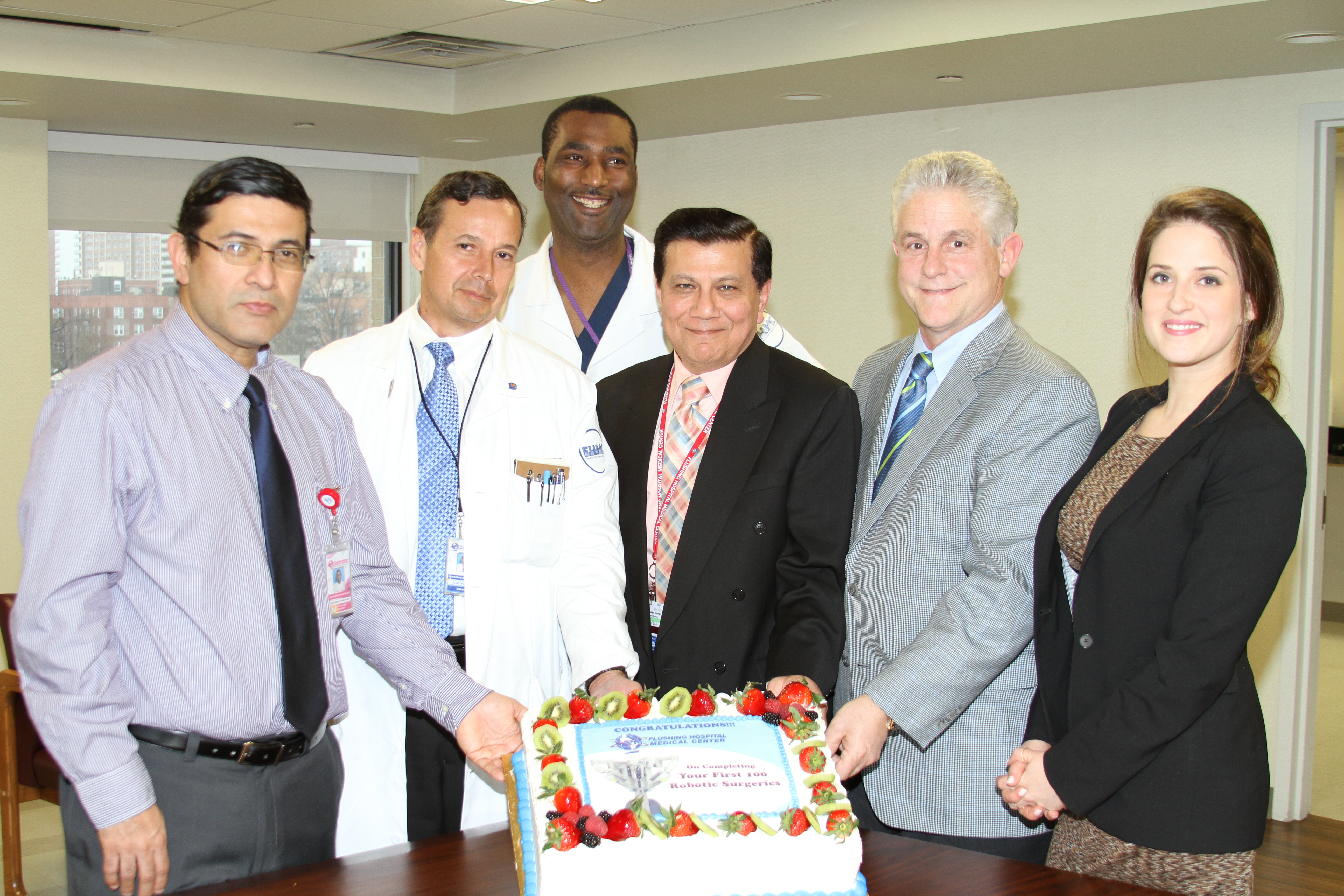
Flushing Hospital Medical Center Celebrates 100th Robotic Surgery

Pictured from L to R: Dr Alejandro Alcaide , Dr  Roberto Cantu Jr. , Nixon Medrick, Dr Sanjeev Rajpal, Dr Frederick Gulmi, Danielle Kronfeld

Pictured from L to R: Dr Alejandro Alcaide , Dr Roberto Cantu Jr. , Nixon Medrick, Dr Sanjeev Rajpal, Dr Frederick Gulmi, Danielle Kronfeld

Flushing Hospital Medical Center celebrates 100 successful robotic surgery cases since adding the da Vinci robot to its team in October 2014. Since its inception surgeons have used robotic technology in a wide variety of procedures with great success. Surgery performed with the assistance of the da Vinci surgical system can offer several benefits to patients such as shorter hospital stays, minimal scarring and less pain.

All content of this newsletter is intended for general information purposes only and is not intended or implied to be a substitute for professional medical advice, diagnosis or treatment. Please consult a medical professional before adopting any of the suggestions on this page. You must never disregard professional medical advice or delay seeking medical treatment based upon any content of this newsletter. PROMPTLY CONSULT YOUR PHYSICIAN OR CALL 911 IF YOU BELIEVE YOU HAVE A MEDICAL EMERGENCY.