What Should I Do If I’m Outside During a Lightning Storm?

It’s summer time, the most likely time of year for surprise thunderstorms.  All thunderstorms are dangerous and every thunderstorm produces lightning.  Most lightning deaths and injuries occur when people are caught outdoors in the summer months during the afternoon and evening. Did you know that even if a storm is as much as 10 miles away, lightning can still strike in your area?  On average in the U.S., lightning kills 51 people and injures hundreds more. Although most survive, people struck by lightning often report a variety of long-term, debilitating symptoms.

ThinkstockPhotos-469850273According to the National Weather Service, if you’re outside while thunderstorms and lightning are occurring in your area, you should:

.  Get inside a home, building, or hard top automobile (not a convertible). Although you may be injured if lightning strikes your car, you are much safer inside a vehicle than outside. Avoid isolated sheds or other small structures in open areas.

.  Avoid natural lightning rods such as a tall, isolated tree in an open area.  Seek shelter in a low area under a thick growth of small trees.

.  Avoid hilltops, open fields, the beach or a boat on the water.

.  If you’re in a boat, get off the water.   Get to land and find shelter immediately.

.  Avoid contact with anything metal like motorcycles, golf carts, golf clubs, and bicycles.

.  Do not lie on concrete floors and do not lean against concrete walls.

.  If you are driving, try to safely exit the roadway and park. Stay in the vehicle and turn on the emergency flashers until the heavy rain ends. Avoid touching metal or other surfaces that conduct electricity in and outside the vehicle. The steel frame of a hard-topped vehicle provides increased protection if you are not touching metal.

Remember, rubber-soled shoes and rubber tires provide NO protection from lightning.


All content of this newsletter is intended for general information purposes only and is not intended or implied to be a substitute for professional medical advice, diagnosis or treatment. Please consult a medical professional before adopting any of the suggestions on this page. You must never disregard professional medical advice or delay seeking medical treatment based upon any content of this newsletter. PROMPTLY CONSULT YOUR PHYSICIAN OR CALL 911 IF YOU BELIEVE YOU HAVE A MEDICAL EMERGENCY.

World Sickle Cell Day is June 19: What is Sickle Cell Disease?

Sickle cell disease is one of the most serious, and common, inherited blood disorders.  It occurs when a child inherits two sickle cell genes—one from each parent. It is mostly found in people of African, Hispanic, Mediterranean and Middle Eastern descent and affects about 100,000 Americans. It is diagnosed with a simple blood test, most often at birth during routine newborn screening tests in the hospital, but it can also be diagnosed before birth through genetic testing.

The syndrome causes normal, oval-shaped red blood cells to lose oxygen and collapse into sickle shapes. These cells can get stuck in veins, causing pain, anemia, fatigue, respiratory distress, infection, stroke and eventually organ failure and early death is possible.

People with sickle cell start to have signs of the disease during the first year of life, usually around five months of age. Symptoms and complications are different for each person and can range from mild to severe. Treatment options are also different for each person depending on the symptoms, but with early diagnosis the condition can be managed with less pain and increased life expectancy.

World Sickle Cell Day is June 19.

All content of this newsletter is intended for general information purposes only and is not intended or implied to be a substitute for professional medical advice, diagnosis or treatment. Please consult a medical professional before adopting any of the suggestions on this page. You must never disregard professional medical advice or delay seeking medical treatment based upon any content of this newsletter. PROMPTLY CONSULT YOUR PHYSICIAN OR CALL 911 IF YOU BELIEVE YOU HAVE A MEDICAL EMERGENCY.
Stress and Heart Disease: What’s the Connection?

Everyone has some degree of stress in their lives. Health concerns, family and relationship issues, financial problems can all cause stress which can ultimately affect one’s health.

Stress has been shown to raise the levels of certain hormones such as adrenaline and cortisol. Stress can affect the way blood clots and that can increase the risk of a heart attack.

Stress can:

  • Cause ulcers
  • Exacerbate asthma
  • Lead to digestive problems
  • Cause problems sleeping
  • Elevate blood pressure
  • Lead to coronary artery disease

Stress can lead to unhealthy behaviors such as overeating, smoking and alcohol consumption. These activities are considered coping mechanisms that can lead to additional health problems. It is very important to identify the sources of stress and learn to manage them. Some tips to manage stress include:

  • Learning to cope
  • Having a positive approach to situations
  • Starting an exercise regime
  • Eating healthy
  • Getting proper rest

If these don’t work, you can speak with a medical professional who can prescribe medication. The important thing to remember is that by reducing stress you will also be lowering the likelihood of developing long term health issues.

All content of this newsletter is intended for general information purposes only and is not intended or implied to be a substitute for professional medical advice, diagnosis or treatment. Please consult a medical professional before adopting any of the suggestions on this page. You must never disregard professional medical advice or delay seeking medical treatment based upon any content of this newsletter. PROMPTLY CONSULT YOUR PHYSICIAN OR CALL 911 IF YOU BELIEVE YOU HAVE A MEDICAL EMERGENCY.
Skin Changes During Pregnancy: What to Expect

470822057 pregnant womanDuring pregnancy, a woman’s body undergoes a complete transformation. Many of these changes are due to hormonal shifts and altered blood flow. Women may experience several changes in their skin.

Often, changes in pigmentation are among the most pronounced skin changes during pregnancy. Dark patches may begin to appear on a woman’s face, particularly along the cheekbone, forehead, nose, chin, and upper lip. This is known a chloasma, or the mask of pregnancy. This occurs because estrogen and other hormones stimulate glands that produce more pigment, but since the pigment is not produced evenly, it results in a blotchy look. While chloasma is not preventable, the effects can be minimized by avoiding exposure to the sun or using sunblock.

Many women also develop acne during pregnancy. This is due to hormonal changes, but is usually not as severe as during adolescence. To combat pimples, simply wash your face with a mild, oil-free cleanser multiple times a day. Avoid abrasive scrubs and exfoliants because your skin during pregnancy is often more sensitive. Check with your physician before using ante-acne prescription medications.

Other skin conditions that women experience during pregnancy include stretch marks, heat rash, spider veins, and the development of a reddish hue to the palms of your hands and soles of your feet, known as palmer erythema.

Regardless of the issue, skin conditions during pregnancy will improve or resolve within weeks or months after your baby is born.

To minimize adverse skin conditions during pregnancy, try following the “pregnancy diet”, a diet that offers women just the right balance of nutrients during pregnancy. Other suggestions include drinking plenty of water and only using “noncomedogenic” and unscented makeup and skin care products. A supplement of B6 might also be helpful for someone with severe skin issues.

For more information about changes to your skin during pregnancy, speak to your obstetrician. If you do not have one, you can make an appointment at Flushing Hospital Medical Center’s Ambulatory Care Center by calling 718-670-5486.


All content of this newsletter is intended for general information purposes only and is not intended or implied to be a substitute for professional medical advice, diagnosis or treatment. Please consult a medical professional before adopting any of the suggestions on this page. You must never disregard professional medical advice or delay seeking medical treatment based upon any content of this newsletter. PROMPTLY CONSULT YOUR PHYSICIAN OR CALL 911 IF YOU BELIEVE YOU HAVE A MEDICAL EMERGENCY.

Living With a Hernia

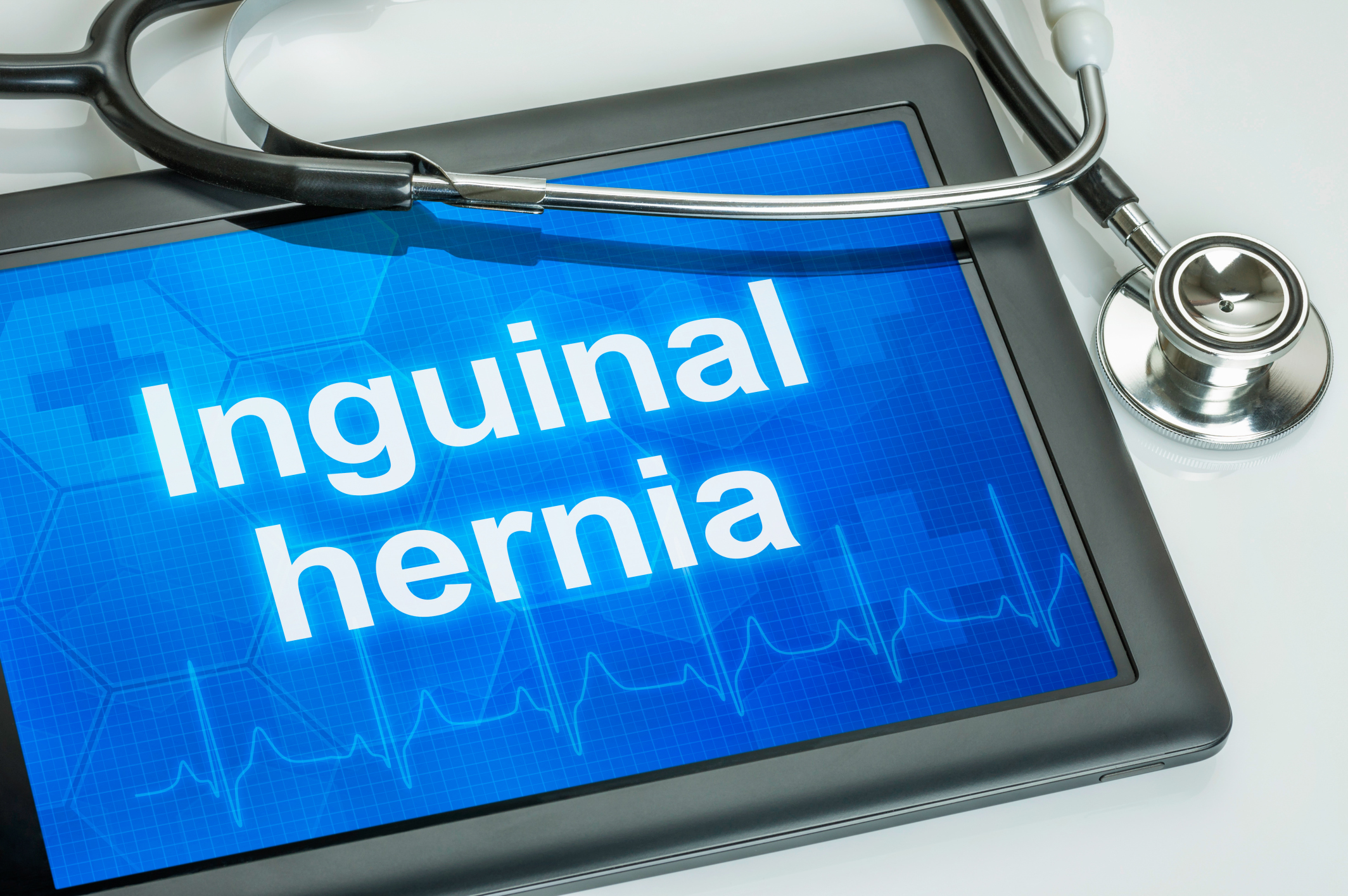
Unless you’ve suffered from one, most people only know about hernias from the Weird Al Yankovic song (“Living With A Hernia”).  Hernias are caused by pressure on an opening or weakness in the wall of muscle or connective tissue of the groin, belly button or upper stomach that allows a hernia sac (like a balloon) to protrude.  An increase in abdominal pressure pushes the hernia sac and its contents (organ or tissue) through the opening or weak spot.  The muscle weakness may be present at birth or develop at any age.  The most common types of hernia are:

ThinkstockPhotos-473611872. Inguinal (inner groin) –   fat, intestines, colon or bladder may protrude through the abdominal wall. About 96% of all groin hernias are inguinal, and most occur in men because of a natural weakness in this area.

. Incisional (resulting from an incision) —  intra-abdominal organs push  through the abdominal wall at the site of previous abdominal surgery. This type is most common in elderly or overweight people who are inactive after abdominal surgery.

. Femoral (outer groin) — occurs when the intestine enters the canal carrying the femoral vessels into the upper thigh. Femoral hernias are most common in women, especially those who are pregnant or obese.

. Umbilical (belly button) — part of the small intestine passes through the abdominal wall at or near the navel. Common in newborns, it also commonly afflicts obese women or those who have had many children.

. Hiatal (upper stomach) — when the upper stomach squeezes through the hiatus, an opening in the diaphragm through which the esophagus passes. These hernias cannot be seen or felt from the outside and majority do not require surgery

Anything that causes an increase in pressure in the abdomen can cause a hernia, including lifting heavy objects without proper support and coughing or sneezing.  Obesity, poor nutrition, smoking and prior abdominal surgery, can all weaken muscles and make hernias more likely.

Surgery to repair a hernia is one of the most commonly performed surgeries. Flushing Hospital Medical Center offers minimally invasive robotic procedures using the da Vinci robotic system. Hernia surgery performed using the robot allows for faster healing time, less scarring and shorter hospital stays.

If you are experiencing hernia discomfort and would like to make an appointment with a urologist, please contact the Ambulatory Care Center at 718-670-5486.

All content of this newsletter is intended for general information purposes only and is not intended or implied to be a substitute for professional medical advice, diagnosis or treatment. Please consult a medical professional before adopting any of the suggestions on this page. You must never disregard professional medical advice or delay seeking medical treatment based upon any content of this newsletter. PROMPTLY CONSULT YOUR PHYSICIAN OR CALL 911 IF YOU BELIEVE YOU HAVE A MEDICAL EMERGENCY.
The Eyes Have It: What are Cataracts?

A cataract is defined as the clouding of the lens of the eye. The lens of the eye is made up of water and protein. When the lens is healthy, the proteins are arranged in a very precise pattern allowing light to pass through to the retina in a clear manner. As we age, these proteins may begin to clump together and cause the lens to become cloudy which leads to blurry and dim vision. They are commonly found in people as they get older, and can start when people are in their forties but become noticeable after the age of sixty.  Besides aging other factors that can contribute to cataract formation are diabetes, smoking and alcohol abuse.

Some of the symptoms of cataracts include:
• Cloudy or blurred vision
• Colors that appear faded
• Glare from headlights, lamps
• Diminished night vision

Cataract-Surgery-300x200Cataracts can be corrected by performing surgery to replace the lens of the eye with an artificial lens. There are two types of procedures that can be performed:

  • Phacoemulsification – a procedure where a small incision is made to the side of the cornea. The lens is broken up by ultrasound and removed by suction.
  • Extracapsular surgery – a procedure where a bigger incision is made in the side of the cornea and the lens is removed in one piece.

After both types of surgery a new plastic lens is inserted and allowed to heal. Most people see immediate improvement in their vision. Cataract surgery is one of the most commonly performed procedures done today. Ninety percent of patients who undergo this procedure have their vision restored completely.

Flushing Hospital Medical Center offers a full range of comprehensive medical, diagnostic, and surgical services from annual eye examinations to surgical procedures. For more information or to schedule an appointment with an ophthalmologist, please call Flushing Hospital Medical Center’s Ambulatory Care Center at 718-670-5486 or All City Eye Care Center at 718-380-5070.

All content of this newsletter is intended for general information purposes only and is not intended or implied to be a substitute for professional medical advice, diagnosis or treatment. Please consult a medical professional before adopting any of the suggestions on this page. You must never disregard professional medical advice or delay seeking medical treatment based upon any content of this newsletter. PROMPTLY CONSULT YOUR PHYSICIAN OR CALL 911 IF YOU BELIEVE YOU HAVE A MEDICAL EMERGENCY.

Avoiding Mastitis While Breastfeeding

147638088-210x301Breastfeeding can be a wonderful bonding experience for mother and baby. It can also pose a few obstacles including mastitis. Mastitis is an infection caused by a clogged duct in the nipple of a nursing mother.  Here is some information about mastitis and some helpful tips on how to prevent it.

Mastitis won’t hurt your baby but it can reduce the milk supply in the affected breast.It can happen to occur when bacteria enters the breast through a cracked or sore nipple. It can start as a painful area in one breast and may be red or warm to the touch or both and can be accompanied by fever, chills, and body aches.

Try to avoid mastitis by following a few of these helpful tips:

  • Get plenty of rest and eat a healthy, balanced diet while you are nursing.
  • Try your best to avoid letting your breasts become overly full or engorged.
  • If your breasts are not empty after nursing or pumping, or you have a plugged duct, use warm compresses and massage to get the milk out.
  • Avoid under-wire bras and bras that are too small.

If you are beginning to feel the symptoms of mastitis, continue to breast feed as you normally would but make sure to see your doctor. Applying warm compresses for several minutes before each feeding will help alleviate any pain. Antibiotics may be prescribed, but pain should subside within one to two days after taking you prescriptions.

If you have questions or concerns about breastfeeding, Flushing Hospital Medical Center offers a Breastfeeding Support Group where you can get advice and tips from a certified lactation specialist and meet and share experiences with other mothers that are breastfeeding.

For additional information, please call 718-670-5201.

All content of this newsletter is intended for general information purposes only and is not intended or implied to be a substitute for professional medical advice, diagnosis or treatment. Please consult a medical professional before adopting any of the suggestions on this page. You must never disregard professional medical advice or delay seeking medical treatment based upon any content of this newsletter. PROMPTLY CONSULT YOUR PHYSICIAN OR CALL 911 IF YOU BELIEVE YOU HAVE A MEDICAL EMERGENCY.

Healthy Father’s Day Recipe: Turkey Burger w/Roasted Eggplant

oh-turkey-burgers-roasted-eggplant-x

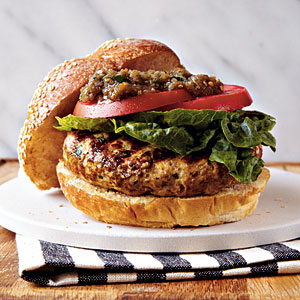
This Father’s Day, give dad a break on the grill and make him a turkey burger with roasted eggplant. The eggplant adds a great meaty flavor while still cutting down on fat and calories. Recipe courtesy of Cooking Light.

INGREDIENTS
1 (8-ounce) eggplant
Cooking spray
2 tablespoons finely chopped fresh parsley, divided
4 teaspoons olive oil, divided
1 teaspoon fresh lemon juice
1 garlic clove, minced
3/4 teaspoon kosher salt, divided
1/2 teaspoon freshly ground black pepper, divided
1 pound turkey tenderloins, cut into 1-inch pieces
1 teaspoon less-sodium soy sauce
1/4 teaspoon Marmite
4 (1 1/2-ounce) hamburger buns, toasted
4 Bibb lettuce leaves
8 (1/4-inch-thick) tomato slices

1. Preheat oven to 400°.

2. Lightly coat eggplant with cooking spray; wrap eggplant in foil. Place eggplant on a jelly-roll pan; bake at 400° for 45 minutes or until very tender, turning once. Remove from foil; cool slightly. Cut eggplant in half. Carefully scoop out pulp to measure 1 1/4 cups; discard skin. Place pulp in a food processor; process until smooth. Reserve 1/4 cup pureed pulp. Combine remaining pulp, 1 tablespoon parsley, 2 teaspoons oil, juice, and garlic. Stir in 1/2 teaspoon salt and 1/4 teaspoon pepper; set aside.

3. To prepare grinder, place feed shaft, blade, and 1/4-inch die plate in freezer 30 minutes or until well chilled. Assemble the grinder just before grinding.

4. Arrange turkey pieces in a single layer on jelly-roll pan, leaving space between each piece. Freeze 15 minutes or until meat is firm but not frozen. Combine meat and remaining 2 teaspoons oil in large bowl; toss to combine. Pass meat through meat grinder completely. Immediately pass meat through grinder a second time. Combine reserved 1/4 cup eggplant puree, turkey, remaining 1 tablespoon parsley, soy sauce, and Marmite in a large bowl. Divide mixture into 4 equal portions, gently shaping each into a 1/2-inch-thick patty. Press a nickel-sized indentation in the center of each patty. Cover and chill until ready to grill.

5. Preheat grill to medium-high heat.

6. Lightly coat patties with cooking spray; sprinkle with remaining 1/4 teaspoon salt and remaining 1/4 teaspoon pepper. Place patties on grill rack, and grill 4 minutes until well marked. Carefully turn patties over, and grill 3 minutes or until done. Place 1 patty on bottom half of each bun; top each serving with 1 tablespoon eggplant mixture, 1 lettuce leaf, 1 tomato slice, and top half of bun. (Reserve remaining eggplant mixture for another use.)


All content of this newsletter is intended for general information purposes only and is not intended or implied to be a substitute for professional medical advice, diagnosis or treatment. Please consult a medical professional before adopting any of the suggestions on this page. You must never disregard professional medical advice or delay seeking medical treatment based upon any content of this newsletter. PROMPTLY CONSULT YOUR PHYSICIAN OR CALL 911 IF YOU BELIEVE YOU HAVE A MEDICAL EMERGENCY.

Poll Question: What is the right way to brush your teeth?

ThinkstockPhotos-83406284

What is the right way to brush your teeth?

A.  From side to side

B.  Up and down

C.  In small circles

If you answered A, you’re right! According to the American Dental Association you should:

  • Place your toothbrush at a 45-degree angle to the gums.
  • Gently move the brush from side to side in short (tooth-wide) strokes.
  • Brush the outer surfaces, the inner surfaces, and the chewing surfaces of the teeth.
  • To clean the inside surfaces of the front teeth, tilt the brush vertically and make several up-and-down strokes.
  • Brush your tongue to remove bacteria and keep your breath fresh.

The ADA also recommends brushing your teeth twice a day with a soft-bristled brush. The size and shape of your brush should fit your mouth allowing you to reach all areas easily. You should replace your toothbrush every three or four months, or sooner if the bristles are frayed.

To make an appointment with a dentist at Flushing Hospital Medical Center, please call our Dental Department at 718-670-5521.

All content of this newsletter is intended for general information purposes only and is not intended or implied to be a substitute for professional medical advice, diagnosis or treatment. Please consult a medical professional before adopting any of the suggestions on this page. You must never disregard professional medical advice or delay seeking medical treatment based upon any content of this newsletter. PROMPTLY CONSULT YOUR PHYSICIAN OR CALL 911 IF YOU BELIEVE YOU HAVE A MEDICAL EMERGENCY.

Try a Summer Mocktail! Strawberry-Kiwi Sangria

Nothing says summer more than fancy, fruity drinks, and nothing is more festive than a Strawberry-Kiwi Sangria mocktail! Recipe courtesy of Epicurious.

Peddlers-Village-Strawberry-Festival

STRAWBERRY-KIWI SANGRIA WITH ROSÉ GERANIUM

YIELD: Serves 12

INGREDIENTS

  • 8 cups water
  • 8 wild-berry tea bags
  • 2 cups sugar
  • 4 1-pint baskets strawberries, hulled
  • 2 25.4-ounce (750-ml) bottles chilled sparkling apple cider
  • 6 kiwis, peeled, cut into 1/2-inch cubes
  • 16 fresh rose geranium leaves, crushed slightly, or 3/4 teaspoon rose water*
  • 4 cups ice cubes
 

PREPARATION

Bring 4 cups water to boil in large saucepan. Add tea bags; cover and let steep 10 minutes. Discard tea bags. Add sugar to hot tea; stir until dissolved. Stir in remaining 4 cups water. Chill tea until cold, about 3 hours. (Can be made 1 day ahead. Cover; keep chilled.)

Puree 2 baskets strawberries in processor. Slice remaining 2 baskets strawberries. Place pureed and sliced berries in large pitcher (or divide between 2 pitchers). Add tea and all remaining ingredients. Stir and serve.

*Rose water is available at Middle Eastern markets and specialty foods stores.

market tip:Unless you already grow them, you’ll most likely have to visit a nursery to find rose geraniums. They make great potted plants and, of course, smell wonderful, too. The aromatic, rose-scented leaves are used to infuse their flavor in sorbets, ices, and beverages.

All content of this newsletter is intended for general information purposes only and is not intended or implied to be a substitute for professional medical advice, diagnosis or treatment. Please consult a medical professional before adopting any of the suggestions on this page. You must never disregard professional medical advice or delay seeking medical treatment based upon any content of this newsletter. PROMPTLY CONSULT YOUR PHYSICIAN OR CALL 911 IF YOU BELIEVE YOU HAVE A MEDICAL EMERGENCY.