#WELLNESSWEDNESDAY

With all the running around we do and the stress we deal with each and every day, try to take a moment to center your mind and bring wellness to your entire being.  Try reciting these and other positive affirmations to help start your day in a positive way.

All content of this newsletter is intended for general information purposes only and is not intended or implied to be a substitute for professional medical advice, diagnosis or treatment. Please consult a medical professional before adopting any of the suggestions on this page. You must never disregard professional medical advice or delay seeking medical treatment based upon any content of this newsletter. PROMPTLY CONSULT YOUR PHYSICIAN OR CALL 911 IF YOU BELIEVE YOU HAVE A MEDICAL EMERGENCY.

Holidays Should Bring Lots of Presents Not Pounds

The holidays are full of cheer, family gatherings and lots of calories!

Here are some tips on how to maintain your weight during the holiday food fest:

  • Stay Active – Although the weather may not be conducive to outdoor physical activity, you can try some simple indoor activities such as workout videos, stationary bikes and treadmill.
  • Healthy Snacking – Treats are easily accessible during the holiday season. Be mindful to stay away from snacks that are high in sugar and unhealthy fats.  Stick to the veggie and fruit platters.
  • Portion Control – The best way to overcome obesity and maintain a healthy weight is through portion control. Check the serving sizes for the foods you are choosing to eat and try to remain within the guidelines of the recommended portion.
  • Don’t Stress Eat – Try to remain mindful of your stress level during the holiday season. Use exercise, meditation, yoga or deep breathing to reduce stress.
  • Bring a Healthy Dish – By bringing your own healthy meal to share, you are guaranteed to be in control of your choices.
  • Limit Alcohol Consumption– Everyone loves a libation during the holiday season, but keep in mind that alcohol contains lots of calories and can cause you to gain weight.

Addition tips include cooking and baking holiday favorites with less calorie rich ingredients, such as substituting sugar and butter with more healthy options like Greek yogurt, pumpkin puree, olive oil, mashed bananas or avocado.

Hopefully, these tips will give you all the holiday cheer with none of the holiday guilt!

Happy Holidays!

All content of this newsletter is intended for general information purposes only and is not intended or implied to be a substitute for professional medical advice, diagnosis or treatment. Please consult a medical professional before adopting any of the suggestions on this page. You must never disregard professional medical advice or delay seeking medical treatment based upon any content of this newsletter. PROMPTLY CONSULT YOUR PHYSICIAN OR CALL 911 IF YOU BELIEVE YOU HAVE A MEDICAL EMERGENCY.

Osteoarthritis

Osteoarthritis is the most common form of arthritis, currently affecting  over 32 million Americans. This form of arthritis is known as the “wear and tear” disease because while it can affect almost any joint, it most commonly affects the joints in the knees, hips, hands, and spine that are subject to the most amount of movement. Women tend to be affected by osteoarthritis more often than men.

Osteoarthritis occurs when the cartilage, which is the slippery tissue which cushions your bones when they rub against one another deteriorates over time due to weight, stress, injuries or genetic factors. When this happens, people with osteoarthritis will experience a variety of issues including::

  • Joint pain
  • Joint Deformity
  • Decrease in joint mobility
  • Swelling of a joint
  • Joint crackling

Diagnosing osteoarthritis can be performed by taking an x-ray, a magnetic resonance image (MRI), and physical manipulation of the joint. Examining the joint fluid can help differentiate osteoarthritis from other types of arthritis.

Osteoarthritis may not be able to be completely avoided but there are ways to slow down its progress and to treat it. Measures to minimize osteoarthritis include:

  • Keeping active
  • Maintaining a proper weight
  • Participating in physical therapy
  • Taking medications to reduce symptoms such as acetaminophen and non-steroidal anti-inflammatory drugs (NSAIDS)
  • Applying transcutaneous electrical nerve stimulation (TENS)
  • Receiving cortisone injections into the joint
  • Receiving injections of hyaluronic acid
  • Having Joint replacement procedures

If you are experiencing symptoms of osteoarthritis, speak with your physician to discuss what treatment option is best for you. If  you would like to schedule an appointment with a physician at Flushing Hospital Medical Center, please call 718-670-5486.

All content of this newsletter is intended for general information purposes only and is not intended or implied to be a substitute for professional medical advice, diagnosis or treatment. Please consult a medical professional before adopting any of the suggestions on this page. You must never disregard professional medical advice or delay seeking medical treatment based upon any content of this newsletter. PROMPTLY CONSULT YOUR PHYSICIAN OR CALL 911 IF YOU BELIEVE YOU HAVE A MEDICAL EMERGENCY.

Psoriasis or Dandruff?

Psoriasis and dandruff are both skin conditions that can affect the scalp and result in similar symptoms such as itchiness, redness, or flakes.

While there are similarities in dandruff and psoriasis, there are also significant differences between the two.

Dandruff (a mild form of seborrheic dermatitis) is only restricted to the scalp. It can be caused by dry, irritated, or oily skin, sensitivity to hair products, skin conditions such as eczema, or Malassezia which is a type of yeast.

Dandruff is not long-lasting, and symptoms tend to go away with treatment. This condition is often treated by using over-the-counter medicated shampoos, antifungal solutions, or a topical corticosteroid.

Psoriasis is a chronic (long-lasting), auto-immune disease. It can affect multiple parts of our bodies including the scalp.  Unlike dandruff, scalp psoriasis can spread from the scalp to the face, neck, inside, and behind the ears.

Psoriasis develops when the immune system instructs skin cells to regenerate much quicker than normal. This results in the formation of scales and red patches. In addition to redness, itchiness, or flakes, symptoms of scalp psoriasis can include silvery-white scales, burning sensation, or soreness, all of which can lead to temporary hair loss. These symptoms come and go.

Mild cases of scalp psoriasis can be treated with over-the-counter ointments, medicated shampoos, gels, or oils that contain salicylic acid or coal tar. However, more severe cases often require prescription treatments such as topical steroids, antimicrobials, or biologics.  There is no cure for psoriasis, but it can be managed with the help of a dermatologist.

If you are experiencing symptoms of dandruff or psoriasis and over-the-counter treatments are not working, it is recommended that you see a doctor. You should also see a physician if you have noticed any changes in your skin.

To schedule an appointment with a doctor at Flushing Hospital Medical Center, please call 718-670-5486.

All content of this newsletter is intended for general information purposes only and is not intended or implied to be a substitute for professional medical advice, diagnosis or treatment. Please consult a medical professional before adopting any of the suggestions on this page. You must never disregard professional medical advice or delay seeking medical treatment based upon any content of this newsletter. PROMPTLY CONSULT YOUR PHYSICIAN OR CALL 911 IF YOU BELIEVE YOU HAVE A MEDICAL EMERGENCY.
November is National Hospice and Palliative Care Month

November is National Hospice and Palliative Care Month.  Jamaica Hospital Medical Center (JHMC) is joining with the National Hospice and Palliative Care Organization (NHPCO), to promote raising awareness about hospice and Palliative Care.

National Hospice and Palliative Care Month bring focus on how hospice and palliative care can offer a person-centered approach to treatment that includes expert medical care, comprehensive pain management, and emotional and spiritual support.

When you are faced with the decision of choosing whether palliative care or hospice care better suits the needs of you, or your loved ones; it is best to know the definition and relationship between the two before deciding.

Palliative care focuses on relieving symptoms that are related to a chronic illness, such as cancer, cardiac disease, respiratory disease, kidney failure, Alzheimer’s and other dementias, AIDS, Amyotrophic Lateral Sclerosis (ALS), and other neurological diseases. Palliative care can be used at any stage of illness –not just in advanced stages.

Hospice care is palliative by nature but is only offered when the patient has progressed to a point where curative treatment is no longer desired. Hospice care supports the patient, and their families, on the journey to the end of life focusing on relieving symptoms and offering comfort from pain, shortness of breath, fatigue, nausea, anxiety and insomnia.

Although there are differences between palliative care and hospice care, there is a relationship between the two. Knowing the treatment differences and similarities may be helpful when making your decision, including:

  • Treatments are not limited to palliative care and can range from conservative to aggressive or curative.
  • Hospice care treatments are limited and focus on the palliation of symptoms. The goal is no longer to cure but to promote comfort.
  • Palliative care can be considered at any time during the course of a chronic illness.
  • With hospice care, Medicare requires that a physician certify that a patient’s condition is terminal. The physician must certify that a patient’s life expectancy is six months or less.
  • Both palliative and hospice care can be delivered at any location.
  • Palliative care services are typically provided through regular physician and nursing visits.
  • Hospice care services are more inclusive than palliative care services. Hospice care includes physician services, nursing services, social workers, spiritual care, bereavement care and volunteers. In some cases, physical, occupational, speech and dietary therapy services, as well as other counseling services are deemed necessary as part of the hospice holistic care plan to manage terminal symptoms and provide support for the individual and their family.

It is important to know that choosing palliative care or hospice care is about comfort, control, dignity, and quality of life and not about giving up. If you or a loved one should need information on palliative or hospice care, the Maureen Russo Hospice Unit at Flushing Hospital Medical Center can help. To schedule an appointment for an evaluation, or to just talk, call 718-670-8900.

All content of this newsletter is intended for general information purposes only and is not intended or implied to be a substitute for professional medical advice, diagnosis or treatment. Please consult a medical professional before adopting any of the suggestions on this page. You must never disregard professional medical advice or delay seeking medical treatment based upon any content of this newsletter. PROMPTLY CONSULT YOUR PHYSICIAN OR CALL 911 IF YOU BELIEVE YOU HAVE A MEDICAL EMERGENCY.

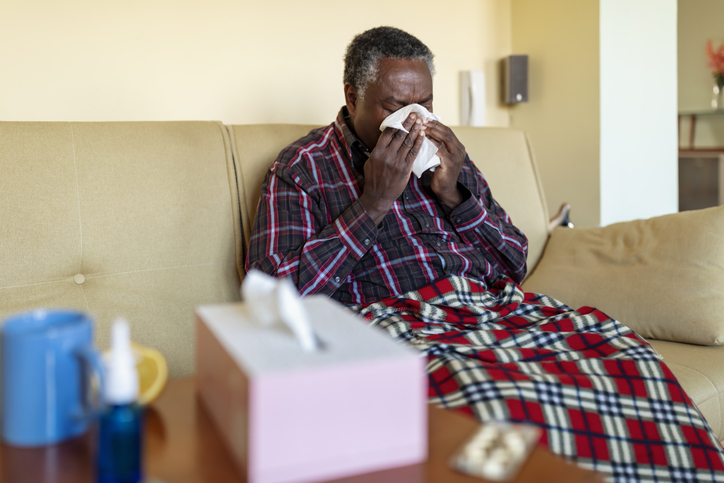
Home Remedies for a Cold and the Flu

.

There is no known cure for the common cold or the flu, both of which are caused by viruses. Anyone who has ever experienced having a cold or the flu has at some time or another tried a home remedy to help alleviate the symptoms. While some home remedies are natural, they may cause adverse reactions if you are taking certain medications or have allergies. Therefore, you should consult with a physician before taking anything.

Age-old home remedies have been passed on for generations. Even in a modern, technologically advanced and scientific world, these timeless, home-made remedies have remained and become common practice to this day.

Some commonly used home remedies that people have found helpful are:

  • Eating chicken soup
  • Drinking herbal tea
  • Sipping boiled ginger root
  • Drinking tea with honey
  • Adding garlic to food
  • Eating fruits and vegetables that contain vitamin C
  • Using a humidifier
  • Applying a warm compress on the nose and forehead
  • Gargling with salt water
  • Using a neti  pot
  • Practicing nasal irrigation with warm saline

Under most circumstances, the symptoms of a cold or the flu will subside on their own after a few days. If you have concerns, see your physician right away. You may schedule an appointment with a physician at Flushing Hospital Medical Center by calling 718-670-5486.

All content of this newsletter is intended for general information purposes only and is not intended or implied to be a substitute for professional medical advice, diagnosis or treatment. Please consult a medical professional before adopting any of the suggestions on this page. You must never disregard professional medical advice or delay seeking medical treatment based upon any content of this newsletter. PROMPTLY CONSULT YOUR PHYSICIAN OR CALL 911 IF YOU BELIEVE YOU HAVE A MEDICAL EMERGENCY.

November is Lung Cancer Awareness Month

November is recognized as Lung Cancer Awareness Month. The importance of this designation is to bring awareness to the fact that lung cancer is responsible for approximately 25 percent of all cancer deaths. Lung cancer takes more lives each year than colon, breast, and prostate cancers combined.

Lung cancer is a form of cancer that starts in the lungs. There are several types of lung cancer based on their appearance under the microscope. These include small cell cancer and non-small cell cancer, which  is a group of cancers that includes squamous cell carcinoma, adenocarcinoma, and large cell carcinoma.

In the early stages of lung cancer there may not be any signs or symptoms. However, as the disease progresses the following signs and symptoms my present:

• Coughing up blood
• Shortness of breath
• Chest pain
• Wheezing
• Hoarseness
• Weight loss that isn’t intentional

A history of smoking definitely contributes to a higher risk of being diagnosed with the disease, though non-smokers also can develop lung cancer. It is now recommended that certain patients who are over 55 years of age and have smoked for many years consider screening for lung cancer by doing a  low dose CT scan of the lungs. This may detect cancers at an early stage where they may be more curable. It is important to have a conversation with your physician prior to performing a screening CT scan so that the patient understands the pros and cons of screening.

Testing that can help diagnose cancer includes chest  x-rays, CT scans,  PET scans, examination of the sputum, bronchoscopy ( a test in which a fiber optic  scope is passed into the lungs), and lung biopsies (which can be done by a needle although sometimes a surgical procedure is required). Not all tests will be required for every patient.

Once the diagnosis is established it is important to determine what stage the cancer is. Factors that go into staging cancer include the size of the tumor, location and whether it has spread to the lymph nodes in the chest or to other parts of the body such as the brain, liver, bone or adrenal glands.

To schedule an appointment with a pulmonologist at Flushing Hospital Medical Center, please call 718-670-5486.

All content of this newsletter is intended for general information purposes only and is not intended or implied to be a substitute for professional medical advice, diagnosis or treatment. Please consult a medical professional before adopting any of the suggestions on this page. You must never disregard professional medical advice or delay seeking medical treatment based upon any content of this newsletter. PROMPTLY CONSULT YOUR PHYSICIAN OR CALL 911 IF YOU BELIEVE YOU HAVE A MEDICAL EMERGENCY.

Coping With The Five Stages Of Grief

Most people will experience some form of grief during their lifetime. It may be due to the death of a loved one, the loss of a pet, the loss of your home, the end of a relationship or the loss of a job.

It is important to keep in mind that everyone grieves differently. Some people grieve very intensely and some not at all. Most people fit into a category that lays between these two extremes. There is no timeline for how long a person will grieve for.

Elizabeth Kubler-Ross a Swiss American psychiatrist devised a model based on her theory that there are five stages of grief. This was published in her book “On Death and Dying” in 1969.

There is no specific order to the five stages of grief, and not everyone will experience these five stages which are:

  • Denial
  • Anger
  • Bargaining
  • Depression
  • Acceptance

One of the first steps to coping with grief is to acknowledge that it exists. Talking with others and sharing with them your feelings will help you to cope. You can speak to people you’re comfortable expressing yourself to. You can also rely on clergy, grief support groups, and trained professionals who can listen and support you. Many religions also have rituals that can assist with the mourning process after the loss of a loved one.

Some suggestions for coping with grief are:

  • Take your time to grieve as you need to
  • Talk to people who are supportive
  • Don’t judge your grieving process based on how others have handled their situations
  • Avoid alcohol and other substances that can alter your responses
  • Seek professional help if you feel you need it
  • Allow yourself to cry
  • Take care of your body by exercising and eating properly

If you would like to speak to a professional grief counselor at Flushing Hospital Medical Center, you can call 718-670-5562.

All content of this newsletter is intended for general information purposes only and is not intended or implied to be a substitute for professional medical advice, diagnosis or treatment. Please consult a medical professional before adopting any of the suggestions on this page. You must never disregard professional medical advice or delay seeking medical treatment based upon any content of this newsletter. PROMPTLY CONSULT YOUR PHYSICIAN OR CALL 911 IF YOU BELIEVE YOU HAVE A MEDICAL EMERGENCY.

Calcium Rich Dairy Free Foods

Calcium is the most abundant mineral found in our bodies. It is found in our teeth and bones and is also essential for the proper functioning of our heart, nervous system and muscles.

The daily recommended intake of calcium for adults is 1000mg. Most of this can be obtained by eating dairy foods such as milk and cheese that are rich in calcium.

While dairy products are good sources of calcium, it is possible to obtain this very important mineral from other foods.

Good non-dairy sources of calcium include:

  • Seeds ( poppy, sesame, celery, sunflower and chia )
  • Sardines
  • Soy milk
  • Almonds
  • Peanuts
  • White beans
  • Canned salmon
  • Beans and lentils
  • Dark leafy greens ( spinach, collard greens, broccoli rabe, kale)
  • Rhubarb
  • Tofu
  • Edamame
  • Figs
  • Sweet potatoes
  • Oranges and orange juice
  • Arugula

If you are going to consume non-dairy products, it is recommended to eat two to three servings of plant based calcium per day.

It is important to speak with your physician before starting any type of diet to make sure you are doing it properly. If you would like to schedule an appointment with a physician at Flushing Hospital Medical Center, please call 718-670-5486.

All content of this newsletter is intended for general information purposes only and is not intended or implied to be a substitute for professional medical advice, diagnosis or treatment. Please consult a medical professional before adopting any of the suggestions on this page. You must never disregard professional medical advice or delay seeking medical treatment based upon any content of this newsletter. PROMPTLY CONSULT YOUR PHYSICIAN OR CALL 911 IF YOU BELIEVE YOU HAVE A MEDICAL EMERGENCY.

Trick-or-Treat Safety Tips During COVID-19

Halloween is known as a kid-favorite holiday full of spooky fun and lots of candy.  However, it can also present many opportunities for injury, as children take to the streets in pursuit of trick-or-treat goodies.

Although the restrictions regarding COVID-19 have somewhat relaxed, it is still suggested that you and your child where a mask, wash or sanitize hands regularly and  try not to be part of large crowds while trick-or-treating.

Additionally, statistics show that roughly four times as many children aged 5-14 are killed while walking on Halloween evening compared with other evenings of the year.  Also, injuries such as falls are a leading cause of injuries among children on Halloween.

Parents can help minimize the risk of children getting injured at Halloween by following these safety tips from the American Academy of Pediatrics, the Centers for Disease Control and Prevention and the National Safety Council.

On Halloween children should:

  • Go only to well-lit houses and remain on porches than entering houses.
  • Travel in small groups accompanied by an adult.
  • Use costume plastic knives and swords that are flexible, not rigid or sharp.
  • When walking through neighborhoods trick or treating, use flashlights, stay on sidewalks, and avoid crossing yards.
  • Cross at the corner, use crosswalks and do not cross between parked cars.
  • Be sure to stop at all corners and stay together in a group before crossing.
  • Wear clothing or costumes that are bright, reflective and flame retardant.
  • Consider using face paint instead of masks which can obstruct a child’s vision.
  • Avoid wearing hats that will slide over children’s eyes.
  • Avoid wearing long, baggy or loose costumes or oversized shoes to prevent tripping.
  • Be reminded to look left, right and left again before crossing a street.

On Halloween parents and adults should:

  • Supervise the trick or treat outing for children under age 12.
  • Avoid giving choking hazards such a gum, peanuts, hard candies, or small toys as treats to young children.
  • Parents and adults should ensure the safety of pedestrian trick or treaters.
  • Make sure children under age 10 are supervised as they cross the street.
  • Drive slowly.
  • Watch for children in the street and on medians.
  • Exit driveways and alleyways slowly and carefully.
  • Have children get out of cars on the curbs side, not on the traffic side.

By following these simple tips, you and your children can have a safe and fun Halloween!

All content of this newsletter is intended for general information purposes only and is not intended or implied to be a substitute for professional medical advice, diagnosis or treatment. Please consult a medical professional before adopting any of the suggestions on this page. You must never disregard professional medical advice or delay seeking medical treatment based upon any content of this newsletter. PROMPTLY CONSULT YOUR PHYSICIAN OR CALL 911 IF YOU BELIEVE YOU HAVE A MEDICAL EMERGENCY.