Food Safety Tips

Tuesday, April 7 is World Health Day. This year, the World Health Organization is asking food producers, policy-makers and the public to think about and promote food safety.

large-poster300

The Centers for Disease Control estimates that each year roughly one in six Americans (or 48 million people) get sick, 128,000 are hospitalized, and 3,000 die of foodborne diseases.  More than 200 diseases, like salmonella, listeria and e. coli, are spread through improper food handling, causing symptoms such as stomach pains, vomiting and diarrhea.

With warmer weather on the way, here are five food handling tips that will help make your meals safer:

  1. Keep clean – Wash your hands before handling food and often during food preparation. Wash your hands after using the bathroom.  Keep food preparation surfaces and equipment clean.
  2. Keep raw and cooked food separate – Store food in containers to prevent cross contamination.
  3. Cook thoroughly – Be sure to cook and reheat food thoroughly, especially meat, poultry, eggs and seafood. Use a meat thermometer to check cooking temperatures.
  4. Store food at safe temperatures – Don’t leave cooked food at room temperature for more than two hours. Refrigerate all cooked and perishable foods below 5 degrees Celsius. Don’t keep leftovers too long and always defrost food in the fridge, not on the counter.
  5. Choose foods wisely – Thoroughly wash fruits and vegetables before eating and don’t use food beyond its expiration date.

These few simple guidelines will help keep your food and kitchen cleaner, and your family healthier.

All content of this newsletter is intended for general information purposes only and is not intended or implied to be a substitute for professional medical advice, diagnosis or treatment. Please consult a medical professional before adopting any of the suggestions on this page. You must never disregard professional medical advice or delay seeking medical treatment based upon any content of this newsletter. PROMPTLY CONSULT YOUR PHYSICIAN OR CALL 911 IF YOU BELIEVE YOU HAVE A MEDICAL EMERGENCY.
Obesity: Lifestyle or Genetics?

ObesityGenetics-223x300“How does she eat so much and not gain any weight?”

It’s a question that has left many puzzled and quite frustrated. The conversation about weight, however, is a longstanding one. Today, especially, weight gain and weight loss remain relevant discussions, as the United States faces an obesity epidemic.

Though several health initiatives to help fight obesity have been implemented over the past few years, it is important to first understand what factors contribute to obesity. According to a National Institutes of Health funded study conducted by UCLA, not only does behavior and environment affect obesity, but genetic factors can also play a significant role in causing obesity.

How our genes actually influence obesity varies. As explained by the Centers for Disease Control and Prevention (CDC), genes give the body instruction for responding to changes in its environment. Some research has linked genes to metabolism, pointing out that genetics affects how one’s body responds to high-fat diets. Genes can either cause an increased tendency to store fat or a diminished capacity to use dietary fats as fuel. Other research has suggested that genes influence behaviors, such as overeating and being sedentary.

The conversation about obesity can now change since research has shown that body weight is hereditary and that genetic disposition affects weight. In all efforts to fight obesity, living environments where high calorie foods are prevalent and physical activity is limited should be looked at more closely.

For more health and fitness tips visit:Facebook.com/FlushingHospital

All content of this newsletter is intended for general information purposes only and is not intended or implied to be a substitute for professional medical advice, diagnosis or treatment. Please consult a medical professional before adopting any of the suggestions on this page. You must never disregard professional medical advice or delay seeking medical treatment based upon any content of this newsletter. PROMPTLY CONSULT YOUR PHYSICIAN OR CALL 911 IF YOU BELIEVE YOU HAVE A MEDICAL EMERGENCY.
The Benefits of Drinking Bay Leaf Tea

Bay-leaf-462032601-300x200

There are many benefits of drinking bay leaf tea. Some of the most widely known benefits are:

1.  Bay leaves are a rich source of vitamin A, vitamin C, iron, potassium, calcium, and magnesium. Also regular inclusion of bay leaves in meals promotes general health.

2.  They have been proven to be useful in the treatment of migraines.

3.  Bay Leaf contains enzymes that help to breakdown proteins and digest food faster, helping to calm indigestion.

Recipe for Bay Leaf Tea

  • 16 oz water
  • 3 bay leaves
  • Juice1 large or 2 smaller lemons
  1. Place ingredients, together, in a pot and bring to a boil.
  2. Drink, after it cools down

A hot cup of bay leaf tea can be very comforting. The aromatic fragrance that the leaves release is calming and the essence of the spiced tea makes bay leaf tea delicious.

All content of this newsletter is intended for general information purposes only and is not intended or implied to be a substitute for professional medical advice, diagnosis or treatment. Please consult a medical professional before adopting any of the suggestions on this page. You must never disregard professional medical advice or delay seeking medical treatment based upon any content of this newsletter. PROMPTLY CONSULT YOUR PHYSICIAN OR CALL 911 IF YOU BELIEVE YOU HAVE A MEDICAL EMERGENCY.
Are Gummy Vitamins Good for my Child?

Gummy vitamins contain important nutrients to maintain a child’s health, but they can be damaging to your child’s teeth. Similar to candy, gummy vitamins stick to the grooves of your child’s teeth and can cause cavities.

Although your child may brush their teeth the recommended two times per day, toothbrush bristles cannot reach the deepest grooves of the back molars. Sticky sugar particles can remain embedded in the grooves, causing cavities when not brushed properly.

Try switching to traditional chewable tablets if you’re giving your child gummy vitamins. Before the age of two years, speak with your children’s pediatrician or pediatric dentist about a liquid vitamin.

If you believe your child has developed a cavity, ask at your child’s next dental visit or call The Dental Department at Flushing Hospital Medical Center at 718-670-5521 to schedule an appointment.

All content of this newsletter is intended for general information purposes only and is not intended or implied to be a substitute for professional medical advice, diagnosis or treatment. Please consult a medical professional before adopting any of the suggestions on this page. You must never disregard professional medical advice or delay seeking medical treatment based upon any content of this newsletter. PROMPTLY CONSULT YOUR PHYSICIAN OR CALL 911 IF YOU BELIEVE YOU HAVE A MEDICAL EMERGENCY.

How Smoking Affects Your Good Looks


smoker177094162

Smoking is harmful to your body; the toxins found in tobacco and cigarettes can damage your body from the inside out. The smoke from cigarettes contains 7,000 hazardous chemicals which may lead to lung cancer, asthma, complications with diabetes and damage to your heart. These chemicals are also known to wreak havoc on your physical appearance.

Here are some of the ways smoking can ruin your good looks:

.Bags under the eyes-Smokers are four times as likely to have bags under the eyes. Nicotine slows the circulation of blood throughout the body, which in turn affects the flow of circulation around the eyes.
.Dental health-Cigarette smoke can also interfere with the normal function of the cells in the gum, which leads to discoloration of your pearly whites, bad breath and other dental problems.
.Premature wrinkles- Smoking limits circulation and causes deprivation of blood to the tissues that keep the skin supple. Studies show that smokers tend to look older than their peers because the aging process has been accelerated.
.Sagging arms or breasts- Is often a tell-tale sign of a person who has smoked for an extended period of time. It has been discovered that the chemicals in cigarettes destroy collagen and elastin. With the loss of these fibers, the skin will begin to lose its elasticity and strength.
.Yellow nails and fingers- Nicotine can stain fingers and nails making them brown or yellow in color.
.Hair loss- Studies show that smoking can accelerate hair loss. The circulation of blood flowing to the hair follicles is hampered, this disrupts the normal growth cycle of hair.

The damages caused by smoking affect the body both internally and externally. Some of the effects are immediate and can be seen instantly or some may develop over time. However, several of these conditions can be reversed once a person stops smoking.

Flushing Hospital Medical Center encourages you to quit today. For help with smoking cessation visit www.cdc.gov/tobacco for a list of resources near you.

All content of this newsletter is intended for general information purposes only and is not intended or implied to be a substitute for professional medical advice, diagnosis or treatment. Please consult a medical professional before adopting any of the suggestions on this page. You must never disregard professional medical advice or delay seeking medical treatment based upon any content of this newsletter. PROMPTLY CONSULT YOUR PHYSICIAN OR CALL 911 IF YOU BELIEVE YOU HAVE A MEDICAL EMERGENCY.

Flushing Hospital Medical Center Celebrates 100th Robotic Surgery

Pictured from L to R: Dr Alejandro Alcaide , Dr  Roberto Cantu Jr. , Nixon Medrick, Dr Sanjeev Rajpal, Dr Frederick Gulmi, Danielle Kronfeld

Pictured from L to R: Dr Alejandro Alcaide , Dr Roberto Cantu Jr. , Nixon Medrick, Dr Sanjeev Rajpal, Dr Frederick Gulmi, Danielle Kronfeld

Flushing Hospital Medical Center celebrates 100 successful robotic surgery cases since adding the da Vinci robot to its team in October 2014. Since its inception surgeons have used robotic technology in a wide variety of procedures with great success. Surgery performed with the assistance of the da Vinci surgical system can offer several benefits to patients such as shorter hospital stays, minimal scarring and less pain.

All content of this newsletter is intended for general information purposes only and is not intended or implied to be a substitute for professional medical advice, diagnosis or treatment. Please consult a medical professional before adopting any of the suggestions on this page. You must never disregard professional medical advice or delay seeking medical treatment based upon any content of this newsletter. PROMPTLY CONSULT YOUR PHYSICIAN OR CALL 911 IF YOU BELIEVE YOU HAVE A MEDICAL EMERGENCY.

Diabetes-Friendly Dessert: Carrot Cake with Fluffy Cream Cheese Frosting

Eating healthful meals is an essential part of managing diabetes. If you suffer from diabetes,or just crave a healthy dessert, this carrot cake recipe is sure to please. Recipe courtesy of Diabetic Living Online.

Carrot Cake with Fluffy Cream Cheese Frosting
Ingredients
  • 1 1/2 cups all-purpose flour
  • 2/3 cup flax seed meal
  • 2 teaspoons baking powder
  • 1 teaspoon pumpkin pie spice
  • 1/2 teaspoon baking soda
  • 1/4 teaspoon salt
  • 3 cups finely* shredded carrot (about 6 medium)
  • 1 cup refrigerated or frozen egg product, thawed, or 4 eggs, lightly beaten
  • 1/2 cup granulated sugar or sugar substitute blend** equivalent to 1/2 cup granulated sugar
  • 1/2 cup packed brown sugar or brown sugar substitute blend** equivalent to 1/2 cup brown sugar
  • 1/2 cup canola oil
  • 1 recipe Fluffy Cream Cheese Frosting
  • Coarsely shredded carrot (optional)
 Directions
  1. Preheat oven to 350 degrees F. Grease and lightly flour two 8×1-1/2- or 9×1-1/2-inch round cake pans; line bottom of pans with waxed paper. Grease and lightly flour the waxed paper and the sides of the pans. Set aside.
  2. In a large bowl, stir together flour, flax seed meal, baking powder, pumpkin pie spice, baking soda, and salt; set aside. In another large bowl, combine finely shredded carrot, eggs, granulated sugar, brown sugar, and oil. Add egg mixture all at once to flour mixture. Stir until combined. Divide batter evenly among prepared pans, spreading evenly.
  3. Bake for 25 to 30 minutes for 8-inch pans, 20 to 25 minutes for 9-inch pans, or until a toothpick inserted near centers of the cakes comes out clean. Cool cakes in pans on wire racks for 10 minutes. Invert cakes onto wire racks. Cool completely.
  4. Place one cooled cake layer on a serving platter. Top with half of the Fluffy Cream Cheese Frosting. Place the second cake layer atop the frosting; spread with the remaining frosting. If desired, garnish with coarsely shredded carrot. Makes 14 to 16 servings.
 Tip
  • * Be sure to finely shred the carrots to prevent them from sinking to the bottom of the pan during baking.
  • **Sugar Substitutes: Choose Splenda® Sugar Blend for Baking to substitute for the granulated sugar and Splenda® Brown Sugar Baking Blend to substitute for the brown sugar. Follow package directions to use product amount equivalent to 1/2 cup granulated and 1/2 cup brown sugar.
  • **Sugar Substitutes: PER SERVING WITH SUBSTITUTE: same as above, except 231 cal., 25 g carb., 186 mg sodium. Daily values: 3% calcium. Exchanges: 1.5 other carb. Carb choices: 1.5

Fluffy Cream Cheese Frosting ingredients:

  • 2 ounces softened reduced-fat cream cheese (Neufchatel)
  • 1/2 teaspoon vanilla
  • 1/4 cup powdered sugar
  • 1 1/2 cups frozen light whipped dessert topping
 
 Directions
  1. In a medium bowl, beat reduced-fat cream cheese (Neufchatel) with an electric mixer on medium to high speed until smooth. Beat in vanilla. Gradually add powdered sugar, beating until smooth. Thaw 1-1/2 cups frozen light whipped dessert topping. Fold about 1/2 cup of the topping into the cream cheese mixture to lighten. Fold in the remaining whipped topping. Makes about 1-3/4 cups.
Makes 14-16 servings
NUTRITION FACTS PER SERVING: 254 cal., 11 g total fat (2 g sat. fat), 3 mg chol., 188 mg sodium, 34 g carb. (3 g fiber, 19 g sugars), 5 g pro.
 
Diabetic Exchanges
Other Carb (d.e): 2; Fat (d.e): 2;

All content of this newsletter is intended for general information purposes only and is not intended or implied to be a substitute for professional medical advice, diagnosis or treatment. Please consult a medical professional before adopting any of the suggestions on this page. You must never disregard professional medical advice or delay seeking medical treatment based upon any content of this newsletter. PROMPTLY CONSULT YOUR PHYSICIAN OR CALL 911 IF YOU BELIEVE YOU HAVE A MEDICAL EMERGENCY.

How Safe is Hookah Smoking?

Hookah smoking is a growing trend among teens and young adults. Though the practice of smoking specially-made, and usually flavored tobacco, from water pipes is believed by many to be a safe alternative to cigarette smoking, medical research has shown otherwise.

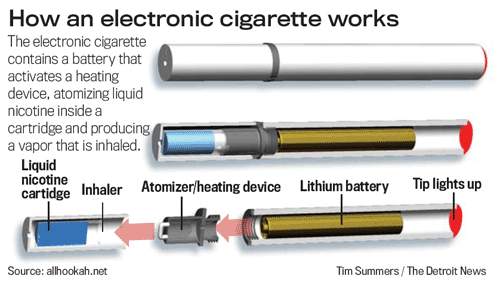
When one smokes hookah, tobacco is heated by charcoal in a smoke chamber. The smoke then passes through water and is drawn through a rubber hose to a mouthpiece. The variety of flavored tobaccos, like apple, mint, cherry, chocolate, and coconut, used in hookah smoking makes the practice more attractive to teenagers and college age students. Hookah smoking typically takes place in a group setting and generally lasts about an hour.

According to the Centers for Disease Control and Prevention (CDC), “hookah smoking delivers the addictive drug nicotine, is as toxic as cigarette smoking, and poses several health risks.” In a typical hookah session, smokers take approximately 200 puffs, compared to cigarette smokers who average 20 puffs a session. Additionally, the volume of smoke inhaled during a hookah session is much higher than the smoke inhaled while smoking a cigarette, 90,000 milliliters compared to 600 milliliters.

It is also believed that the charcoal used to heat the tobacco increases toxicity levels of various compounds, including carbon monoxide and heavy metals. Therefore, hookah smoking is linked to lung and oral cancer, as well as reduced lung function. These are the same harmful health effects as cigarettes.  Since hookah smoking involves using, and often sharing a mouthpiece, there is also the risk of developing and spreading infectious diseases, such as herpes, influenza, and hepatitis.

Although research on hookah smoking is still developing, there is enough evidence that suggest it is just as dangerous as cigarette smoking, if not worse. Hookah smoking and its use of flavored tobacco is marketed to young adults but it’s important to understand there is no such thing as smoking hookah safely.

Join us on Facebook.com/FlushingHospital or follow us on Twitter @FHMC_NYC for more information on smoking cessation and tips on fitness and health.

All content of this newsletter is intended for general information purposes only and is not intended or implied to be a substitute for professional medical advice, diagnosis or treatment. Please consult a medical professional before adopting any of the suggestions on this page. You must never disregard professional medical advice or delay seeking medical treatment based upon any content of this newsletter. PROMPTLY CONSULT YOUR PHYSICIAN OR CALL 911 IF YOU BELIEVE YOU HAVE A MEDICAL EMERGENCY.

March 24 is World TB Day

2015wtbdgraphic2_logo

Tuesday, March 24 is #WorldTBDay. Many people in the United States believe that #tuberculosis, or TB, was eradicated along with other diseases like smallpox and polio. Although the overall rate of TB in the United States has declined, it might surprise you to know that Western Queens has the highest incidence of tuberculosis in New York City.

TB is an airborne respiratory disease which can spread rapidly when an infected person coughs, sneezes, or speaks. It mainly affects the lungs, but other organs such as the kidneys, spine, or brain are sometimes involved.

TB impacts all ages, races, income levels, and both genders. Most TB cases in the U.S. are brought in from foreign countries, but those at risk include people who live or work with others who have TB, including healthcare workers, the homeless, and those in group settings like nursing homes. Those with impaired immune systems like Intravenous drug users, the elderly, and HIV patients are also at risk. For someone with diabetes, the risk of contracting TB is 2-3x more likely.  However, repeated exposure to the germs is usually necessary before a person will become infected.

TB is diagnosed with a TB skin test. Additional tests to determine if a person has TB disease include X-rays and sputum tests.

Stages of TB are:

Exposure — contact or exposure to another person who is thought to have or does have TB. The exposed person will have a negative skin test, a normal chest X-ray, and no signs or symptoms of the disease.

Latent TB infection – diagnosed TB bacteria infection, but no symptoms of the disease. TB organisms can remain dormant in the body throughout life in 90 percent of people who are infected.  This person would have a positive skin test, but a normal chest X-ray.

TB disease — signs and symptoms of an active infection determined by a positive skin test and a positive chest X-ray.

The symptoms of TB may resemble other lung conditions or medical problems. If you’d like to make an appointment for a TB skin test, please contact the Ambulatory Care Center at Flushing Hospital Medical Center at 718-670-5486.

For more health and fitness information and tips, follow us on Twitter @FHMC_NYC and like us on Facebook www.facebook.com/FlushingHospital

All content of this newsletter is intended for general information purposes only and is not intended or implied to be a substitute for professional medical advice, diagnosis or treatment. Please consult a medical professional before adopting any of the suggestions on this page. You must never disregard professional medical advice or delay seeking medical treatment based upon any content of this newsletter. PROMPTLY CONSULT YOUR PHYSICIAN OR CALL 911 IF YOU BELIEVE YOU HAVE A MEDICAL EMERGENCY.

What is Creative Arts Therapy?

Mandala created by arts therapy patient

Mandala created by arts therapy patient


Creative arts therapists guide patients to create and reflect on art and the artistic process. They help people increase awareness of themselves and others, and enhance cognitive abilities, as well as cope with the symptoms of stress, illness and trauma. Patients gain improved self-esteem, develop more effective communication skills and create new options for coping with problems.

Celebrate Creative Arts Therapy Week March 16-21, 2015.

All content of this newsletter is intended for general information purposes only and is not intended or implied to be a substitute for professional medical advice, diagnosis or treatment. Please consult a medical professional before adopting any of the suggestions on this page. You must never disregard professional medical advice or delay seeking medical treatment based upon any content of this newsletter. PROMPTLY CONSULT YOUR PHYSICIAN OR CALL 911 IF YOU BELIEVE YOU HAVE A MEDICAL EMERGENCY.