5 Reasons Why Dental Hygiene Matters

October is National Dental Hygiene Month. Flushing Hospital wants you to think beyond your teeth and gums and learn how good oral care has some surprising benefits for your overall health.

Here are five surprising reasons why oral care matters for a healthy body.

  • Healthy gums for a healthier heart

One health concern may lead to another. Studies have linked oral inflammatory disease with elevated heart disease risk. Gum disease from extended bacterial exposure can lead to cardiovascular disease as it may increase the inflammation level throughout the body. Your dentist should ask about your heart health and family history of heart disease.

  • A healthy mouth could mean a healthier pregnancy

Regular checkups with a dentist and hygienist become even more important during pregnancy. Women who are pregnant should take extra care to keep their teeth at their best, not just for themselves, but for their babies too. Pregnant women with poor oral health may be at higher risk of delivering pre-term, low birth weight babies than pregnant women with good oral health.

  • There’s a link between gum disease and diabetes

People with diabetes are more prone to gum disease. However, new studies suggest that serious gum disease may actually contribute to diabetes as it affects blood glucose control. This two-way link is a wake-up call to take care of your teeth, especially since the incidence of diabetes is rising.

  • Early screening for Oral Cancer

As part of regular examinations, dentists should check all soft tissues to ensure they are healthy. All dentists are trained to do a cancer screening as part of ongoing dental checkups, by inspecting the gums, tongue, lips and cheeks for anything suspicious or any unusual changes. A precancerous lesion can begin as a small white or dark red patch that may not be causing you any noticeable symptoms. Keep in mind that only about one-half of all patients diagnosed with oral cancer survive more than five years, so detecting early signs of the disease is crucial.

  • Trying to lose weight? Brush your teeth!

Brushing your teeth signals you have finished eating and may help with portion control. Use this trick to your advantage – have a healthy meal and then, before you are tempted to overeat or indulge in sweet desserts, go and brush your teeth. This will tell your brain that mealtime is over. While brushing cleans your teeth and freshens your breath.

All content of this newsletter is intended for general information purposes only and is not intended or implied to be a substitute for professional medical advice, diagnosis or treatment. Please consult a medical professional before adopting any of the suggestions on this page. You must never disregard professional medical advice or delay seeking medical treatment based upon any content of this newsletter. PROMPTLY CONSULT YOUR PHYSICIAN OR CALL 911 IF YOU BELIEVE YOU HAVE A MEDICAL EMERGENCY.


How Smoking Effects Your Oral Health

It is no secret that smoking can have a great number of adverse effects on the health of the smoker. It is only natural that oral health would be one of the areas most negatively affected by oral smoke inhalation. The most ideal option to reverse the damage to your teeth caused by smoking is to quit smoking but, in most cases it is easier said than done.

Smoking can cause many serious problems for teeth and oral structures. Gum disease is among the most common oral problems, putting smokers at an increased risk. Smokers are four times more likely to develop this problem than non-smokers. Gum disease occurs when plaque build-up is present. As a result tooth loss can occur. Due to the harmful chemicals in cigarette smoke, smokers are twice aslikely to suffer tooth loss than non-smokers.

Smokers are at a higher risk for developing leukoplakia, leading to throat, lung, and oral cancers. It can cause the salivary glands to become swollen and contribute to the break-down of bone structure. In addition smokers also have a harder time recovering from dental procedures such as plaque removal treatments, dental implants, and tooth removal.

Due to an increased and steady buildup of plaque and tarter, the teeth of a smoker are less attractive in appearance. Smoking also stains the teeth and can cause bad breath. In some smokers, the tongue can develop a condition known as black hairy tongue, due to a growth that may grow as a result of tobacco use. Smokers may also lose the sensation of taste and smell.

While quitting smoking is the most effective way to ensure better oral health, regular dental visits are a must. Given all of the risks and complications of smoking on oral health it is very important that smokers do not skip regular checkups with their dentists. During these visits, dentists can watch for signs of developing gum disease and oral cancers. Everyone should visit their dentist twice a year, but those who smoke should consider more frequent visits.

The Dental Department at Flushing Hospital Medical Center specializes in a wide selection of dental services. To schedule an appointment, please call 718-670-5521. The journey to quit smoking can be difficult, but you do not have to do it alone. Flushing Hospital’s smoking cessation team wants to help you develop a plan leading to your “quit day”. For more information please call 718-206-8494.

All content of this newsletter is intended for general information purposes only and is not intended or implied to be a substitute for professional medical advice, diagnosis or treatment. Please consult a medical professional before adopting any of the suggestions on this page. You must never disregard professional medical advice or delay seeking medical treatment based upon any content of this newsletter. PROMPTLY CONSULT YOUR PHYSICIAN OR CALL 911 IF YOU BELIEVE YOU HAVE A MEDICAL EMERGENCY.
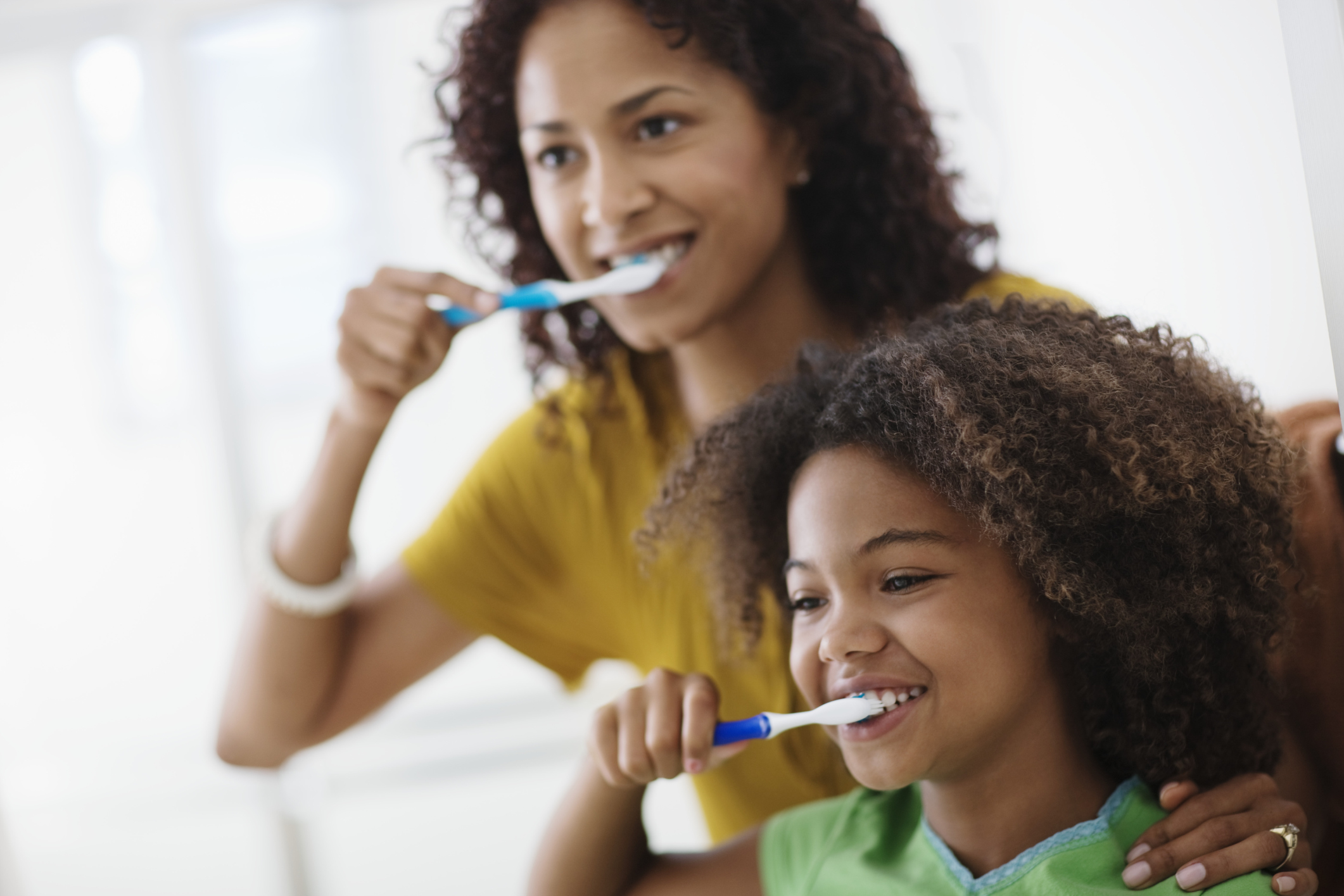
How To Brighten Your Smile At Home

3 Natural Ways to Whiten Your Teeth At Home

Without a doubt winter is the toughest season on our teeth, with all those coffees, teas and hot cocoa’s we drink to keep us warm. So how do you keep your pearly whites their whitest without breaking the bank? Here are three easy, natural and budget-friendly home remedies to keep your smile looking it’s best all through winter!

You will need your favorite toothpaste, 1 teaspoon of baking soda, 1 teaspoon of hydrogen peroxide, and half a teaspoon of water.

Mix these together and apply to your teeth with a standard toothbrush. Brush as normal. Use this remedy once a week until you reach your desired results. Once you have achieved sparkling teeth, try to limit yourself to using this remedy just once a month.

For a fruity take on whiter teeth, you can try mashing up a strawberry and mixing it with a small amount of baking soda to create your own whitening toothpaste. The acids in the strawberry work to polish and whiten your teeth. Limit this remedy to about once a month.

Rinsing your mouth with coconut oil (called ‘oil pulling’) is a unique, old, remedy that people swear by to help whiten teeth. It won’t make a difference by “bleaching” per say, but lauric acid in coconut oil can rid your teeth of bacteria found in plaque that can make them yellow. It is also supposed to promote gum health, and help keep your breath fresh.

You will need about a tablespoon of natural coconut oil. This can be found in health food markets if not available in your local supermarket.

Before you brush your teeth, scoop out a tablespoon or a little less (depending on the size of your mouth) of coconut oil. You can either soften it, or just put it in your mouth. Push, swish, and “pull” the oil through and around your teeth for 10-15 minutes, then spit it out, rinse with water, and brush your teeth.

Remember to brush after every meal and floss after snacks. Now that you have these teeth whitening tips you can be on your way to a brighter smile!

To schedule a dental appointment at Flushing Hospital, please call 718-670-5521.

All content of this newsletter is intended for general information purposes only and is not intended or implied to be a substitute for professional medical advice, diagnosis or treatment. Please consult a medical professional before adopting any of the suggestions on this page. You must never disregard professional medical advice or delay seeking medical treatment based upon any content of this newsletter. PROMPTLY CONSULT YOUR PHYSICIAN OR CALL 911 IF YOU BELIEVE YOU HAVE A MEDICAL EMERGENCY.

Cavity Prevention for Children

Dental cavities can be prevented for most children. To keep those pearly whites pearly it takes being mindful about eating, drinking and brushing habits along with being knowledgeable about your child’s water supply. Remember, every time we eat or drink something that contains sugar or starches, bacteria in our mouth uses the sugar and starch to produce acids. These acids begin to eat away at the tooth’s enamel. Our saliva can help fight off this acid attack unless there are a lot of foods high in starch and sugar in your diet. That’s why it’s important to keep an eye on how often your children eat as well as what they eat.

A key source in strengthening teeth against cavities is fluoride. Brushing with fluoride toothpaste is important for preventing cavities. Most bottled water does not contain enough fluoride to prevent tooth decay. If your child drinks only bottled water, speak with a dentist about whether your child needs additional fluoride in the form of a vitamin, varnish, or gel.

Young children cannot get their teeth clean by themselves. For children aged two to six, it is recommended that an adult puts the toothpaste on the brush. Use only a pea-sized amount of fluoride toothpaste.Try brushing your child’s teeth first, then let him/her finish.  Until they are seven or eight years old, you will need to help your child brush.

Encourage your child to spit out the toothpaste rather than swallow it. Children under six years old tend to swallow much of the toothpaste on their brush. If children regularly consume higher-than-recommended amounts of fluoride during the teeth-forming years (age eight and younger), their permanent teeth may develop white lines or flecks called dental fluorosis. Fluorosis is usually mild; in many cases, only a dental professional would notice it. (In children under age two, dental experts recommend that you do not use fluoride toothpaste unless directed by a dentist.)

It is recommended that children see their dentist every six months for regular check-ups and cavity prevention. To make an appointment at Flushing Hospital Dental Center, please call 718-670-5521.

All content of this newsletter is intended for general information purposes only and is not intended or implied to be a substitute for professional medical advice, diagnosis or treatment. Please consult a medical professional before adopting any of the suggestions on this page. You must never disregard professional medical advice or delay seeking medical treatment based upon any content of this newsletter. PROMPTLY CONSULT YOUR PHYSICIAN OR CALL 911 IF YOU BELIEVE YOU HAVE A MEDICAL EMERGENCY.

How Smoking Negatively Affects Dental Health

453877721With smoking, we tend to focus on the effects it may have on the lungs or the heart. However, we don’t focus on the health effects it may have on other parts of the body including your oral health.

The American Cancer Society states that smokers are six times more likely than non-smokers to develop cancers of the mouth, lips, tongue, and throat. In addition, smoking can cause many serious problems for teeth and oral structures. It can interfere with the normal function of gum tissue cells; this can make smokers more susceptible to infections, gum disease, or even periodontal disease. The problem can be further exacerbated when proper dental health care is not followed. The excess of harmful chemicals in cigarette smoke makes smokers twice more likely to suffer tooth loss than non-smokers.

Keep your winning smile and kick the smoking habit. For help to quit smoking, please contact Flushing Hospital’s smoking cessation support group at 718-206-8494.

All content of this newsletter is intended for general information purposes only and is not intended or implied to be a substitute for professional medical advice, diagnosis or treatment. Please consult a medical professional before adopting any of the suggestions on this page. You must never disregard professional medical advice or delay seeking medical treatment based upon any content of this newsletter. PROMPTLY CONSULT YOUR PHYSICIAN OR CALL 911 IF YOU BELIEVE YOU HAVE A MEDICAL EMERGENCY.

What is Hypersalivation?

Have you ever found yourself drooling or swallowing excessively? You might suffer from hypersalivation. Saliva is produced by salivary glands located in the mouth and throat. Saliva helps to keep the mouth moist and assists in comfortable swallowing. It plays a protective role because of its’ anti-fungal properties and components that destroy viruses and attack bacteria and acids that cause tooth decay and produce plaque. Saliva also contains phosphorus and calcium which help to rebuild tooth enamel.

ThinkstockPhotos-74579471Most people produce between two and four pints of saliva every day. Chewing and swallowing food increases the flow of saliva and you swallow most of it. However, if you find yourself drooling at times other than sleep, which is normal, it can be an indicator of other problems.

Hypersalivation can be caused by everything from difficulty swallowing to problems with muscle control to an infection like tonsillitis or strep throat.  Certain medications cause excess saliva production as a side effect, and chronic diseases like Parkinson’s disease can also cause an increase in salivary activity. Some of the medical conditions that affect muscle control over the lips and tongue may cause drooling including cerebral palsy, multiple sclerosis, and stroke.

Other conditions that can lead to drooling are allergies, acid reflux or heartburn and pregnancy.

If you feel like you are producing excessive amounts of saliva and don’t know why, contact your doctor or dentist or make an appointment at Flushing Hospital Medical Center’s Ambulatory Care Center at 718-670-5486.

All content of this newsletter is intended for general information purposes only and is not intended or implied to be a substitute for professional medical advice, diagnosis or treatment. Please consult a medical professional before adopting any of the suggestions on this page. You must never disregard professional medical advice or delay seeking medical treatment based upon any content of this newsletter. PROMPTLY CONSULT YOUR PHYSICIAN OR CALL 911 IF YOU BELIEVE YOU HAVE A MEDICAL EMERGENCY.

Poll Question: What is the right way to brush your teeth?

ThinkstockPhotos-83406284

What is the right way to brush your teeth?

A.  From side to side

B.  Up and down

C.  In small circles

If you answered A, you’re right! According to the American Dental Association you should:

  • Place your toothbrush at a 45-degree angle to the gums.
  • Gently move the brush from side to side in short (tooth-wide) strokes.
  • Brush the outer surfaces, the inner surfaces, and the chewing surfaces of the teeth.
  • To clean the inside surfaces of the front teeth, tilt the brush vertically and make several up-and-down strokes.
  • Brush your tongue to remove bacteria and keep your breath fresh.

The ADA also recommends brushing your teeth twice a day with a soft-bristled brush. The size and shape of your brush should fit your mouth allowing you to reach all areas easily. You should replace your toothbrush every three or four months, or sooner if the bristles are frayed.

To make an appointment with a dentist at Flushing Hospital Medical Center, please call our Dental Department at 718-670-5521.

All content of this newsletter is intended for general information purposes only and is not intended or implied to be a substitute for professional medical advice, diagnosis or treatment. Please consult a medical professional before adopting any of the suggestions on this page. You must never disregard professional medical advice or delay seeking medical treatment based upon any content of this newsletter. PROMPTLY CONSULT YOUR PHYSICIAN OR CALL 911 IF YOU BELIEVE YOU HAVE A MEDICAL EMERGENCY.

Dental Spotlight: What is Oil Pulling?

download (5)Oil pulling, also known as “kavala” or “gundusha,” is a growing trend, but what exactly is it? Based on an ancient Ayurvedic dental technique, it involves swishing a tablespoon of oil in your mouth on an empty stomach for 20 minutes, then spitting it out.

Enthusiasts claim that toxins in the body build up in the mouth and that swishing oil will draw out these impurities or wash them from the mouth. A recent study published in the Journal of Ayurveda and Integrative Medicine shows that oil pulling may improve your oral health, as well as help against gingivitis, plaque, and even remove the microorganisms that cause bad breath by adhering to the oil.

Oil pulling is not a substitute for brushing and flossing. Start with five minutes a day and slowly work your way up to 20. You can use sesame, sunflower or coconut oil, but the anti-microbial agents in coconut oil may help prevent tooth decay. Gently swish, push and suck the oil through your teeth and make sure you don’t swallow. Just discard the used oil into the nearest trash and continue with your usual brushing and flossing routine.   Tell us, would you try or have you tried oil pulling?

All content of this newsletter is intended for general information purposes only and is not intended or implied to be a substitute for professional medical advice, diagnosis or treatment. Please consult a medical professional before adopting any of the suggestions on this page. You must never disregard professional medical advice or delay seeking medical treatment based upon any content of this newsletter. PROMPTLY CONSULT YOUR PHYSICIAN OR CALL 911 IF YOU BELIEVE YOU HAVE A MEDICAL EMERGENCY.

Your Child and the Battle Against Junk Food

187539116 kid and junk food

Childhood obesity has become a common health concern for parents. It is estimated that one in every five children is overweight.  An obese child is considered well above the normal weight for their age and height. One of the contributing factors in obesity is unhealthy eating habits. Parents should introduce healthy eating to children as early as possible.  For some this may be easier said than done, because children love junk food.

What makes junk food enticing to children is sugar, high sodium, the taste of fat-commonly hydrogenated oils, in addition to bright, colorful packaging, fun shapes and unnatural food coloring. Parents can win the fight against junk food by making healthy food more appealing to children’s senses.

Here are a few tips on converting kid favorites into healthier choices:

  • Hot dogs- instead of regular beef and pork hot dogs, purchase low sodium turkey franks and ones without added nitrates. Decorate the hot dog with colorful vegetables such as cucumbers, carrots, red and yellow peppers.
  • Salty cheese snacks- make plain cheese fun by cutting it into quirky shapes or adding bright and sweet fruit. You can make cheese and fruit shish kebabs.
  • French fries- opt for baked sweet potato fries and sprinkle lightly with sea salt. Sweet potatoes are high in vitamin C, B6, and D. They are a great source of Iron, magnesium and potassium.
  • Ice cream- frozen yogurt is just as tasty and contains less sugar and fat. Adding toppings such as fruit and granola is a plus.
  • Popsicles- freeze real fruit juices with bits of fruit into bars.
  • Potato chips- kale chips are rich in vitamin A and easy to make at home. Make them delicious by adding herbs and spices.
  • Candy- healthy alternatives to candy include raisins or strawberries and bananas lightly drizzled with chocolate.
  • Milk shakes- smoothies made with fresh fruit and low fat yogurt are a healthier option.
  • Meat lasagna- load lasagna with vegetables instead of meat, choose low fat cheese and whole-grain pasta.
  • Macaroni and cheese-use low fat cheese and Greek yogurt to make it creamy. Add spinach to make it nutritious.

The battle against junk food is not lost. In addition to healthy eating, keep your family physically active and make an appointment with your family doctor to ensure that everyone is at their recommended weight.

All content of this newsletter is intended for general information purposes only and is not intended or implied to be a substitute for professional medical advice, diagnosis or treatment. Please consult a medical professional before adopting any of the suggestions on this page. You must never disregard professional medical advice or delay seeking medical treatment based upon any content of this newsletter. PROMPTLY CONSULT YOUR PHYSICIAN OR CALL 911 IF YOU BELIEVE YOU HAVE A MEDICAL EMERGENCY.

Are Gummy Vitamins Good for my Child?

Gummy vitamins contain important nutrients to maintain a child’s health, but they can be damaging to your child’s teeth. Similar to candy, gummy vitamins stick to the grooves of your child’s teeth and can cause cavities.

Although your child may brush their teeth the recommended two times per day, toothbrush bristles cannot reach the deepest grooves of the back molars. Sticky sugar particles can remain embedded in the grooves, causing cavities when not brushed properly.

Try switching to traditional chewable tablets if you’re giving your child gummy vitamins. Before the age of two years, speak with your children’s pediatrician or pediatric dentist about a liquid vitamin.

If you believe your child has developed a cavity, ask at your child’s next dental visit or call The Dental Department at Flushing Hospital Medical Center at 718-670-5521 to schedule an appointment.

All content of this newsletter is intended for general information purposes only and is not intended or implied to be a substitute for professional medical advice, diagnosis or treatment. Please consult a medical professional before adopting any of the suggestions on this page. You must never disregard professional medical advice or delay seeking medical treatment based upon any content of this newsletter. PROMPTLY CONSULT YOUR PHYSICIAN OR CALL 911 IF YOU BELIEVE YOU HAVE A MEDICAL EMERGENCY.