How Smoking Negatively Affects Dental Health

453877721With smoking, we tend to focus on the effects it may have on the lungs or the heart. However, we don’t focus on the health effects it may have on other parts of the body including your oral health.

The American Cancer Society states that smokers are six times more likely than non-smokers to develop cancers of the mouth, lips, tongue, and throat. In addition, smoking can cause many serious problems for teeth and oral structures. It can interfere with the normal function of gum tissue cells; this can make smokers more susceptible to infections, gum disease, or even periodontal disease. The problem can be further exacerbated when proper dental health care is not followed. The excess of harmful chemicals in cigarette smoke makes smokers twice more likely to suffer tooth loss than non-smokers.

Keep your winning smile and kick the smoking habit. For help to quit smoking, please contact Flushing Hospital’s smoking cessation support group at 718-206-8494.

All content of this newsletter is intended for general information purposes only and is not intended or implied to be a substitute for professional medical advice, diagnosis or treatment. Please consult a medical professional before adopting any of the suggestions on this page. You must never disregard professional medical advice or delay seeking medical treatment based upon any content of this newsletter. PROMPTLY CONSULT YOUR PHYSICIAN OR CALL 911 IF YOU BELIEVE YOU HAVE A MEDICAL EMERGENCY.

How Cold Weather Affects Asthma

When very cold and dry air enters the body, and subsequently the lungs it can cause a tightening of the airways. Cold air can cause wheezing, tightness of the chest muscles, shortness of breath, coughing, a sense of dizziness and sometimes difficulty speaking.

Taking some precautions before going outside in very cold weather can help ease the symptoms. It is important to keep asthma under control at all times. It can be helpful to take a dose of an asthma inhalant ten minutes before going outdoors. This will aid in keeping the airways open. People with asthma should carry their medication with them if they know they are going to be outdoors for any period of time. Another good idea is to keep your mouth and nose covered with a scarf when you are outside in cold weather. This will help to warm the air you are breathing. Anyone who has asthma should avoid strenuous outdoor activities. Sometimes the act of just walking on a windy day can bring on symptoms of an asthma attack. Try breathing through your nose more and through your mouth less. This will help to warm the air that enters your lungs.

People with asthma know the effects it can have during the cold days of winter. Taking a few precautions can help minimize the effects of the cold air on the body.

All content of this newsletter is intended for general information purposes only and is not intended or implied to be a substitute for professional medical advice, diagnosis or treatment. Please consult a medical professional before adopting any of the suggestions on this page. You must never disregard professional medical advice or delay seeking medical treatment based upon any content of this newsletter. PROMPTLY CONSULT YOUR PHYSICIAN OR CALL 911 IF YOU BELIEVE YOU HAVE A MEDICAL EMERGENCY.

Driving and Secondhand Smoke

We all know about the health risks associated with smoking and secondhand smoke, but do you truly know how dangerous it is to smoke in an enclosed place like a car, even with the windows open?

A study by researchers at the Harvard School of Public Health found “alarming” levels of secondhand smoke were generated in just five minutes in vehicles under various driving, ventilation, and smoking conditions. These levels were higher than found in similar studies conducted in restaurants and bars.

Secondhand smoke and carbon monoxide from just one cigarette exceeded levels described by the U.S. Environmental Protection Agency as “unhealthy for sensitive groups” such as children and the elderly. Even when the smoker extinguished the cigarette and rolled down the window, the unhealthy levels lingered.

For more information, check out this video from the California Department of Public Health.

All content of this newsletter is intended for general information purposes only and is not intended or implied to be a substitute for professional medical advice, diagnosis or treatment. Please consult a medical professional before adopting any of the suggestions on this page. You must never disregard professional medical advice or delay seeking medical treatment based upon any content of this newsletter. PROMPTLY CONSULT YOUR PHYSICIAN OR CALL 911 IF YOU BELIEVE YOU HAVE A MEDICAL EMERGENCY.

Leaves of Three, Let it be: How to Avoid & Treat Poison Ivy

ThinkstockPhotos-179093102

Poison ivy is one of the most commonly found plants in North America. Contact with the plant oils, either directly or indirectly, can cause an itchy, blistering rash.  Watch out for plants that have three small leaflets on each leaf. This is usually a sign of poison ivy, poison sumac or poison oak. Poison ivy grows as a vine or a shrub, sprouting yellow-green flowers in the spring and green berries that turn off-white in early fall. Touching any part of the plant, including the roots, can cause an allergic reaction.

The best way to treat a poison ivy rash is to not get one in the first place. Make sure to wear long pants, long sleeves, boots, and gloves. Protect your skin by using an ivy block barrier lotion before going outdoors. Available over-the-counter, the lotion will help prevent the skin from absorbing the oil which causes the rash. Even with the ivy block, you still need to cover your skin. Touching anything that has the plant oil on it can cause an allergic reaction, including gardening tools, sporting equipment, shoes, and even a pet’s fur. Burning these plants releases the oil into the air and you can have an allergic reaction if airborne particles land on your skin.

According to the American Academy of Dermatology, most people can safely treat the rash at home. If you’ve been exposed, immediately do the following:

. Rinse your skin with lukewarm, soapy water.

. Thoroughly wash all of the clothes you were wearing when you came into contact with the plant.

. Wash everything that may have the oil on its surface in warm, soapy water including gardening tools, golf clubs, leashes and even your pet.

. Leave blisters alone and don’t scratch to avoid an infection.

. Take short, lukewarm baths in a colloidal oatmeal to ease the itch, or apply cool compresses.

. Apply calamine lotion to skin that itches. Hydrocortisone cream or lotion may also help.

. Antihistamine pills can help reduce itching, ask your doctor or pharmacist which one is best for you.

If you experience any of the following symptoms, go to the emergency room right away:

. Trouble breathing or swallowing.

. The rash and blisters cover most of your body and nothing eases the itch.

. You experience swelling, especially if an eyelid swells shut.

. The rash develops anywhere on your face or genitals.

If your rash is not improving after seven to ten days, or you think your rash may be infected, see a board-certified dermatologist. A dermatologist can treat your rash and any infection and help relieve the itch.

All content of this newsletter is intended for general information purposes only and is not intended or implied to be a substitute for professional medical advice, diagnosis or treatment. Please consult a medical professional before adopting any of the suggestions on this page. You must never disregard professional medical advice or delay seeking medical treatment based upon any content of this newsletter. PROMPTLY CONSULT YOUR PHYSICIAN OR CALL 911 IF YOU BELIEVE YOU HAVE A MEDICAL EMERGENCY.

What is an Allergic Reaction?

Your own asthma allergyimmune system is what really causes allergic reactions.  Grass and tree pollen’s, ragweed, dust- it mistakes these harmless allergens for a serious threat and attacks them. The sneezing, watery eyes or coughing are the result of your body mistakenly attacking itself.It begins with exposure to the allergen. Even if you’ve inhaled an allergen many times before with no trouble, at some point, the body flags it as an invader. The immune system studies the allergen and readies itself for the next exposure by developing antibodies; you are now “sensitized” to the allergen.
May is National Asthma and Allergy Awareness month. If you are having trouble finding relief from allergies, contact Flushing Hospital’s Ambulatory Care Center to set an appointment with one of our physicians at 718-670-5486.

All content of this newsletter is intended for general information purposes only and is not intended or implied to be a substitute for professional medical advice, diagnosis or treatment. Please consult a medical professional before adopting any of the suggestions on this page. You must never disregard professional medical advice or delay seeking medical treatment based upon any content of this newsletter. PROMPTLY CONSULT YOUR PHYSICIAN OR CALL 911 IF YOU BELIEVE YOU HAVE A MEDICAL EMERGENCY.

What are the Risk Factors and Symptoms of Childhood Asthma?

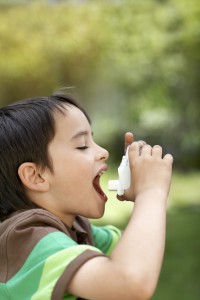
Did you know that asthma is the most common, chronic,childhood disease?  It’s more commonly found in children who live in urban areas and more prevalent in African Americans than Caucasians, and in males more than females.

Asthma often runs in families. Children who have brothers, sisters or parents with asthma often will have asthma themselves. Asthma can also be caused by certain types of allergens.

Risk factors for childhood asthma include:asthma-childhood-200x300

• Allergies – environmental or food
• Family history
• Frequent respiratory infections
• Secondhand smoke
• Living in an urban versus suburban area
• African American
• Low birth weight baby

Signs and symptoms:

• Rapid breathing
• Dark circles under the eyes
• Shortness of breath
• Wheezing
• Feeling tired or weak
• Chest pain on exertion

The Ambulatory Care Center at Flushing Hospital Medical Center offers a full range of pediatric allergy and asthma services. Please call 718-670-5486 for an appointment.

All content of this newsletter is intended for general information purposes only and is not intended or implied to be a substitute for professional medical advice, diagnosis or treatment. Please consult a medical professional before adopting any of the suggestions on this page. You must never disregard professional medical advice or delay seeking medical treatment based upon any content of this newsletter. PROMPTLY CONSULT YOUR PHYSICIAN OR CALL 911 IF YOU BELIEVE YOU HAVE A MEDICAL EMERGENCY.