Back To School – Time To Reestablish Your Child’s Sleep Schedule

While most parents tend to be a bit more flexible with their child’s sleep schedule during summer vacation, it’s important to remember that back to school is just around the corner, and now is the time to reestablish a proper sleeping routine for your children.

After a relaxing summer, children might need some time to adjust to their back-to-school sleep schedule. Here are some tips to help your child adjust to the change:

  • Every night, beginning 1-2 weeks before school begins, set an incrementally earlier bedtime and wake-up time.
  • Once your child’s sleep schedule is established, stick with it.
  • Establish a relaxing bedtime routine to allow your child time to unwind including a bath and a bedtime story (for young children) or reading time (for older children).
  • Limit television, video games, and other electronic distractions before and during bedtime.
  • Avoid big meals and caffeinated beverages close to bedtime as they may prevent your child from falling asleep.
  • Maintain a peaceful bedroom environment which includes a comfy bed, an appropriate room temperature, and lights turned off, or with a night light if your child needs one.
  • Be a role model by setting a good example for your child. Establish your regular sleep schedule and maintain a home that promotes healthy sleep.

Getting your child back on track at bedtime will allow for a smooth transition for the first day of school and will help your children reach their full learning potential.

All content of this newsletter is intended for general information purposes only and is not intended or implied to be a substitute for professional medical advice, diagnosis or treatment. Please consult a medical professional before adopting any of the suggestions on this page. You must never disregard professional medical advice or delay seeking medical treatment based upon any content of this newsletter. PROMPTLY CONSULT YOUR PHYSICIAN OR CALL 911 IF YOU BELIEVE YOU HAVE A MEDICAL EMERGENCY.

Five Things To Know About Whole-Body Deodorants

You may see advertisements for whole-body deodorants everywhere. These products claim to stop odors from forming on various parts of the body beyond our armpits including the feet, skin creases, breasts, thighs, groins, and more.

Whole-body deodorants are available in different forms including creams, sticks, and sprays. So, there are several options to choose from. But, before you purchase one of these products, here are five things you should know:

  • Deodorants and antiperspirants are not the same. Therefore, these products are not made to prevent sweat, they can however change the smell of sweat.
  • Most whole-body deodorants are not designed to target underarm sweat.
  • These products may include ingredients such as essential oils, zinc compounds, starch to absorb wetness, or cyclodextrins to absorb odor.
  • Some ingredients can cause allergic skin reactions or irritation.
  • Avoid applying these products in areas with mucus membranes such as the anus or vagina.

Whole-body deodorants are generally considered safe. However, it is important to remember that they cannot be applied everywhere on our bodies. If you are experiencing skin irritation or an allergic reaction stop using the product immediately. If symptoms persist, make an appointment with your doctor. To make an appointment with a doctor at Flushing Hospital Medical Center, call 718-670-5486.

All content of this newsletter is intended for general information purposes only and is not intended or implied to be a substitute for professional medical advice, diagnosis or treatment. Please consult a medical professional before adopting any of the suggestions on this page. You must never disregard professional medical advice or delay seeking medical treatment based upon any content of this newsletter. PROMPTLY CONSULT YOUR PHYSICIAN OR CALL 911 IF YOU BELIEVE YOU HAVE A MEDICAL EMERGENCY.

The MediSys Health Network Launches New Healthcare App

The MediSys Health Network (Comprised of Jamaica Hospital Medical Center and Flushing Hospital Medical Center) is pleased to announce the launch of its new application and comprehensive patient platform, MediSys Connect.

The MediSys Connect app is an ideal companion for patient health. The app is integrated with an intuitive platform that gives patients a smooth and hassle-free experience, allowing them to manage their healthcare conveniently from their mobile devices.

With MediSys Connect, patients can seamlessly search for healthcare providers and schedule their appointments in just a few clicks.  The platform’s Find-A-Doctor feature offers a wide selection of providers, with over 100 specialties to choose from. Patients can also utilize a messaging tool within the app to securely and directly communicate with their physicians.

Other key tools allow patients to:

  • View test results
  • View medication lists
  • Request medication refills
  • Stay informed about past and upcoming appointments
  • eCheck-in for upcoming appointments
  • Enroll for paperless statements
  • View billing account summaries and statements
  • View signed and scanned documents
  • Manage payments
  • Effortlessly retrieve medical records.

In addition to these user-friendly tools, MediSys Connect provides access to newsletters and podcasts. Here, patients can stay informed by reading articles or listening to trusted healthcare experts discuss various medical and lifestyle topics.

The MediSys Health Network encourages patients to download the MediSys Connect app and explore the state-of-the-art features.

Whether you’re a guest user, a Medisys Connect member, or have a MyChart account, the platform is easy to navigate. It is designed to provide a positive and personalized healthcare experience.  Information provided on the platform is available in multiple languages to help members of the network’s culturally diverse patient population manage their health.

New users can download the app from the Apple Store or Google Play. They can sign up by providing their name, birth date, and address. MyChart users can download the app from the Apple Store or Google Play and log in with their existing credentials from MyChart.

All content of this newsletter is intended for general information purposes only and is not intended or implied to be a substitute for professional medical advice, diagnosis or treatment. Please consult a medical professional before adopting any of the suggestions on this page. You must never disregard professional medical advice or delay seeking medical treatment based upon any content of this newsletter. PROMPTLY CONSULT YOUR PHYSICIAN OR CALL 911 IF YOU BELIEVE YOU HAVE A MEDICAL EMERGENCY.

Flushing Hospital Completes Phase 1 Of ER Renovation Project

Flushing Hospital Medical Center recently completed the construction of Phase 1 of its ER renovation and expansion project.

Once completed, the project will double the size of the hospital’s Emergency Department, which will feature state-of-the-art equipment, as well as a dedicated bariatric treatment space and enhanced infection control measures that include two negative pressure isolation rooms. The expanded area also includes two new triage rooms and comfortable, private treatment spaces for patients in a beautifully renovated, calming environment.

Flushing Hospital’s new ER will have separate walk-in and ambulance entrances. The walk-in side will quickly treat patients of lower acuity, while the ambulance entrance side will treat more critically ill patients and contain a trauma and behavioral health room.

In 2023, Flushing Hospital’s Emergency Department received 42,000 ER visits, that number will greatly increase once the ER expansion project is completed.

In addition to expanding its ER, Flushing Hospital completed a renovation and modernization project for its entire fifth floor, which includes the labor, delivery, and recovery suites, mother/baby unit, neonatal intensive care unit, and newborn nursery.

Flushing Hospital’s continuous growth and optimization of services reflects its commitment to meeting the needs of its community, a commitment that has been upheld since 1884 when the hospital first opened its doors.


All content of this newsletter is intended for general information purposes only and is not intended or implied to be a substitute for professional medical advice, diagnosis or treatment. Please consult a medical professional before adopting any of the suggestions on this page. You must never disregard professional medical advice or delay seeking medical treatment based upon any content of this newsletter. PROMPTLY CONSULT YOUR PHYSICIAN OR CALL 911 IF YOU BELIEVE YOU HAVE A MEDICAL EMERGENCY.

Treatments For Rheumatoid Arthritis

Rheumatoid arthritis (RA) can cause a variety of debilitating symptoms, such as joint pain, stiffness, and fatigue, that can significantly interfere with your daily life. It can also cause lasting damage to multiple parts of your body, such as your nerves, skin, and heart. However, several treatment approaches can help relieve your symptoms and reduce the severity of these long-term effects.

Medication is a common element of treatment for people who are diagnosed with rheumatoid arthritis, though which ones are prescribed by your doctor will depend on the nature and severity of your symptoms.

  • Nonsteroidal anti-inflammatory drugs (NSAIDs) can relieve pain and reduce inflammation
  • Disease-modifying antirheumatic drugs (DMARDs) are typically among the first medications prescribed to slow the progression of rheumatoid arthritis
  • Biologics are used to reduce inflammation by targeting certain parts of the immune system that contribute to it
  • Janus kinase (JAK) inhibitors block enzymes that signal inflammatory and immune responses in cells
  • Analgesics reduce pain in people who cannot take NSAIDs, but do not reduce inflammation
  • Corticosteroids are strong anti-inflammatory drugs that may be given while slow-acting medications begin to take effect

Exercise is also often beneficial for people living with rheumatoid arthritis. Many people diagnosed with this condition work with a physical therapist, who can create an effective exercise program that improves your strength and mobility. A physical therapist can also teach you techniques for relieving pain, ways of moving that prevent further physical damage, and exercises that you can perform on your own outside of scheduled sessions.

If other treatments are not providing adequate relief or offering significant improvement, your doctor may recommend joint replacement surgery. This most often involves hip and knee replacements, which can be effective for people with rheumatoid arthritis, but other affected joints may also be replaced for improved mobility and pain relief. Joint replacement surgery may also be followed up by physical therapy, which can help you learn how to stay mobile without causing damage to your joint replacements or surrounding parts of your body.

All content of this newsletter is intended for general information purposes only and is not intended or implied to be a substitute for professional medical advice, diagnosis or treatment. Please consult a medical professional before adopting any of the suggestions on this page. You must never disregard professional medical advice or delay seeking medical treatment based upon any content of this newsletter. PROMPTLY CONSULT YOUR PHYSICIAN OR CALL 911 IF YOU BELIEVE YOU HAVE A MEDICAL EMERGENCY.

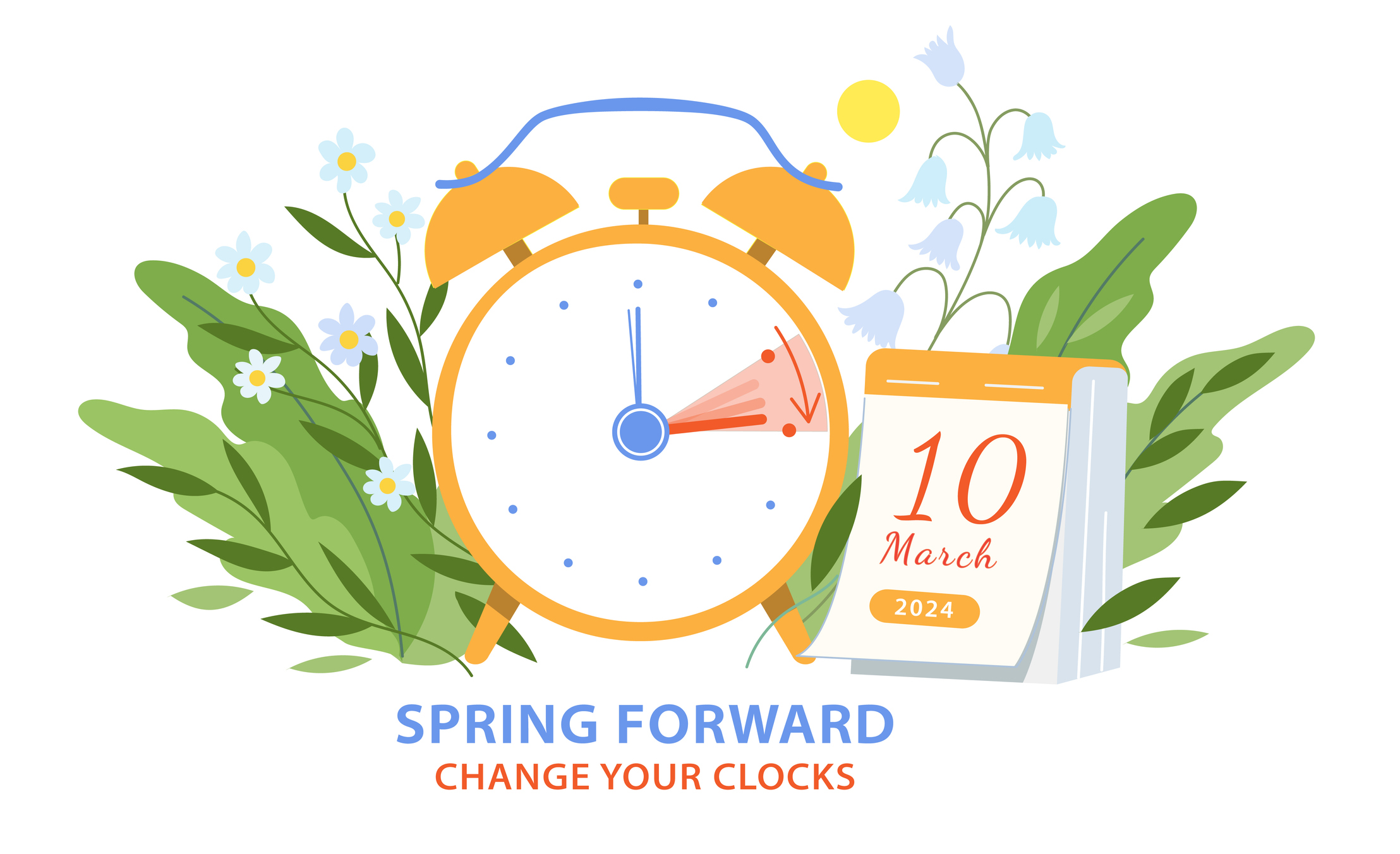
Managing The Transition To Daylight Saving Time

Sunday, March 10th, 2024 marks the beginning of Daylight Saving Time (DST), and most people living in the United States will advance the time on their clocks by one hour.

The transition between standard time and DST causes many to lose one hour of sleep. Although one hour less of sleep may seem harmless, it has been found that the change in time can adversely affect our health.

The Sleep Foundation explains, “The transition between DST and Standard Time has darker mornings and more evening light. This can essentially “delay” your sleep-wake cycle.” This disruption in our sleep cycle or circadian rhythm can lead to problems such as insomnia, grogginess, problems concentrating, lower cognitive performance, and mood changes.

Fortunately, there are ways we can prepare our bodies for the change to DST and reduce the risk of these problems. Here are a few ways to manage the change:

  • Set your clocks ahead on Saturday evening and go to bed on time
  • Take afternoon naps following the days after DST
  • Get more light during the first days of the change
  • Limit the consumption of caffeinated or alcoholic beverages a few days before the change

Getting a good night’s rest is essential for your health. If you are having trouble falling asleep or getting a restful night’s sleep, you should speak with your doctor as there may be an underlying medical issue.

To schedule an appointment at Flushing Hospital Medical Center, please call 718-670-5486.

All content of this newsletter is intended for general information purposes only and is not intended or implied to be a substitute for professional medical advice, diagnosis or treatment. Please consult a medical professional before adopting any of the suggestions on this page. You must never disregard professional medical advice or delay seeking medical treatment based upon any content of this newsletter. PROMPTLY CONSULT YOUR PHYSICIAN OR CALL 911 IF YOU BELIEVE YOU HAVE A MEDICAL EMERGENCY.

Thyroid Awareness Month

Woman touching glands on the side of the neck.Thyroid disease is common among Americans, with over 12% of the population experiencing some form of it during their lifetime. Some of the most common thyroid conditions include hyperthyroidism, hypothyroidism, thyroiditis, and thyroid cancer.

Both hyperthyroidism and hypothyroidism can occur due to a wide variety of causes, including other medical conditions that directly affect the thyroid (such as thyroiditis).

Hyperthyroidism occurs when the thyroid produces too much of the hormones thyroxine (T-4) and triiodothyronine (T-3). These hormones help to regulate your metabolism, body temperature, and protein production. When too many of them are produced, it can lead to symptoms such as:

  • Enlargement of the thyroid gland (also known as goiter)
  • Unexplained weight loss
  • Faster, irregular, and/or pounding heartbeat
  • Increased hunger
  • Anxiety
  • Fatigue
  • Disrupted sleep
  • Hair and skin problems
  • Menstrual cycle changes

Conversely, hypothyroidism occurs when too few T-3 or T-4 hormones are produced. This can cause a few symptoms that are similar to those of hyperthyroidism, such as fatigue and, for women and people assigned female at birth, changes in menstrual cycles. Other symptoms include:

  • Weight gain
  • Slowed heart rate
  • Depression

Thyroiditis, which is inflammation of the thyroid gland, can initially cause hyperthyroidism to occur during thyrotoxicosis. During this phase of the condition, damage to thyroid cells causes a leakage of hormones, causing them to build up in the body. Thyrotoxicosis can last up to three months, after which thyroiditis can enter a hypothyroid phase. This phase may be long-term or permanent.

Thyroid cancer occurs when an abnormal growth of cells develops on the thyroid gland. Unlike hyperthyroidism, hypothyroidism, or thyroiditis, symptoms of thyroid cancer do not necessarily affect the production of thyroid hormones. In fact, this disease may not cause any symptoms in its early stages. Once it has progressed, however, symptoms such as difficulty swallowing, pain in the neck and throat, and swollen lymph nodes on the sides of your neck may appear.

If you’re experiencing symptoms of any thyroid disease, you can receive treatment from an endocrinologist at Flushing Hospital Medical Center’s Ambulatory Care Center. To schedule an appointment, please call (718) 670-5486.


All content of this newsletter is intended for general information purposes only and is not intended or implied to be a substitute for professional medical advice, diagnosis or treatment. Please consult a medical professional before adopting any of the suggestions on this page. You must never disregard professional medical advice or delay seeking medical treatment based upon any content of this newsletter. PROMPTLY CONSULT YOUR PHYSICIAN OR CALL 911 IF YOU BELIEVE YOU HAVE A MEDICAL EMERGENCY.

Signs of Poor Sleep Quality

The National Sleep Foundation describes sleep quality as the measurement of how well you’re sleeping.

Getting adequate amounts of quality sleep is essential for our health. It allows our bodies to recharge and provides additional benefits including:

  • Improving memory and concentration
  • Strengthening the immune system
  • Reducing stress
  • Lowering the risk of chronic health conditions such as heart disease and diabetes

Consequently, not getting enough quality sleep can harm our health.   A lack of quality sleep can result in:

  • Difficulty concentrating
  • Insomnia and other sleep disorders
  • Increased stress
  • An increased risk of developing health conditions such as diabetes
  • An increased risk of developing mental health issues such as anxiety and depression

Thankfully, our body tells us when we are depriving ourselves of quality sleep so that we can make improvements. Signs of poor-quality sleep include:

  • Taking 30 minutes or more to fall asleep
  • Feeling sleepy or tired, even after getting enough sleep
  • Waking up often throughout the night and lying awake for several minutes
  • Having trouble concentrating during the day
  • Experiencing hunger more often
  • Experiencing symptoms of a sleep disorder such as snoring or gasping for air
  • Having dark circles or bags under the eyes

Improving sleep quality can be achieved by making simple changes to our lifestyles. Here are a few recommendations from the Centers for Disease Control and Prevention (CDC):

  • Be consistent. Go to bed at the same time each night and get up at the same time each morning, including on the weekends.
  • Make sure your bedroom is quiet, dark, relaxing, and at a comfortable temperature.
  • Remove electronic devices such as TVs, computers, and phones from the bedroom.
  • Avoid large meals, caffeine, and alcohol before bedtime.
  • Don’t use tobacco.
  • Get some exercise. Being physically active during the day can help you fall asleep more easily at night.

If you are having difficulty falling and staying asleep for an extended period, speak with your doctor to explore possible causes.   Your physician may recommend that you see a sleep specialist who can diagnose and treat a variety of sleep disorders.

All content of this newsletter is intended for general information purposes only and is not intended or implied to be a substitute for professional medical advice, diagnosis or treatment. Please consult a medical professional before adopting any of the suggestions on this page. You must never disregard professional medical advice or delay seeking medical treatment based upon any content of this newsletter. PROMPTLY CONSULT YOUR PHYSICIAN OR CALL 911 IF YOU BELIEVE YOU HAVE A MEDICAL EMERGENCY.

This October Flushing Hospital Observes Health Literacy Month

You have just been diagnosed with a medical condition and your doctor provides you with detailed information about your condition, the cause and symptoms, as well as how to treat it. After leaving you realize that you didn’t quite understand everything that your doctor shared and you are confused about what to do next. This is a common occurrence that takes place between patients and healthcare professionals.

It has been well documented that many people face challenges when trying to comprehend the important health information being shared with them by their doctors, nurses, and other healthcare professionals. Failure to understand complex medical information could affect a patient’s health.

To address this issue, the month of October has been designated Health Literacy Month.  This global observation is intended to raise awareness about this issue and encourage individuals and organizations in the healthcare industry to promote the importance of creating ways to share health information in a way that is understandable to our patients.

Flushing Hospital is promoting health literacy by offering the following tips:

  • Ask questions – Then, make sure you get and understand the answers. If you don’t understand, ask the doctor or nurse for more information.
  • Repeat information to your doctor or nurse – After your doctor or nurse gives you instructions, repeat them back in your own words.
  • Bring a pen and paper – Take the time to write instructions down so you can refer to them later.
  • Have another adult with you – This might be especially true when you expect to receive important information.
  • Ask for an interpreter – You have a right to an interpreter, at no cost to you. Tell your provider what language you prefer to communicate.

By following these tips, you can improve your healthcare literacy and improve your overall health.

All content of this newsletter is intended for general information purposes only and is not intended or implied to be a substitute for professional medical advice, diagnosis or treatment. Please consult a medical professional before adopting any of the suggestions on this page. You must never disregard professional medical advice or delay seeking medical treatment based upon any content of this newsletter. PROMPTLY CONSULT YOUR PHYSICIAN OR CALL 911 IF YOU BELIEVE YOU HAVE A MEDICAL EMERGENCY.

National Cholesterol Education Month

September is designated as National Cholesterol Education Month. The importance of this designation is to bring awareness of the health risks associated with high cholesterol.

One of the major conditions associated with high cholesterol is heart disease, a leading cause of death in the United States. People who have high levels of cholesterol are twice as likely to have heart disease than those who have levels in the normal range.

The liver produces two types of cholesterol: low-density lipoprotein (LDL) and high-density lipoprotein (HDL). When the level of LDL cholesterol, also known as the “bad” cholesterol, is too high, we can develop health problems such as peripheral vascular disease, high blood pressure, stroke, kidney failure, and heart attack. We can reduce our risk of complications by making lifestyle changes.

Ways to reduce “bad” cholesterol LDL and raise HDL “good”  cholesterol include:

  • Quit smoking
  • Exercise regularly
  • Avoid saturated fats and trans fats such as fried food, pizza, margarine and pastries
  • Eat foods with unsaturated fats including olive oil, olives, and nuts such as almonds, cashews, macadamia, pecans, and canola oil
  • Eat foods with polyunsaturated fat containing Omega-3 fatty acids including salmon, mackerel, herring, and tuna
  • Eat high-fiber foods such as fruits, beans, oat cereal
  • Limit alcohol consumption
  • Use Psyllium as a dietary supplement

There are no symptoms associated with high cholesterol, so the only way to assess it is through a blood test. It is recommended by the Centers for Disease Control and Prevention (CDC) to have cholesterol levels checked every five years after the age of 20. It should also be a part of your annual physical as you get older. If you would like to schedule an appointment with a physician at Flushing Hospital Medical Center, please call 718-670-5486.

All content of this newsletter is intended for general information purposes only and is not intended or implied to be a substitute for professional medical advice, diagnosis or treatment. Please consult a medical professional before adopting any of the suggestions on this page. You must never disregard professional medical advice or delay seeking medical treatment based upon any content of this newsletter. PROMPTLY CONSULT YOUR PHYSICIAN OR CALL 911 IF YOU BELIEVE YOU HAVE A MEDICAL EMERGENCY.