The Potential Dangers of Tattoos

Tattoos are more common than ever. It is now estimated that 21 percent of adults have tattoos, and approximately 36 percent of those ages 18-25 have them.  Before getting a tattoo, one must consider many things, including the health risks.

Using unsterilized or used needles and equipment can cause serious health problems, such as HIV and hepatitis. Even if everything is sterile however, there are still risks associated with getting a tattoo.

Tattoo sites can easily become infected when contaminated or expired ink is used and enters the bloodstream. The first signs of an infection usually take place two to three weeks later. Red rashes, swelling, pain, and a pus-like discharge are all common early symptoms of an infection. Pain, fever, chills, and sweats can develop if the infection is not treated. A doctor can prescribe antibiotics to treat an infection.

An allergic reaction to the dyes used in tattoo ink is another cause for concern, specifically the red, blue, yellow, and green dyes.  Some people are allergic, but don’t realize it until after they get a tattoo. An allergic reaction can result in an itchy rash or skin bumps at the tattoo site. Allergic reactions can occur immediately, or several months or years later.

Other potential problems associated with tattoos include keloid scarring and sensitivity to MRI exams.

If you do decide to get a tattoo, follow these simple steps to minimize the chances for complications.

• Go to a registered tattoo parlor with licensed tattoo artists.
• Inquire about the expiration date of the ink.
• Make sure inks being used are approved for tattoos.
• Carefully follow aftercare instructions.
• See a doctor immediately if you think you have an infection.

Deciding to get a tattoo is an important decision and should not be taken lightly. You should be informed to make the best decision and do what is safe and best for you.

For more health and fitness tips, Like us on Facebook or follow us on Twitter.

twitter iconFacebooklike -178742843 (1)


All content of this newsletter is intended for general information purposes only and is not intended or implied to be a substitute for professional medical advice, diagnosis or treatment. Please consult a medical professional before adopting any of the suggestions on this page. You must never disregard professional medical advice or delay seeking medical treatment based upon any content of this newsletter. PROMPTLY CONSULT YOUR PHYSICIAN OR CALL 911 IF YOU BELIEVE YOU HAVE A MEDICAL EMERGENCY.

Peer Pressure: Teen Smoking

Adolescents feel social pressure in various ways, from wearing the latest clothing trends and styles to current music choices. Your child’s friends are one of the strongest influences during this time in their lives, especially when it comes to risky behaviors like tobacco use.

During the pre-teen and teenage years, your child is asserting their independence and exploring their identity. Yet they still crave the approval of their peers and often worry about being rejected. Peer pressure makes them feel they are being pulled in two directions. When it comes to smoking cigarettes, the U.S. Department of Health and Human Services noted the rate among teens that have three or more friends who smoke is 10 times higher than those that reported none of their friends smoke.

However, based on behavior recent research, teenagers who don’t smoke say one of the main reasons is their parents. Your influence is real and as a parent, you can help your child as he struggles with peer pressure, examines their options, and becomes a mature independent thinker.

Some helpful tips for your teen to avoid caving into peer pressure are:
• Set boundaries: Place smoking on the list of things they shouldn’t do. Make sure they understand smoking’s health risks, know the consequences for breaking the rules and enforce them.
• Know your child’s friends: Pay attention to how your teen interacts and observe. Are the relationships equal and respectful? If not, make time to about them.
• Manage stress: Be on the look-out for signs of stress. Empathize with their feelings, and help them prioritize their activities.
• Encourage independent thinking: The more they trust themselves, the less vulnerable they will be to peer pressure.
• Show and teach empathy: By showing empathy for your child’s feelings, you teach them how you value their thoughts and in turn will teach them to trust themselves.
• Get them involved: Try having them become involved in groups or clubs that fit their interest and reduce the chances of boredom while gaining a new set of strengths.

Your influence can bring a world of difference. If you are a smoker and are interested in quitting, call our Freedom from Smoking Program at 718 206 8494.

For more health and fitness tips, Like us on Facebook or follow us on Twitter.

twitter iconFacebooklike -178742843 (1)


All content of this newsletter is intended for general information purposes only and is not intended or implied to be a substitute for professional medical advice, diagnosis or treatment. Please consult a medical professional before adopting any of the suggestions on this page. You must never disregard professional medical advice or delay seeking medical treatment based upon any content of this newsletter. PROMPTLY CONSULT YOUR PHYSICIAN OR CALL 911 IF YOU BELIEVE YOU HAVE A MEDICAL EMERGENCY.

Are Headphones Bad for your Hearing?

headphones 180202758Headphones are popular for a multitude of reasons, such as convenience and sound quality, but there is a downside to these devices. According to The Journal of the American Medical Association, the number of teens who have experienced hearing loss has increased by 33% since 1994.  Do you catch yourself blasting music while listening to your headphones for long periods of time? If so, your hearing may be at risk.

Headphones come in a variety of styles, but the two most commonly used are earbuds and around-ear headphones. While around-ear headphones can have negative side effects, earbuds are the more dangerous because they are inserted directly into your ears, providing an uninterrupted route for the music to travel through your ear and straight to your eardrum. When sound enters the ear, the eardrum vibrates. These vibrations travel to the cochlea, where fluid carries them to fine hairs that trigger the auditory nerve fibers, which travel to the brain. When a sound is too loud, the hairs can become damaged, causing permanent hearing loss.

Noise is damaging at about 85 decibels, or the volume of a hair dryer. People who tend to play music up to 110-120 decibels over a long period of time while using earbuds, which increases the sound by 7-9 decibels, can experience a significant amount of hearing loss.

Want to avoid further hearing loss? Try some of these helpful tips:
• Listen to your music for no longer than an hour and no louder than 60% of volume.
• Purchase around-ear headphones with noise-cancelling technology so you can avoid blasting music and prevent music from having direct contact with your eardrum.
• Remove earwax. Earwax builds up every time you push earbuds into your ear canal, so make sure you gently clean it out to prevent hearing loss, discomfort and infection.

For more health and fitness tips, Like us on Facebook or follow us on Twitter.

twitter iconFacebooklike -178742843 (1)

All content of this newsletter is intended for general information purposes only and is not intended or implied to be a substitute for professional medical advice, diagnosis or treatment. Please consult a medical professional before adopting any of the suggestions on this page. You must never disregard professional medical advice or delay seeking medical treatment based upon any content of this newsletter. PROMPTLY CONSULT YOUR PHYSICIAN OR CALL 911 IF YOU BELIEVE YOU HAVE A MEDICAL EMERGENCY.

Top 5 Conditions That Threaten Men’s Health

Mens Health-83405698A recent national survey has shown that women are three times more likely to see a physician for checkups than men and men are more likely to see a doctor only when they experience alarming symptoms of illness.

Despite the reluctance to go for checkups, it is important for men to see their doctors because as they age, the risks for developing life-threatening health conditions increase. Many of these conditions are preventative or can be controlled if they are detected early.  Some of the leading conditions that threaten men’s health include:

  1. Hypertension (High Blood Pressure)-The risk of hypertension increases in men who are 45 years old and older; however, it is not uncommon for younger men to be diagnosed with this condition. Your level of alcohol consumption can also affect your chances of developing high blood pressure. Men who drink alcohol heavily are at a higher risk for hypertension than non-drinkers.
  2. Cancer- According the Centers for Disease Control and Prevention (CDC) the leading causes of cancer deaths among men is prostate cancer, lung cancer and colorectal cancer.
  3. Stroke- Studies have indicated that African American men, seniors and smokers are at higher risk for developing strokes.
  4. Diabetes- The number of men affected by Type 2 diabetes has increased significantly. The risk of this disease tends to increase with age. It is recommended that men are screened regularly after the age of 45.
  5. Cardiovascular disease- The American Heart Association has estimated that one in three adult men have some form of cardiovascular disease.

June is Men’s Health Month, the perfect time to discuss these health concerns with your husband, father or brother, and encourage them to make an appointment for a physical.

Waiting for the onset of debilitating health symptoms is not the best way to gauge your health. There are serious health conditions that can often go undetected until they are at an advanced stage.  Going for regular checkups may give your physician a better chance of detecting symptoms that indicate serious health issues.  It is important to keep in mind that many health conditions are preventative or treatable with early detection.

All content of this newsletter is intended for general information purposes only and is not intended or implied to be a substitute for professional medical advice, diagnosis or treatment. Please consult a medical professional before adopting any of the suggestions on this page. You must never disregard professional medical advice or delay seeking medical treatment based upon any content of this newsletter. PROMPTLY CONSULT YOUR PHYSICIAN OR CALL 911 IF YOU BELIEVE YOU HAVE A MEDICAL EMERGENCY.

The Relationship Between Obesity and Sleep Disorders

America’s expanding waistline may be responsible for another growing problem in our country – sleep apnea. Approximately 18 million Americans suffer from sleep apnea and many of them are overweight or obese. In fact, the most common cause of Obstructive Sleep Apnea in adults is obesity.

Obstructive sleep apnea is a common and serious disorder in which breathing repeatedly stops for 10 seconds or more during sleep. People with this condition often have trouble staying in a deep sleep because their throats close, blocking their airways. As a result, they partially awaken to start breathing properly. They don’t realize they’re waking up and may become very sleepy during the day.

Obstructive sleep apnea can lead to high blood pressure, heart disease, stroke, and even death. People with sleep apnea are also at an increased risk of work and driving-related accidents, due to inadequate sleep at night.  It’s important that anyone with signs and symptoms of obstructive sleep apnea — especially loud snoring, repeated nighttime awakenings and daytime sleepiness speak with a physician.

Fortunately, sleep apnea is treatable. Making an effort to lose weight is the best way to help people sleep better. Recent studies have proven that weight loss can significantly improve and potentially eliminate obstructive sleep apnea symptoms in obese individuals. If, however, weight loss attempts are not successful, a common and effective treatment for sleep apnea is continuous positive airway pressure (CPAP), where patients wear a mask connected to a machine that blows air into the throat, keeping it open while they sleep at night.

If you believe that you have sleep apnea, it is imperative that you get tested. Speak with your doctor and request a referral to a sleep center so experts can perform an overnight sleep study.

For more health and fitness tips, Like us on Facebook or follow us on Twitter.

twitter iconFacebooklike -178742843 (1)

All content of this newsletter is intended for general information purposes only and is not intended or implied to be a substitute for professional medical advice, diagnosis or treatment. Please consult a medical professional before adopting any of the suggestions on this page. You must never disregard professional medical advice or delay seeking medical treatment based upon any content of this newsletter. PROMPTLY CONSULT YOUR PHYSICIAN OR CALL 911 IF YOU BELIEVE YOU HAVE A MEDICAL EMERGENCY.

Electronic Cigarettes – are they safe ?

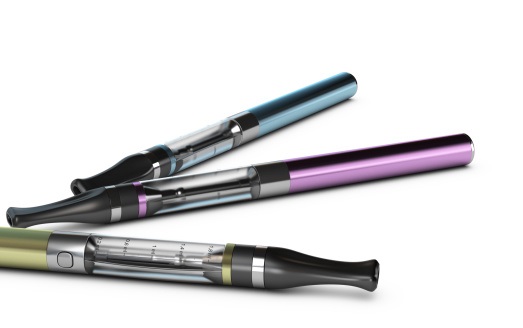
e cigs 465449923Electronic cigarettes, or as they are more popularly called, e-cigarettes, are designed to look like traditional tobacco cigarettes. Though the e-cigarettes contain no tobacco, they can be harmful because they contain nicotine which is a cancer causing chemical. Their manufacturers would like the public to believe that they are a safer alternative to cigarettes, but this may not be the case.

How they work – The user inhales through a mouthpiece similar to traditional cigarettes. This flow of air triggers a sensor that turns on a small battery operated heater. The heater warms up a capsule that contains nicotine and propylene glycol. The vapor that is created gives the user the sensation of smoking a traditional cigarette. The vapor from these e-cigarettes also contains formaldehyde and acetaldehyde which can also cause cancer.

The U. S. Food and Drug Administration has done a preliminary analysis of these devices and concluded that the vapors that they emit contain other carcinogens, such as  nitrosamines and diethylene glycol. It is presumed that the effects of smoking these e-cigarettes would have similar second hand effects as regular tobacco products and their use should be regulated in a similar manner.

Though they have been marketed as an aid to stop smoking for those trying to quit, there is no evidence that proves that these e-cigarettes accomplish that goal. If you smoke, or know someone who does, and are interested in quitting we recommend speaking with your physician or joining a smoking cessation program such as Jamaica Hospital Medical Center’s Freedom from Smoking Program. A representative can be reached at 718 206 8494. Additional resources can also be found at www.nysmokefree.com.

For more health and fitness tips, Like us on Facebook or follow us on Twitter.

twitter iconFacebooklike -178742843 (1)

All content of this newsletter is intended for general information purposes only and is not intended or implied to be a substitute for professional medical advice, diagnosis or treatment. Please consult a medical professional before adopting any of the suggestions on this page. You must never disregard professional medical advice or delay seeking medical treatment based upon any content of this newsletter. PROMPTLY CONSULT YOUR PHYSICIAN OR CALL 911 IF YOU BELIEVE YOU HAVE A MEDICAL EMERGENCY.

Getting Fit and Bicycle Riding Safety Tips

160689896 woman on bike

Riding a bicycle can be a fun and effective way to get fit.  Cycling is beneficial for the cardiovascular system because it increases oxygen intake and stimulates the heart. Studies show that riding can increase energy levels by 20 percent and in one hour burn up to 488 calories when pedaling at 12 to 14 miles per hour.

Although a bicycle is an excellent fitness tool, it is also considered a vehicle.  Therefore, the rules of the road must be obeyed and a bicycle should be operated safely to prevent injuries and accidents.

Follow these basic riding tips to ensure your safety and reduce the risks:

  • Always ride in the same direction as traffic and do not weave in between other vehicles.
  • Obey traffic laws and signals.
  • Do not listen to music or speak on cell phones while riding.
  • Wear a proper fitting helmet.
  • Never pass another vehicle on the right.
  • Always keep your hands on the brakes.
  • Stay aware of dangerous road hazards such as potholes and broken glass.
  • Use hand signals to show motorist where you are going.

Bicycling is a great way to get fit; however, cyclists should continue to keep in mind that they share the same rules and regulations as others. Follow the rules of the road to reduce the risk of injuries and accidents.

All content of this newsletter is intended for general information purposes only and is not intended or implied to be a substitute for professional medical advice, diagnosis or treatment. Please consult a medical professional before adopting any of the suggestions on this page. You must never disregard professional medical advice or delay seeking medical treatment based upon any content of this newsletter. PROMPTLY CONSULT YOUR PHYSICIAN OR CALL 911 IF YOU BELIEVE YOU HAVE A MEDICAL EMERGENCY.

Diabetes and Your Kidneys

The kidneys serve an important function – to filter waste products from the blood.  For people with diabetes, however, the small blood vessels in the kidneys can become injured and fail to clean the blood properly.

Waste products are created when our bodies digest food. In the kidneys, millions of tiny blood vessels act as filters for this waste. As blood flows through the blood vessels, small molecules, such as waste products, squeeze through these holes and produce urine. Useful substances, such as protein, are too big to be filtered and remain in the blood.

A high level of blood sugar can damage the kidneys and after many years of strain, they start to leak and these useful proteins are lost into the urine. This overwork to compensate for a failing filtering system is the reason why there are no early symptoms of kidney disease. In fact, kidney damage can begin 5 to 10 years before symptoms start.

SYMPTOMS
The first symptom of kidney disease is often weight gain due to fluid buildup. Other symptoms include swelling of the ankles and legs, frequent urination, nausea, poor appetite, loss of sleep, and fatigue.

“Not everyone with diabetes develops kidney problems, but it is still important for anyone with diabetes to have their kidney function checked on a yearly basis” states Dr. Alan Roth, Chairman of Family Medicine at Jamaica Hospital, “A doctor can check blood pressure, urine (for protein), blood (for waste products), and other organs for related complications. When kidney disease is diagnosed early, there are several treatments available to prevent kidney disease from getting worse.”

Diabetics can also manage of their condition by keeping their blood sugar and blood pressure under control. Eating a low fat and low sodium diet, taking proper medications, and getting regular exercise can also help prevent or slow kidney damage.
Failure to diagnose and take proper action to slow or prevent kidney disease can result in the kidneys completely failing. At this point, the only options are dialysis or a kidney transplant.

For more health and fitness tips, Like us on Facebook or follow us on Twitter.

twitter iconFacebooklike -178742843 (1)

All content of this newsletter is intended for general information purposes only and is not intended or implied to be a substitute for professional medical advice, diagnosis or treatment. Please consult a medical professional before adopting any of the suggestions on this page. You must never disregard professional medical advice or delay seeking medical treatment based upon any content of this newsletter. PROMPTLY CONSULT YOUR PHYSICIAN OR CALL 911 IF YOU BELIEVE YOU HAVE A MEDICAL EMERGENCY.

Smoking and Weight Gain

Many people gain a few pounds when they quit smoking, some more than others.  Research has shown that, on average, individuals can gain between two to 10 pounds once they stop smoking. This, however, shouldn’t affect your decision or effort to quit smoking, since weight gain is dependent upon your eating habits and your level of physical activity.

Smoking and Weight Gain
There are a several  reasons why people gain a few pounds after they stop smoking. Smoking is known to increase the body’s rate of metabolism, which helps burn calories. Once someone stops smoking, their rate of metabolism may slow down, lessening the amount of calories they burn throughout the day. Over time this could lead to a weight gain.

Also, people who smoke tend to have an oral fixation. When they stop smoking, the act of chewing usually replaces the oral fixation for smoking and most people find themselves eating more. In addition, smoking also acts as an appetite suppressant, which also causes a person to eat more frequently once they stop the habit.

How to Avoid Weight Gain
Learning to eat healthy snacks and exercising will help keep weight under control. More specifically:

  • Eat foods that are low in calories but filling, such as carrots, apples, air popped popcorn or low fat yogurt
  • Drink plenty of water throughout the day
  • Exercise on a regular basis; join a gym, take the stairs, or walk whenever possible

Weight gain is a real concern for people desiring to kick the habit but fortunately, it can be minimized or completely avoided. The damage smoking causes the body is far greater than adding a few extra pounds. The decision to stop smoking can be the first step to leading a healthier life.


All content of this newsletter is intended for general information purposes only and is not intended or implied to be a substitute for professional medical advice, diagnosis or treatment. Please consult a medical professional before adopting any of the suggestions on this page. You must never disregard professional medical advice or delay seeking medical treatment based upon any content of this newsletter. PROMPTLY CONSULT YOUR PHYSICIAN OR CALL 911 IF YOU BELIEVE YOU HAVE A MEDICAL EMERGENCY.

10 Signs Your Teen May Be Using Drugs

teen-on-drugs-173498889If you have a suspicion that your teen may be using illegal drugs, there are several physical and behavioral patterns you can look for. Some of which include:
•Bloodshot eyes or pupils that appear larger or smaller than usual
•A change in appetite – this could be a decrease or increase in appetite
•Skipping classes or a decline in grades
•Frequent mood swings
•Neglect in personal appearance or grooming
•Incoherent or slurred speech
•Heavy use of air fresheners, incense or perfumes in rooms
•Frequent outbursts of anger or periods of hyperactivity
•Consistent disappearance of money, valuables or medication from the home
•An increase in secrecy or avoidance
Speak with your teen about these changes, approach them in a direct but calm manner. Ask them questions about changes that may be occurring in their lives, as well as questions that may uncover drug use. If your teen admits to using drugs, it is advised not to display anger but to rather show your support in finding them help and express your concern for their safety. The next step is to immediately seek treatment from a mental health professional, drug treatment program or a qualified therapist.

All content of this newsletter is intended for general information purposes only and is not intended or implied to be a substitute for professional medical advice, diagnosis or treatment. Please consult a medical professional before adopting any of the suggestions on this page. You must never disregard professional medical advice or delay seeking medical treatment based upon any content of this newsletter. PROMPTLY CONSULT YOUR PHYSICIAN OR CALL 911 IF YOU BELIEVE YOU HAVE A MEDICAL EMERGENCY.