
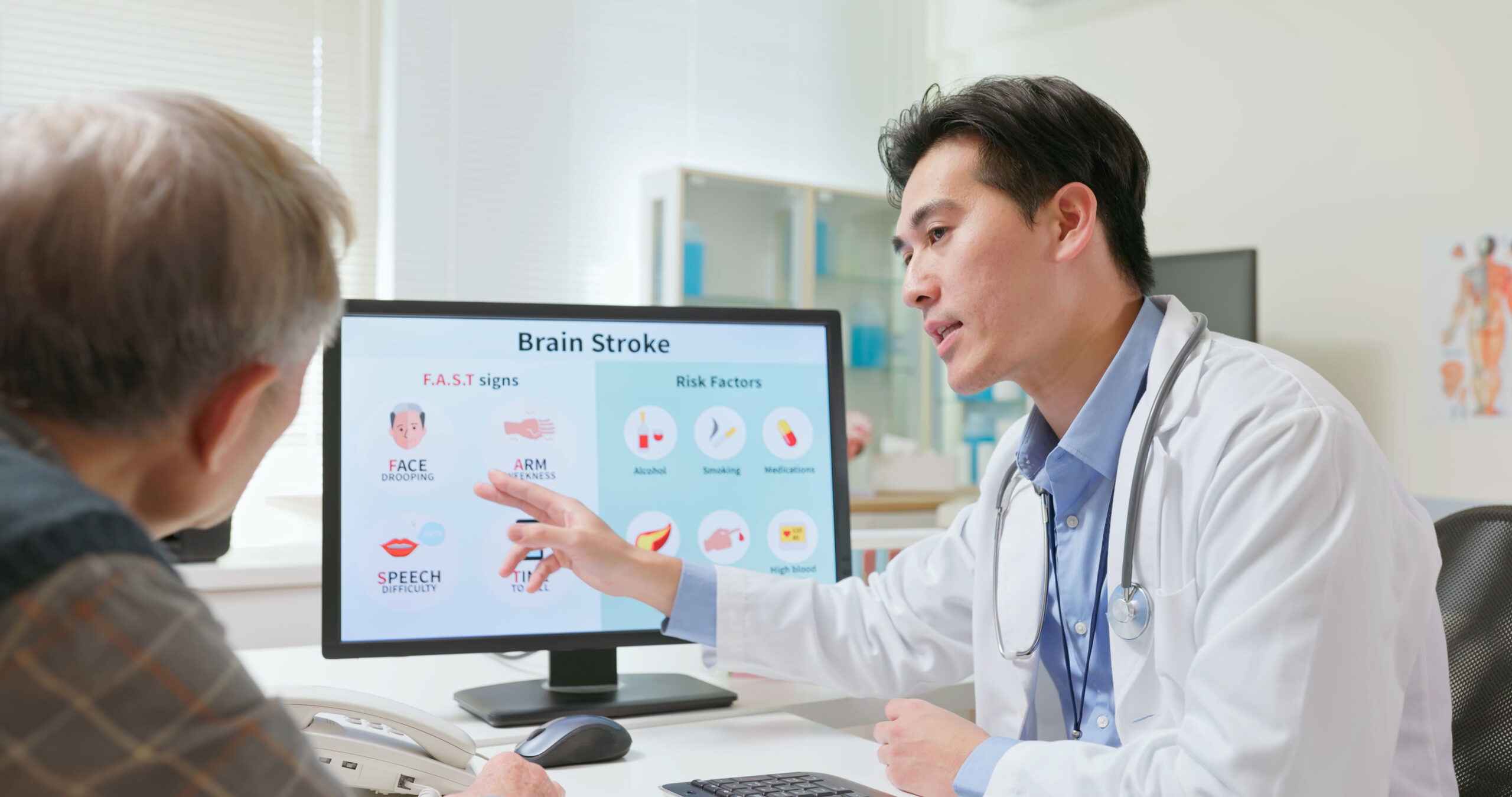
 Strokes happen when a blood clot or broken blood vessel prevents blood from getting to your brain. The lack of blood flow deprives brain cells of the oxygen and nutrients they need to survive, causing them to die in minutes.
Stroke is the fifth leading cause of death and a leading cause of disability in the U.S. Stroke can happen to anyone, at any age, at any time, so it is important to know the warning signs. The warning signs of a stroke can be found using the B.E. F.A.S.T. acronym, which emphasizes the urgency of seeking immediate medical attention:
- B- Balance- is the person experiencing a sudden loss of balance or coordination, or dizziness
- E- Eyes- is the person experiencing sudden vision problems, like blurred or double vision, or vision loss in one or both eyes.
- F- Face drooping- by asking the person to smile, you can tell immediately if one side of the face droops
- A- Arm weakness- ask the person to raise both arms. Observe to see if one arm drifts lower than the other
- S- Speech difficulty- slurred speech is a symptom of stroke. Ask the person to repeat a single sentence
- T- Time to call 911- time may be the difference between life and death, or even partial and full recovery
There are several daily habits and lifestyle factors that could increase your risk of stroke, including:
- Excessive alcohol consumption
- Prolonged sitting
- Recreational drug use:
-
- Amphetamines
-
- Cocaine
-
- Cannabis or marijuana
-
- Ecstasy (MDMA)
-
- Opioids
-
- LSD
-
- PCP
- Physical inactivity
- Unhealthy diet
- Unhealthy weight
- Poor oral health
- Stress
- Smoking
- Birth control and hormone replacement therapy (HRT)
Stroke prevention usually focuses on reducing your stroke risk by managing blood pressure, eating a balanced diet, staying physically active, and avoiding smoking.
Maintaining your overall health is the best way to reduce your stroke risk. Here are some proactive steps to take to help protect your vascular health and sustain your overall health:
- Eating plenty of healthy foods
- Maintaining a healthy weight
- Engaging in regular physical activity
- Managing your blood pressure, cholesterol, and any health conditions you may have
- Quitting smoking
- Managing stress
- Maintaining good oral health
- Limiting excessive alcohol consumption
- Avoiding recreational drug use
If you are experiencing any symptoms of a stroke, call 911 immediately. If you need help managing your health to prevent stroke or maintain overall wellness, visit Flushing Hospital Medical Center’s Ambulatory Care Center. To schedule an appointment, please call (718) 670-5486.
All content of this newsletter is intended for general information purposes only and is not intended or implied to be a substitute for professional medical advice, diagnosis or treatment. Please consult a medical professional before adopting any of the suggestions on this page. You must never disregard professional medical advice or delay seeking medical treatment based upon any content of this newsletter. PROMPTLY CONSULT YOUR PHYSICIAN OR CALL 911 IF YOU BELIEVE YOU HAVE A MEDICAL EMERGENCY.